Atlanta Fed GDPNow Maintains Steady Q2 Growth Forecast at 2.6%
The Atlanta Federal Reserve's GDPNow forecasting tool has maintained its projection for the second quarter of 2025's economic growth, holding steadfast at 2.6%. This consistent outlook comes even as underlying components of the forecast saw slight recalibrations following the release of new economic data. The model offers a dynamic, real-time estimate of Gross Domestic Product, serving as a vital barometer for economic observers.
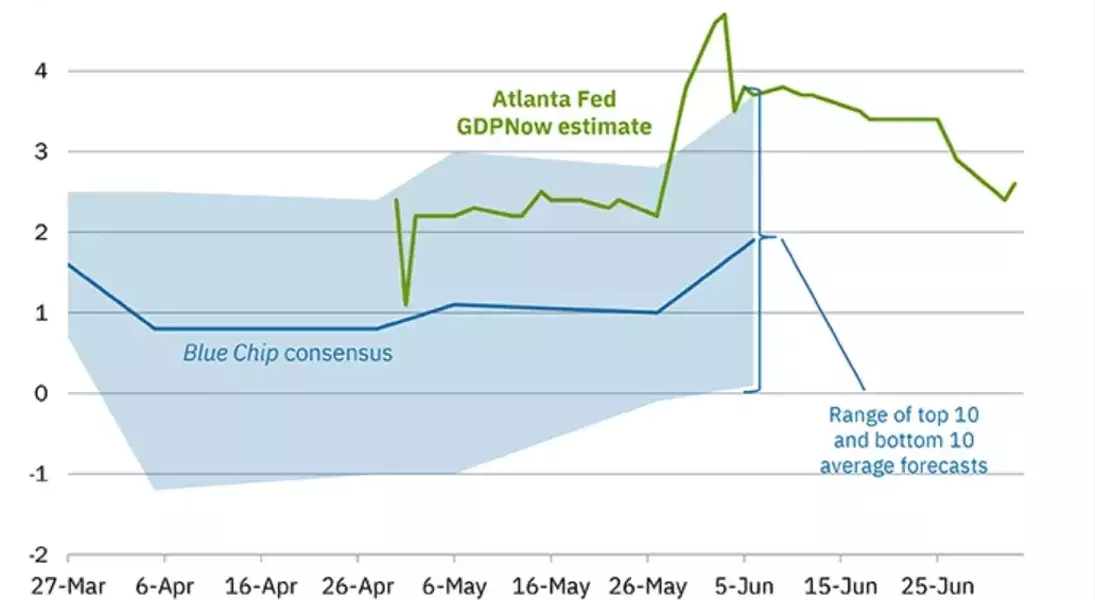
This latest update underscores the stability in the model's overall assessment of the nation's economic momentum. While the headline figure remained unchanged, the granular adjustments reflect the continuous integration of incoming data into the sophisticated forecasting mechanism. The next scheduled update from the Atlanta Fed's GDPNow model is anticipated later this week, providing further insights into the evolving economic landscape.
Steady Economic Outlook Persists
The Atlanta Federal Reserve's GDPNow model continues to project a consistent economic expansion for the second quarter of 2025, with its growth estimate holding firm at 2.6%. This unwavering forecast signals a period of stable, albeit moderate, economic progress. Despite the continuous influx of new economic indicators, the model's aggregate assessment of the nation's output has remained resilient, offering a clear signal regarding the anticipated pace of activity. This steadfastness in the forecast is a testament to the underlying trends supporting the current economic environment, suggesting a predictable trajectory for the immediate future.
The maintained growth rate, directly sourced from the Atlanta Fed's sophisticated GDPNow model, reflects a persistent economic strength that has resisted significant upward or downward revisions. This stability is particularly noteworthy given the dynamic nature of economic data releases. The methodology behind the GDPNow model constantly integrates new information, meaning that any changes to its sub-components are carefully balanced to preserve the overall forecast when broader trends are consistent. This sustained projection provides market participants and policymakers with a high degree of confidence in the near-term economic trajectory, emphasizing a steady state for the upcoming quarter's economic performance.
Subtle Shifts in Underlying Components
Although the headline GDP growth rate for the second quarter of 2025 remained unchanged at 2.6% according to the Atlanta Fed's GDPNow model, a closer examination reveals minor adjustments within its constituent elements. Following the recent wholesale trade report from the US Census Bureau, the forecast for real residential fixed investment growth experienced a slight decline, moving from -6.4% to -6.5%. Concurrently, the anticipated contribution of inventory investment to annualized second-quarter real GDP growth also saw a marginal reduction, shifting from -2.13 percentage points to -2.15 percentage points.
These granular alterations, while not impacting the overarching growth projection, highlight the model's sensitivity to fresh economic data. The subtle downward revisions in both residential fixed investment and inventory contributions indicate minor headwinds in these specific sectors. However, the model's ability to absorb these changes without shifting the overall 2.6% growth rate suggests that other economic factors or existing momentum are offsetting these slight decelerations. This intricate process of continuous data integration and recalibration ensures that the GDPNow model provides the most up-to-date and nuanced picture of the economic outlook, preparing observers for the next comprehensive update, which is scheduled for later this week.