Bangladesh Unveils New Banknotes Highlighting Cultural and Historical Treasures
A significant transformation in the visual representation of Bangladesh's currency was unveiled recently, with new banknotes replacing portraits of the nation’s founding president with stunning depictions of the country's natural beauty and historic sites. This decision coincides with a period of political transition as former Prime Minister Sheikh Hasina undergoes legal proceedings in absentia after being ousted from power last year. The redesigned notes aim to reflect the diverse cultural heritage of Bangladesh rather than focusing solely on political figures.

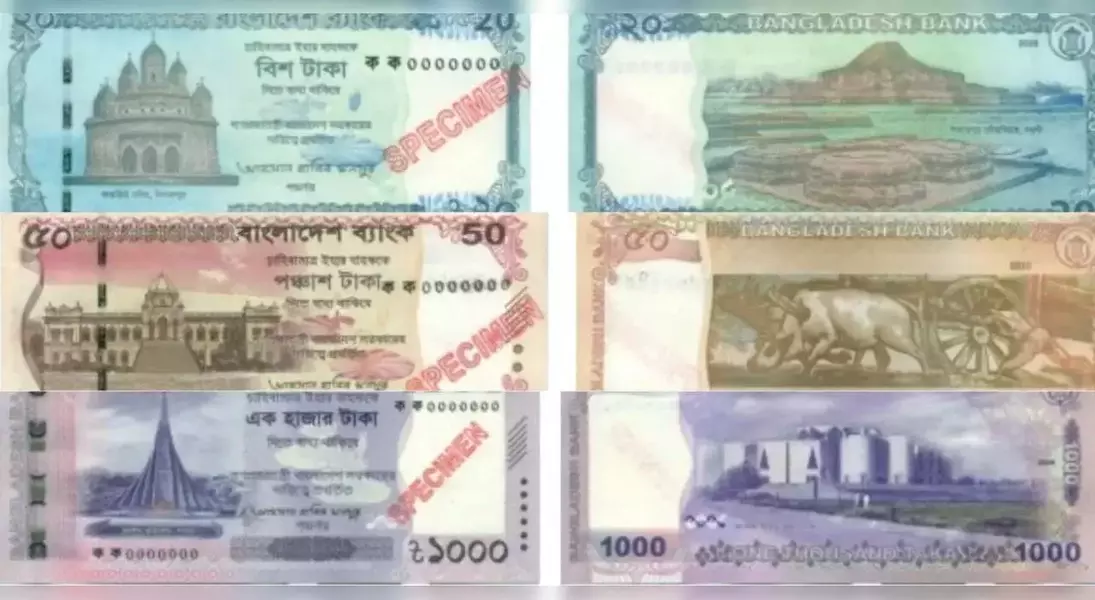
These updated denominations feature an array of landmarks and artworks that symbolize Bangladesh's rich history and artistic legacy. Among these are Hindu and Buddhist temples, ancient palaces, and masterpieces by renowned painter Zainul Abedin, celebrated for capturing the Bengal famine during British colonial times. Additionally, one note honors those who sacrificed their lives in the fight for independence by showcasing the national martyrs’ memorial. According to Bangladesh Bank spokesperson Arif Hossain Khan, this initiative marks a departure from the tradition of featuring human likenesses, instead celebrating landscapes and traditional architecture.
The introduction of these new designs follows a long-standing pattern where changes in Bangladeshi currency often mirror shifts in governance and ideology. In the past, notes have highlighted maps, archaeological wonders, and cultural icons depending on the ruling party at the time. Meanwhile, Sheikh Hasina, who led her party for over a decade, currently faces allegations regarding her administration’s response to protests last year. As the trial progresses without her presence, it underscores the evolving narrative of leadership and accountability in Bangladesh. By embracing symbols of unity and shared heritage, the new currency serves as a reminder of the values and resilience that define the nation.
This shift towards emphasizing cultural and historical elements within the nation’s currency reflects a broader commitment to preserving and celebrating Bangladesh's identity beyond individual political leaders. It highlights the importance of recognizing contributions from all sectors of society, promoting inclusivity and mutual respect among citizens. Such initiatives foster a sense of pride and solidarity, reminding everyone of the collective journey and achievements that shape the essence of Bangladesh.