Fed Official Waller's Insights on Tariffs and Monetary Policy
Federal Reserve official Waller has articulated a compelling argument for a more accommodative monetary policy stance, emphasizing that central banks should not overreact to the temporary price effects of tariffs. His insights suggest a readiness to adjust interest rates in response to evolving economic conditions, particularly labor market dynamics, without waiting for severe downturns. This perspective underscores a nuanced understanding of inflation drivers and the imperative for proactive policy adjustments to support economic stability and growth. Waller's commentary also highlights an internal debate within the Federal Reserve regarding the appropriate timing and magnitude of policy shifts.
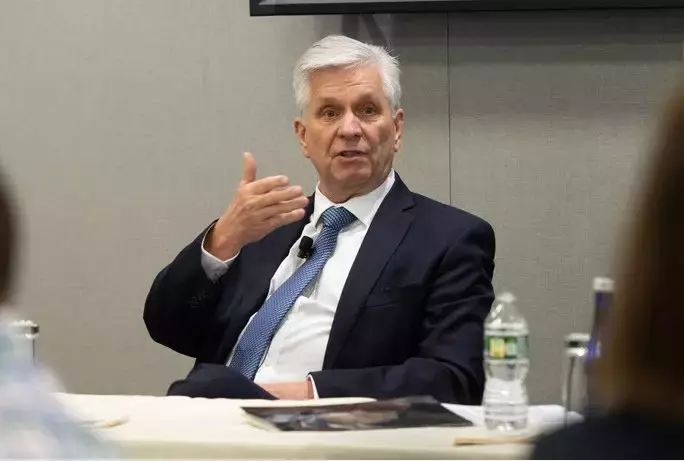
Waller's analysis offers a distinctive viewpoint on the Federal Reserve's strategic direction, particularly concerning inflation and the labor market. He advocates for reducing the policy rate, asserting that current monetary policy is overly stringent given the economic landscape. His arguments delve into the temporary nature of tariff-induced price hikes, stressing that central banks possess the latitude to disregard such fleeting inflationary pressures. This approach aims to prevent undue economic tightening and foster a more resilient economic environment. The discussion also touches upon the signs of stress in the labor market, despite its overall robustness, and the importance of addressing these indicators through timely policy intervention.
Tariffs and Inflation: A Transitory Impact
Waller's viewpoint on tariffs is notably distinct, suggesting that their inflationary effects are merely temporary. He argues that tariffs cause a one-time price adjustment rather than leading to sustained inflation. This implies that central banks can, and should, look beyond these short-term fluctuations when formulating long-term monetary policy. For Waller, even a widespread imposition of tariffs, such as a 10% levy on all imports, would not significantly alter the overall inflation trajectory, thus not warranting a strong monetary policy response aimed at counteracting inflation.
In his discourse, Waller meticulously detailed why tariff-induced price increases should not be a primary concern for central bank policy. He elaborated that such increases represent a singular event in the pricing structure, which, while not entirely negligible, are far from being substantial enough to trigger a continuous inflationary spiral. This nuanced understanding enables monetary authorities to 'look through' these effects, preventing an overreaction that could unnecessarily tighten financial conditions. Waller's assessment provides a crucial framework for distinguishing between temporary supply-side shocks and more persistent demand-driven inflationary pressures, allowing for more targeted and effective monetary policy interventions.
The Case for Monetary Policy Easing
Beyond tariffs, Waller passionately advocates for a prompt reduction in the policy rate, asserting that the current restrictive stance is no longer justified. He believes that the Federal Reserve's rates are considerably above the long-term neutral level, creating an environment that is "just too tight" for the economy. Despite being a minority voice on this matter within the Fed, Waller contends that an early rate cut, possibly as early as July, is economically sound and should not be perceived as a politically motivated decision. He points to signals of stress in the labor market, such as elevated unemployment among recent graduates, as evidence that the economy requires a more supportive monetary policy.
Waller's insistence on a rate cut is rooted in his assessment that the Federal Reserve has maintained its restrictive policy for too long, awaiting an inflationary surge that has yet to materialize. He argues that the current unemployment rate, which hovers around its long-run equilibrium, combined with the substantial gap between the current policy rate and the steady-state neutral rate, indicates ample room for easing. For Waller, initiating a rate cut now would allow the central bank to observe its impact on inflation and broader economic activity, enabling a flexible and data-driven approach to future policy adjustments. He robustly dismisses concerns about political influence, framing the discussion purely in terms of economic necessity and the mandate for price stability and maximum employment.