French Business Confidence Holds Steady Amidst Underlying Concerns
France's business landscape in July displayed a mix of stability and underlying caution, as the overall business confidence index maintained its prior level of 96. This consistency was mirrored across both the manufacturing and services sectors, where confidence levels remained at 96. However, a deeper look into the economic indicators reveals a less optimistic picture, particularly concerning employment. The jobs indicator saw a notable dip from its June figure, highlighting persistent challenges within the labor market and suggesting a pervasive sense of economic malaise despite the headline figures indicating no change. This intricate interplay of static confidence and declining employment paints a complex portrait of the French economy's current trajectory, demanding close observation from policymakers and market participants alike.
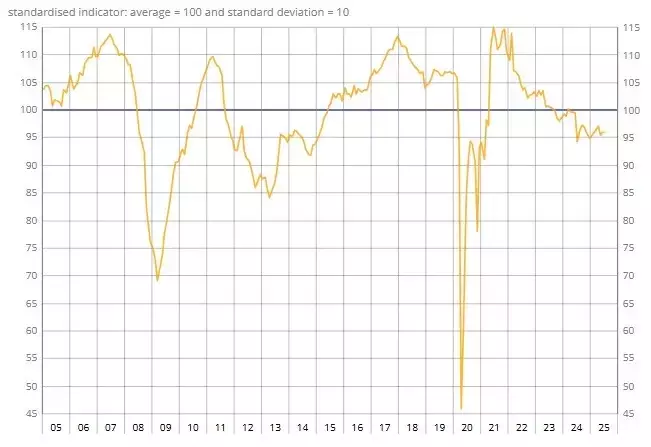

The current state of business confidence in France, as reported by INSEE for July, indicates a static environment rather than a vibrant one. The index holding at 96, a figure that also characterized both manufacturing and services, suggests that businesses are not experiencing significant shifts in their short-term outlook. This stability in the headline figures could be interpreted in various ways; it might imply resilience in the face of economic uncertainties, or it could signal a stagnation where no substantial improvements or deteriorations are occurring. The consistency across different sectors points to a broad-based sentiment that has neither surged nor plummeted, creating a sense of predictability but perhaps also of limited dynamism. Despite this level-pegging, the broader economic mood remains muted, underscoring that the absence of a downturn does not necessarily equate to a robust recovery or expansion. This stability, therefore, acts as a double-edged sword, offering a measure of reassurance but also raising questions about the drivers of future growth and vitality within the French commercial ecosystem.
Stability Amidst Underlying Economic Concerns
The latest data from INSEE indicates that France's business confidence held steady at 96 in July, mirroring the previous month's reading. This stability extended to key sectors, with both manufacturing and services confidence also registering at 96. Despite these unchanged headline figures, a prevailing sense of economic gloom suggests underlying challenges are still impacting the broader business environment. This constancy in confidence, while seemingly positive, is overshadowed by persistent concerns about the economy's overall health and future trajectory, particularly evidenced by the weaker employment outlook.
While the overall business climate in France demonstrated a lack of change in July, with the confidence index remaining firmly at 96, this steadiness belies a deeper undercurrent of economic worry. The manufacturing confidence, initially reported at 96, saw a slight revision to 97, but this marginal adjustment did not significantly alter the overarching narrative of static sentiment. Similarly, the services sector also maintained a confidence level of 96. This consistent numerical value across various economic segments suggests a plateau in business expectations, rather than a robust recovery or a significant decline. This means that businesses are not anticipating substantial shifts in their operating conditions in the immediate future. The lack of upward momentum in these confidence indicators, coupled with the general feeling of a 'gloomy' economic scheme, points to a period of consolidation where firms are navigating persistent uncertainties without a clear path to expansion. This static confidence level, therefore, serves as a crucial signal for understanding the tempered expectations within the French business community.
Employment Woes and Broader Economic Sentiment
A notable concern within the July business confidence report is the decline in the employment indicator, which fell from 98.3 in June to 96.7. This dip suggests a weakening in the labor market's outlook, contributing to the overall "gloomy" perception of the French economic landscape. Despite the stability in general business confidence, the falling employment figure acts as a critical signal of potential economic fragility, indicating that businesses might be anticipating less need for new hires or even considering workforce adjustments.
The decline in France's employment indicator to 96.7 in July, down from 98.3 in June, represents a significant point of concern within the otherwise stable business confidence report. This drop signals that businesses are less optimistic about hiring or maintaining current employment levels, reflecting a cautious approach to workforce expansion. This specific indicator's deterioration is a direct measure of firms' intentions regarding their labor force, and its decrease suggests that companies foresee either a reduced demand for their products and services, or increased operational efficiencies that require fewer employees. Such a trend in employment expectations often precedes or accompanies a broader economic slowdown, even if other confidence measures remain constant. The persistence of a "gloomy" overall business climate, despite the stable confidence indices, is largely attributable to these underlying employment concerns. This highlights that while top-line confidence figures might not be volatile, the real-world impact on jobs and livelihoods could be more pronounced, painting a nuanced and somewhat somber picture of the French economic outlook. Policymakers will likely be monitoring this employment trend closely for any further indications of economic contraction or persistent stagnation.