Gold's Price Trajectory: Navigating CPI Data and Market Dynamics
The trajectory of gold prices is currently at a critical juncture, heavily influenced by impending economic data and prevailing market sentiment. While the precious metal has shown some recent upward movement, it largely remains within a confined trading band, reflecting the cautious stance of investors. All eyes are now on the forthcoming US Consumer Price Index (CPI) report, which is widely expected to be the primary catalyst dictating gold's immediate direction. The interplay between inflation data, Federal Reserve policy, and broader economic indicators will shape gold's short-term volatility, even as its long-term outlook appears more resilient amidst anticipated shifts in real yields. The market is bracing for significant reactions, as both fundamental and technical factors suggest potential for abrupt price shifts depending on the CPI outcome.
Ultimately, gold’s immediate fate hinges on the US CPI report. A softer inflation print could provide the necessary impetus for a strong bullish surge, whereas elevated inflation figures could easily trigger a sharp decline. Beyond the immediate data, the broader macroeconomic landscape points to a sustained uptrend for gold, largely due to the expectation of falling real yields driven by the Federal Reserve’s potential easing of monetary policy. However, this long-term optimism is tempered by the risk of short-term volatility, as any further adjustments to interest rate cut expectations could lead to significant price corrections. Therefore, market participants must remain vigilant, recognizing that while the long-term fundamentals favor gold, immediate price action will be heavily swayed by the specifics of upcoming economic releases and subsequent market interpretations.
Market Sensitivity to Inflation Data
Gold's price behavior is currently characterized by a holding pattern, as market participants adopt a wait-and-see approach ahead of crucial economic data. Despite some recent bullish undertones, the precious metal has remained confined to a relatively tight range. The primary driver for gold's next significant move is anticipated to be the US Consumer Price Index (CPI) release. Previous data, such as the non-farm payrolls report, introduced a hawkish sentiment regarding interest rate expectations, which subsequently curtailed gold's upward momentum. Consequently, a lower-than-expected CPI figure could provide a substantial boost to gold prices, while an elevated reading would likely precipitate a sharp sell-off.
In the broader economic context, gold is generally expected to sustain an upward trend. This long-term positive outlook is predicated on the anticipation that real yields will continue their descent, primarily due to the Federal Reserve's projected easing of monetary policy. However, this optimistic long-term view is balanced by the potential for short-term adjustments. Any further shifts towards a more hawkish stance in interest rate cut expectations could lead to temporary but notable price corrections. Therefore, the immediate future of gold hinges on the CPI report, which will either validate or challenge existing market expectations, influencing both short-term trading strategies and long-term investment decisions. Market dynamics are poised for a significant reaction, underscoring the critical importance of inflation data in shaping gold's valuation.
Technical Outlook Across Timeframes
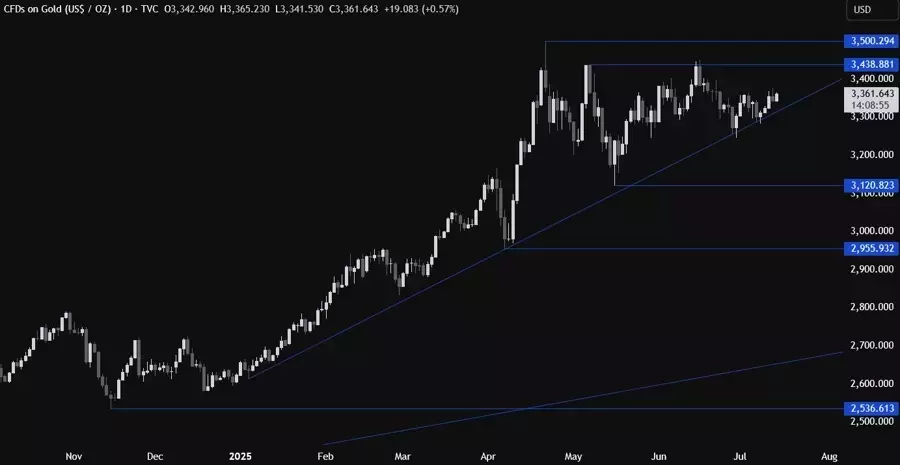
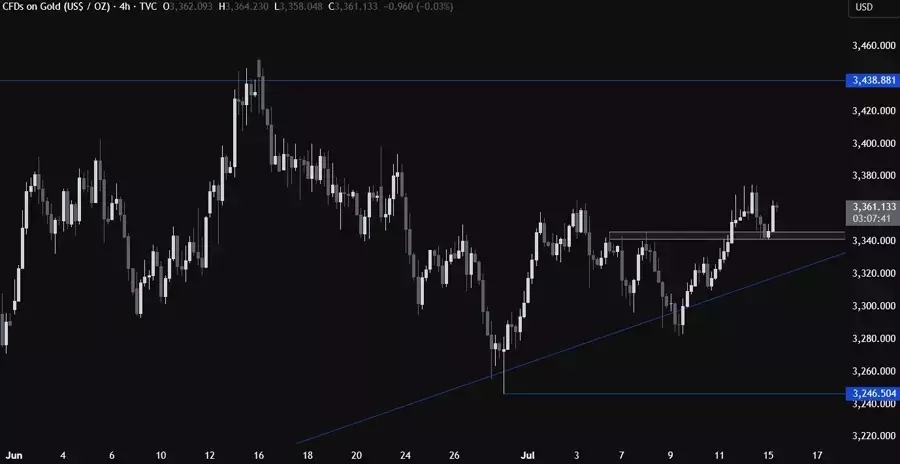
From a daily technical perspective, gold has exhibited a gradual upward trajectory, consistently finding support along a significant long-term trendline. Buyers have demonstrated resilience, steadily pushing prices higher towards a key resistance level at 3438. This level is expected to attract sellers, who may seek to capitalize on potential reversals and aim for a return to the major trendline. Shifting to a four-hour chart, a minor support zone is identifiable around the 3345 mark. This level is crucial, as it represents an entry point for buyers looking to limit their downside risk while targeting the 3438 resistance. Conversely, a decisive break below this support would signal a shift in momentum, encouraging sellers to target the primary trendline and potentially trigger a more significant breakdown.
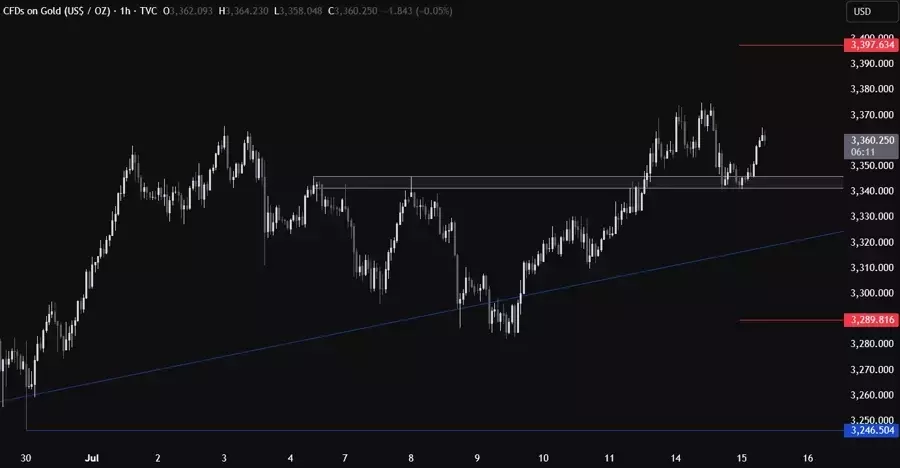
On the hourly chart, the technical picture appears less distinct, as short-term price movements are highly susceptible to high-impact economic releases. While buyers would find a more favorable risk-reward setup near the identified support, sellers would require a breach below this level to gain significant traction. However, given the impending US CPI report, the importance of these short-term technical indicators is considerably diminished. The CPI release is widely expected to induce substantial market volatility, potentially overshadowing minor technical patterns. The average daily range, delineated by red lines on the chart, provides an indication of expected price fluctuations for the day, suggesting that the market is poised for considerable movement, regardless of the precise technical setups. This highlights the overarching influence of fundamental news over immediate chart patterns in the current environment.