J.P. Morgan Adjusts Stance on Emerging Market Currencies Amid Overbought Signals
J.P. Morgan has announced a significant shift in its investment strategy concerning emerging market currencies. The esteemed financial institution is dialing back its previously enthusiastic outlook on Emerging Market Foreign Exchange (EMFX), driven by clear indications that these currencies have become overbought. This adjustment signals a forecast for a tactical reversal in the near future. A key part of this strategic pivot involves reducing their elevated recommendation on the Mexican peso (MXN), which has recently demonstrated robust performance. Although the foundational elements supporting EMFX remain robust, the bank suggests that the rapid appreciation witnessed recently has exceeded what current economic underpinnings might justify, leading to a more cautious stance.
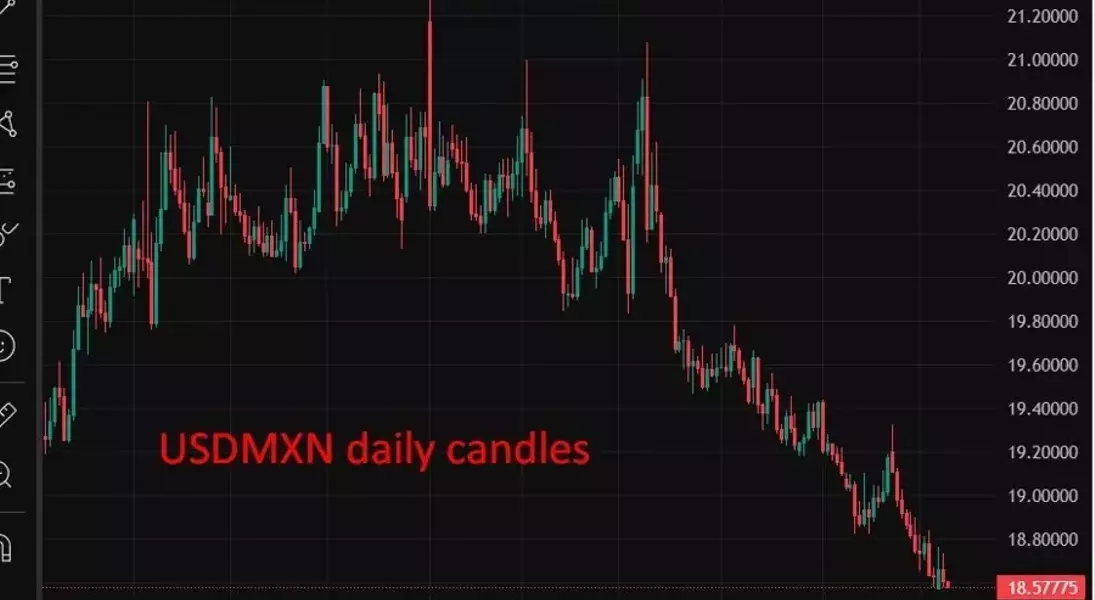
On Tuesday, July 8, 2025, J.P. Morgan's analysts observed a confluence of technical and fundamental signals suggesting a temporary peak in EMFX valuations. This analysis led to the decision to modify their portfolio strategy. The Mexican peso, in particular, had enjoyed a period of significant gains, making it a prime candidate for a re-evaluation of its 'overweight' status. The bank's assessment indicates that while long-term structural factors may continue to support emerging market currencies, the pace of their recent rally warrants prudence.
The bank's move reflects a broader concern about market exuberance possibly outstripping underlying economic realities. Such tactical adjustments are common in dynamic markets, allowing institutions to manage risk and capitalize on anticipated short-term movements. Investors in EMFX, especially those holding significant positions in the Mexican peso, may need to prepare for potential volatility as the market digests J.P. Morgan's revised outlook.
This strategic recalibration by J.P. Morgan underscores the nuanced nature of currency markets, where technical indicators often provide crucial insights into short-term price action, even when long-term fundamentals remain positive. The bank's decision to pare back its exposure highlights the importance of adapting investment positions in response to evolving market dynamics, ensuring alignment with both current conditions and future expectations.