JPMorgan's Dimon Urges Unwavering Independence for Federal Reserve
Jamie Dimon, the chief executive of JPMorgan, has recently voiced a profound concern regarding the autonomy of the Federal Reserve, emphasizing its indispensable role in preserving economic stability. His remarks, delivered during a quarterly earnings review, highlighted the necessity of shielding the central bank from political influence, a sentiment echoed by other financial institutions. The consensus among these figures points to the potential for severe and lasting negative consequences should the Fed's independent decision-making capacity be compromised, particularly concerning leadership changes.
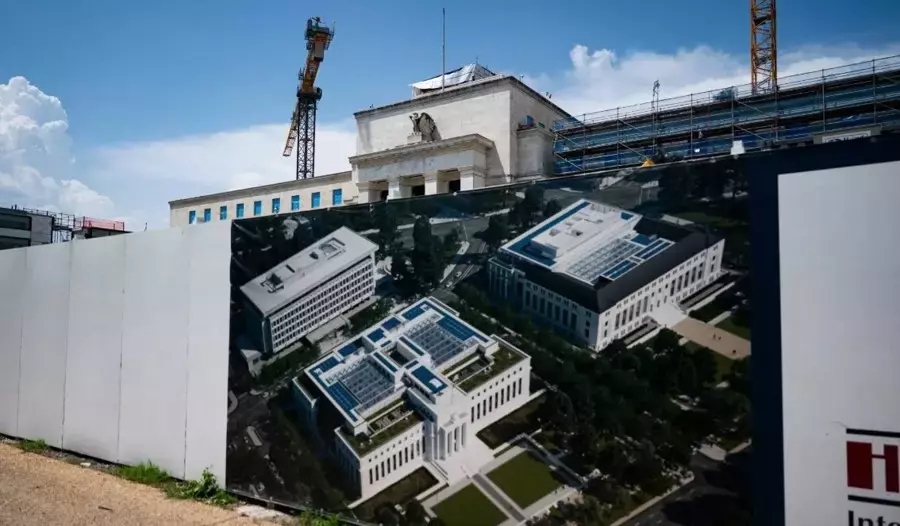
The discussion also brought to light anxieties over potential political interventions targeting the Federal Reserve's leadership, specifically its current chair. Experts suggest that such actions would not only trigger immediate legal resistance but also inflict significant damage on global financial confidence. This underscores a broader recognition within the financial community of the critical balance between governmental oversight and the operational independence required for effective monetary policy.
The Imperative of Federal Reserve Autonomy
JPMorgan's CEO, Jamie Dimon, has forcefully articulated the fundamental need for the Federal Reserve's independence, labeling it 'absolutely critical'. This declaration was made during the bank's second-quarter earnings call, where Dimon stressed that this autonomy must be upheld consistently, irrespective of who holds the position of Fed Chair. He expressed his profound respect for the current Chair, Jerome Powell, but more importantly, he underlined the principle that the institution's independence transcends individual leadership. Dimon's stern warning against political interference in the central bank's affairs reflects a deep-seated belief that such meddling inevitably leads to unfavorable repercussions, disrupting the delicate equilibrium necessary for sound economic management.
Dimon's advocacy for an unencumbered Federal Reserve highlights a crucial aspect of financial governance: the central bank's ability to make decisions based purely on economic data and analysis, free from short-term political pressures. This independence is seen as foundational to its effectiveness in managing monetary policy, controlling inflation, fostering employment, and ensuring overall financial stability. Any erosion of this independence, as Dimon suggests, risks undermining the credibility of the institution and its capacity to act decisively in times of economic uncertainty. His comments serve as a powerful reminder of the intricate relationship between political will and economic policy, advocating for a clear demarcation to safeguard the nation's financial future.
Safeguarding Institutional Credibility and Economic Stability
Echoing Dimon's concerns, MUFG, a prominent financial group, has also weighed in on the issue of the Federal Reserve's independence, particularly in the context of potential political attempts to remove its leadership. Their analysis predicts that any effort to dismiss Federal Reserve Chair Powell would be met with immediate legal challenges, setting a precedent for contentious legal battles. Beyond the immediate legal ramifications, MUFG also forecasts a prolonged and substantial detriment to the confidence placed in the institution itself. This perspective emphasizes that the stability and integrity of the Federal Reserve are intrinsically linked to its perceived independence, and any action that casts doubt on this autonomy could have far-reaching negative effects on market sentiment and investor trust.
The collective apprehension from these financial giants underscores a shared understanding that the Federal Reserve's role extends beyond mere monetary policy implementation; it is a pillar of trust and predictability in the global financial system. A loss of confidence, stemming from political interference or the abrupt dismissal of its leadership, could trigger market volatility, deter investment, and ultimately impede economic growth. This broader impact on confidence is not just about the immediate economic indicators but also about the long-term health and stability of financial markets. The warnings from both Dimon and MUFG serve as a robust argument for upholding the Federal Reserve's independent status, asserting that its ability to operate without political duress is paramount for maintaining both domestic and international financial stability.