A New Chapter in US-Indonesia Trade Relations: The Trump Administration's Strategic Economic Alignment
In a strategic move to reshape international commerce, the Trump administration has brokered a pivotal trade agreement with Indonesia. This accord signifies a deliberate effort to realign economic dynamics between the two nations, focusing on market access and reciprocal trade benefits. The deal aims to establish a new paradigm for future trade negotiations, emphasizing equitable terms and managed inflationary impacts.
Details of the Landmark Trade Accord
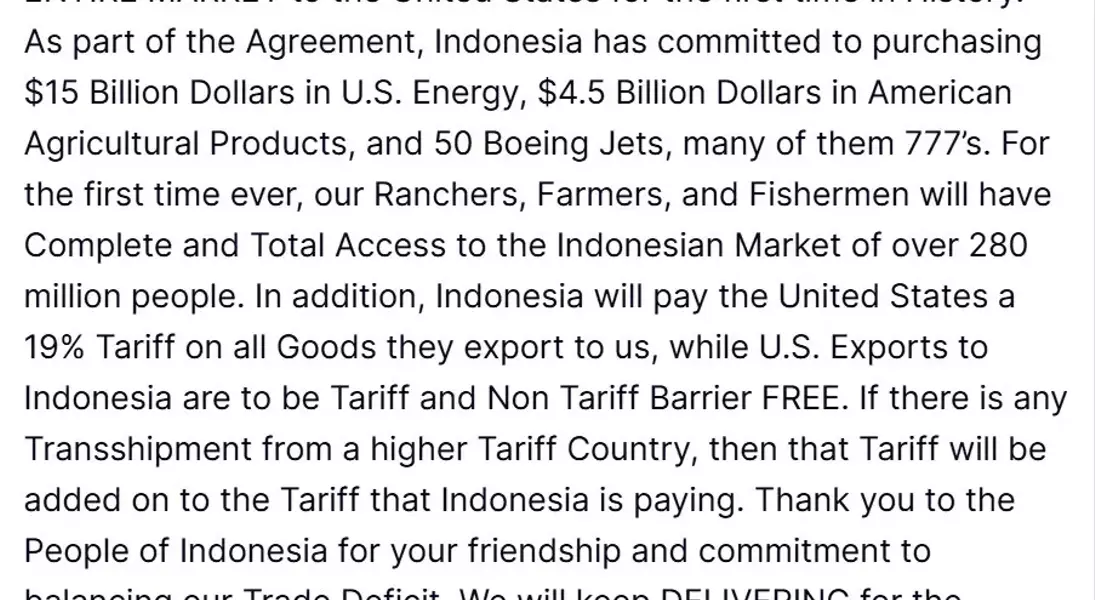
On a bright Tuesday, July 15, 2025, a significant economic understanding was reached between the United States and Indonesia. This agreement, championed by the Trump administration, seeks to fundamentally alter the existing trade landscape. Historically, goods originating from Indonesia have encountered a substantial 19% tariff upon entering the United States. In stark contrast, American products have enjoyed a 0% tariff rate when imported into the Indonesian market. This notable disparity has long been a point of focus in bilateral trade discussions.
Under the newly established terms, Indonesia has pledged to significantly open its markets, creating welcoming avenues for various American enterprises. Furthermore, the agreement stipulates that Indonesia will actively procure a range of US exports. Specifically, this includes the acquisition of American energy resources, a diverse array of agricultural commodities, and modern jet aircraft. This comprehensive purchasing commitment is expected to inject considerable economic vitality into key sectors of the US economy.
A central tenet of the Trump administration's trade strategy, as embodied in this Indonesian agreement, is its potential to serve as a foundational benchmark. It is anticipated that this accord will set a precedent for future bilateral trade negotiations with other global partners. The underlying expectation is that businesses importing goods will either absorb the associated costs or gradually integrate them into their pricing structures, thereby mitigating the risk of widespread or sustained inflationary pressures.
Reflections on the Path Forward
This evolving trade relationship between the United States and Indonesia presents a fascinating case study in contemporary global economics. From a geopolitical perspective, such agreements underscore a shift towards more direct and bilateral negotiations, where specific terms are tailored to the economic realities and strategic interests of the participating nations. For businesses, this deal opens new avenues but also necessitates careful navigation of evolving market conditions and cost structures. The success of this pact, particularly in its ability to manage inflation while fostering equitable trade, will undoubtedly be closely observed as a model for future international economic engagements.