Oil Market Resilience: Prices Climb Despite OPEC+ Production Increases
In a surprising turn of events, the global oil market demonstrated remarkable resilience this week, with crude prices surging despite an unexpected increase in output from the OPEC+ alliance. This development has captivated market analysts, highlighting the complex interplay of supply dynamics, geopolitical factors, and underlying demand, which collectively shape the trajectory of energy commodities.
The Organization of the Petroleum Exporting Countries and its allies, known as OPEC+, concluded their recent meeting with an announcement that defied market expectations. Rather than maintaining current production levels or opting for a more modest increase, the group decided to boost daily crude oil output by 548,000 barrels beginning in August. This figure exceeded the anticipated adjustment of 411,000 barrels per day that analysts had largely foreseen. Furthermore, reports indicate that a similar increment is slated for September, aiming to fully reverse the 'voluntary' production cuts previously implemented by eight major producers. This strategic move by OPEC+ was intended to gradually reintroduce supply to the market, aligning with their long-term production management goals.
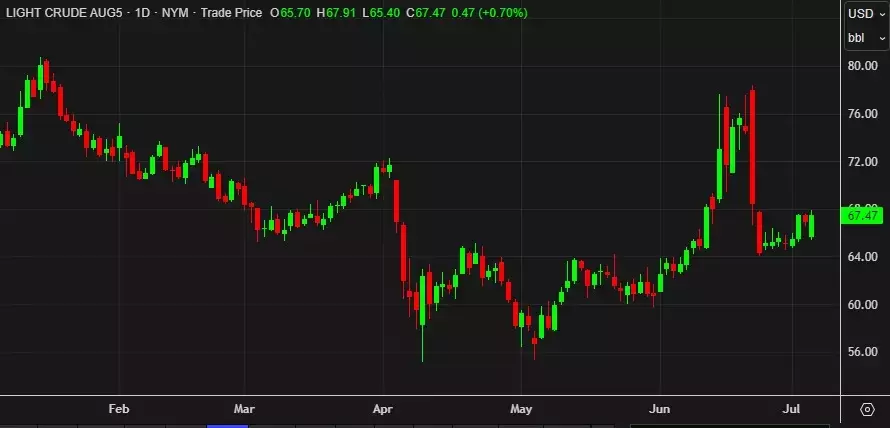
Following the OPEC+ announcement, crude oil markets initially reacted with a downturn, with prices for West Texas Intermediate (WTI) opening approximately two dollars lower. However, this dip was short-lived. The market quickly found a robust floor, leading to a sustained and significant recovery. WTI crude prices subsequently ascended by over $2.20, reaching an intraday peak of $67.91. This marked the commodity's highest valuation since the period immediately following the Iran ceasefire on June 23, underscoring a strong underlying demand and speculative interest that overshadowed the increased supply. The market's capacity to absorb additional barrels and still register gains suggests a more bullish sentiment than previously anticipated, potentially fueled by broader economic recovery narratives and a weakening U.S. dollar, which makes dollar-denominated commodities more attractive to international buyers.
The current market behavior also brings into focus the long-term outlook for global oil supply, particularly regarding U.S. shale production. Recent data from weekly rig counts and industry surveys suggest a growing trend among U.S. shale operators to scale back their production expansion plans. This aligns with an emerging view within some market segments that U.S. shale output might be nearing its peak, making it increasingly challenging to sustain, let alone significantly increase, production levels going forward, especially at existing price points. Should this perspective gain wider acceptance, it could fundamentally alter the global supply-demand equation, providing sustained upward pressure on oil prices irrespective of OPEC+'s short-term adjustments.
The recent surge in oil prices, despite OPEC+'s decision to increase production, underscores a resilient market underpinned by strong demand fundamentals and evolving supply-side perceptions, particularly concerning U.S. shale output. This trend suggests a confident market outlook for crude oil, reflecting its ability to absorb additional supply while maintaining an upward trajectory in value.