Strategic Investment Approaches to Reach a Million-Dollar Retirement
Unlock Your Million-Dollar Retirement: Smart Strategies for Wealth Accumulation
Embracing Early Investment: The Power of Time in Wealth Building
One of the most impactful steps you can take to grow your capital to a million dollars is to begin investing at the earliest possible stage. The principle of compound growth thrives on time, meaning the longer your investments have to grow, the more significant their returns become. For instance, an initial investment of $100,000, compounded annually at a modest rate of 6% over 40 years, can comfortably exceed $1 million. Delaying your investment start date necessitates higher returns or larger contributions to achieve the same goal, underscoring the critical advantage of an early start.

Cultivating a Diverse Portfolio: Minimizing Risk and Maximizing Potential
While the allure of high-risk, high-reward assets like certain cryptocurrencies or nascent biotech stocks can be strong, a more prudent approach to wealth accumulation involves diversifying your investment portfolio. Spreading your investments across various asset classes significantly reduces overall risk exposure. A well-diversified portfolio might include a broad selection of stocks, bonds, and other financial instruments, ideally featuring at least 25 different stocks from diverse industries. Alternatively, you can opt for funds like Exchange-Traded Funds (ETFs) or Closed-End Funds (CEFs), which inherently offer diversification and can be more cost-effective than traditional mutual funds due to lower fees and trading flexibility.
Harnessing the Growth Potential of Dividend Reinvestment
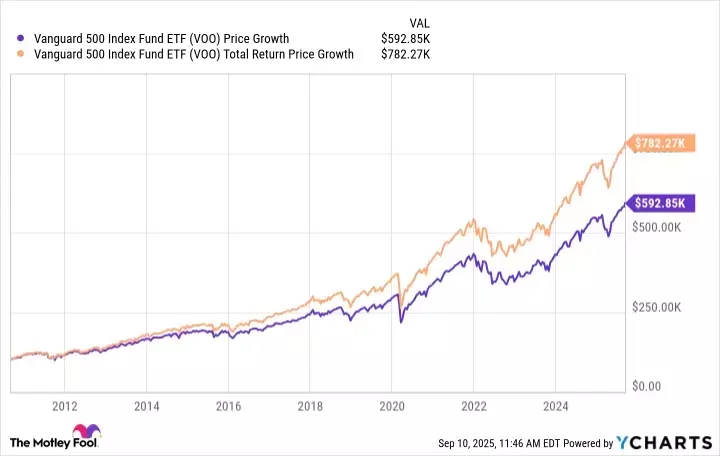
A powerful, yet often underestimated, strategy for accelerating your journey to a million-dollar retirement is the consistent reinvestment of dividends. Many stocks, as well as stock-focused mutual funds, ETFs, and CEFs, distribute regular dividends. By reinvesting these payouts to acquire additional shares, you leverage the compounding effect, where your earnings begin to generate their own earnings. For example, investing $100,000 in an S&P 500 index ETF and consistently reinvesting dividends could lead to a significantly larger portfolio over time compared to simply taking the dividends as cash. Historically, dividends have contributed substantially to the total returns of major market indices, making their reinvestment a crucial tactic for long-term wealth growth.