A Tale of Two Fintechs: Robinhood and SoFi's Divergent Paths to Growth
In the dynamic realm of financial technology, two companies, Robinhood Markets and SoFi Technologies, stand out as rapidly expanding entities. Despite operating within the same sector and demonstrating significant growth, their business strategies and market perceptions exhibit notable differences. Robinhood, initially gaining notoriety through its association with \"meme stocks\" and a controversial payment for order flow model, has successfully broadened its offerings beyond commission-free trading to include diverse financial services and even cryptocurrency. This evolution has solidified its position as a key player in retail investment, constantly seeking new avenues for expansion.
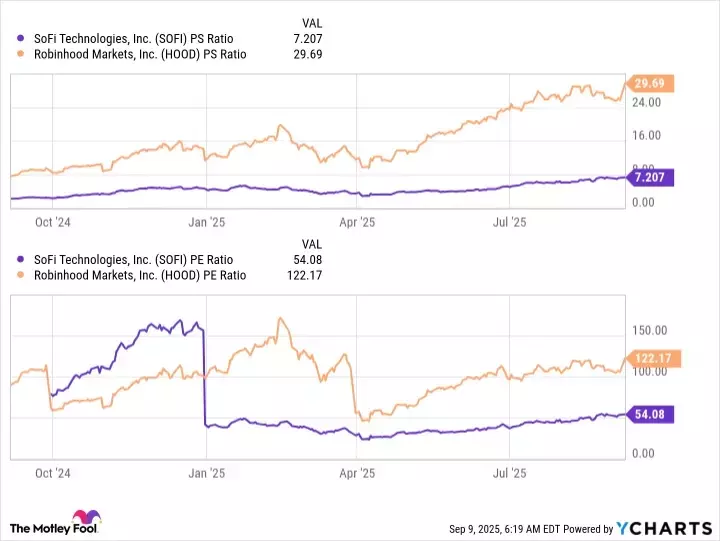
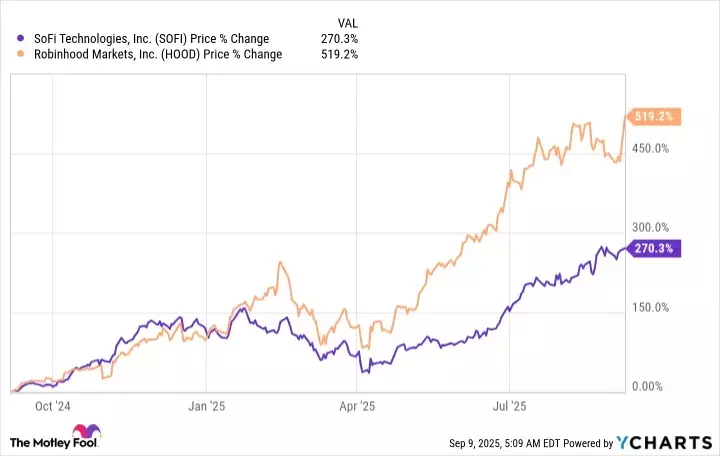
Conversely, SoFi presents itself as a digital-first banking institution, catering primarily to students and young professionals with an emphasis on user-friendly services. While its core business remains lending, SoFi has strategically diversified into fee-based financial services, which are experiencing faster growth. The company aims to become a top-tier U.S. bank, continually enhancing its platform with features like exclusive exchange-traded funds and blockchain-based remittance services. Both companies have achieved profitability, with their recent quarterly performances showcasing impressive revenue and net income growth, albeit with SoFi demonstrating a significantly higher net income growth percentage.
The market's valuation of these two fintech innovators reflects their differing approaches and perceived risks. Robinhood's stock has seen a more dramatic surge, trading at a substantial premium, which suggests investors are placing a higher value on its disruptive potential, despite the inherent risks associated with its less conventional financial activities. SoFi, while still representing a growth opportunity, is priced more conservatively, appealing to long-term investors who prioritize a blend of innovation and stability. Ultimately, the choice between these two companies depends on an investor's risk tolerance, with Robinhood offering high potential rewards for those comfortable with greater volatility, and SoFi appealing to those seeking a more measured growth trajectory in the evolving financial landscape.
The journey of both Robinhood and SoFi exemplifies the transformative power of innovation in finance. Their success underscores the importance of adapting to market demands, embracing technological advancements, and consistently expanding service offerings to meet the diverse needs of modern consumers. As these companies continue to shape the future of financial services, their stories serve as a testament to the pursuit of progress and the positive impact that strategic foresight can have on the economy and individual financial empowerment.