Trump's Unconventional Dialogue with Powell: Insights on Interest Rates and Economic Views
Former President Donald Trump's recent interaction with Federal Reserve Chair Jerome Powell offered a rare glimpse into their dynamic, previously characterized by public discord. Despite past tensions, Trump reported a productive and harmonious exchange focused on critical economic matters, particularly interest rates. His remarks underscored a desire for lower rates and a belief that such a policy would benefit the nation's financial landscape. This dialogue not only provided insights into Trump's economic philosophy but also highlighted the intricate relationship between political leadership and monetary policy. Meanwhile, the Federal Reserve continues to navigate its independent role, striving to maintain economic stability amidst varying external pressures. The broader implications of such high-level discussions extend to market sentiment, investor confidence, and the overall trajectory of the American economy, making these interactions a focal point for financial analysts and policymakers alike.
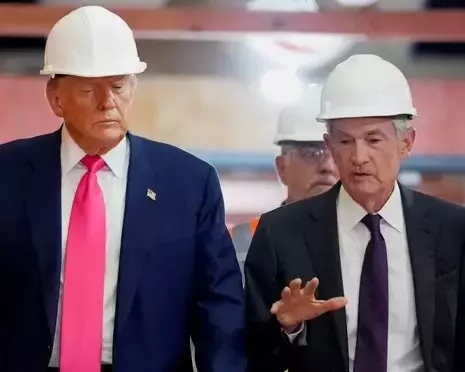
The discussion between Trump and Powell also extended to the European economic sphere, where Trump alluded to ongoing trade negotiations and Europe's keen interest in securing a deal. This multifaceted conversation suggests a broader strategic perspective on global economic interconnectedness, where domestic policies like interest rates are interwoven with international trade dynamics. The narrative painted by Trump emphasized a cooperative tone, signaling a potential shift or at least a temporary détente in what has often been portrayed as a contentious relationship. This engagement reiterates the significance of open communication channels between political figures and central bank leaders, especially in times of economic uncertainty, to foster a shared understanding of challenges and potential solutions. Ultimately, the outcomes of such dialogues can significantly influence economic decisions and their widespread impact on both national and international stages.
Trump's Economic Perspectives and Powell's Position
During a recent encounter, former President Trump candidly discussed his economic views with Federal Reserve Chair Jerome Powell, with a primary focus on interest rates. Trump characterized their conversation as highly productive and devoid of any underlying friction, contradicting previous narratives of a strained relationship. He consistently advocated for a reduction in interest rates, firmly believing this measure would catalyze economic growth and address specific market concerns, such as housing affordability. While expressing satisfaction with the dialogue, Trump also hinted at having alternative candidates in mind for Powell's position, yet simultaneously stated that terminating Powell's tenure was not a necessary step. This nuanced stance suggests a complex interplay of pressure and pragmatism in his approach to central bank policy.
The exchange between Trump and Powell provided a window into the former president's enduring economic convictions. Trump's insistence on lower interest rates aligns with his long-held belief that such policies are crucial for fostering a robust economy, stimulating investment, and easing the financial burden on consumers and businesses. His comments regarding housing prices, suggesting a need for them to decline, present an interesting juxtaposition to the typical economic theory that lower rates could inflate asset values; this highlights his unique and often contradictory interpretations of economic cause and effect. Despite previous public criticisms, Trump's acknowledgment of a productive discussion with Powell, alongside his assertion that no tension existed, indicates a strategic shift towards a more measured, albeit still assertive, engagement with monetary policy leadership. This dynamic underscores the perpetual tension between political objectives and the independent role of central banking in maintaining economic stability.
Broader Economic Implications and Global Trade
Beyond domestic interest rate policy, the conversation between former President Trump and Federal Reserve Chair Jerome Powell ventured into wider economic territory, including the state of the U.S. economy and international trade relations. Trump indicated that Powell acknowledged the country's strong economic performance, suggesting a shared understanding, at least in part, of the current financial landscape. Furthermore, Trump emphasized Europe's strong desire for a trade agreement with the United States, revealing that active negotiations were underway. This aspect of the discussion highlights the interconnectedness of domestic monetary policy with global trade strategies, and how both can influence national economic prosperity.
The discussion's expansion into global trade, particularly with Europe, signals a comprehensive approach to economic policy from Trump's perspective, where domestic monetary adjustments are considered alongside international commercial dynamics. His assertion that Europe is eager for a deal and that progress is being made underscores the significance of international trade in his economic vision. This aspect of the dialogue also serves as a reminder that central banking decisions, while primarily domestic, have ripple effects across the global economy. The complexity of these interactions—balancing internal economic pressures with external trade opportunities—demonstrates the multifaceted challenges faced by policymakers and central bankers alike. The confluence of views on national economic health and international trade agreements further illustrates the holistic nature of economic governance, where various policy levers are deployed to achieve overarching prosperity.