US Beef Exports to Australia Reinstated Amidst Tariff Discussions
A notable shift in international trade relations has occurred with Australia's decision to permit the import of American beef, ending a long-standing prohibition. This move, recently highlighted by former U.S. President Donald Trump, is set to significantly boost the flow of U.S. beef into the Australian market. The lifting of this ban, which Australia had justified with biosecurity concerns, signals a new phase in agricultural commerce between the two nations. Concurrently, however, the trade landscape remains complex, as the U.S. plans to impose a 10% tariff on Australian goods. Despite this, Australian Prime Minister Albanese has affirmed that his nation will not implement counter-tariffs, prioritizing the avoidance of inflationary pressures within Australia.
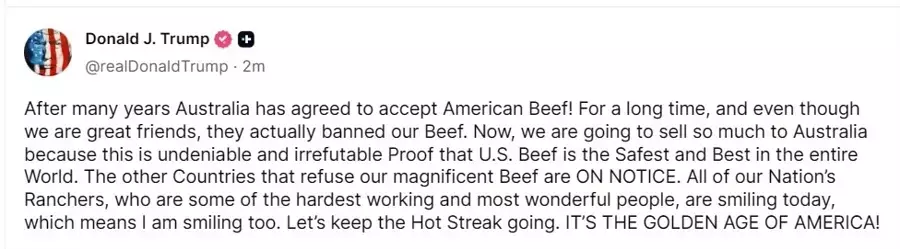

The announcement by former President Trump regarding Australia's acceptance of American beef was a key moment, emphasizing the potential for increased bilateral trade. For many years, Australia had maintained a strict ban on U.S. beef, citing concerns related to biosecurity. This restriction had been a point of contention, especially given the otherwise friendly and robust relationship between the two countries. The recent agreement paves the way for substantial growth in U.S. beef exports to Australia, transforming a previously closed market into a lucrative opportunity for American producers.
While the beef import agreement marks a positive step, the broader economic dialogue between the U.S. and Australia includes ongoing discussions about U.S.-imposed tariffs. A 10% tariff rate is reportedly on the horizon for Australian products entering the U.S. market. In response to this, Australian Prime Minister Albanese has taken a firm stance against retaliatory tariffs. His administration believes that imposing tariffs on U.S. imports would inevitably lead to undesirable inflation within Australia, a consequence they are determined to avoid. This strategic decision underscores Australia's commitment to managing its domestic economy while navigating the complexities of global trade policies.
The reintroduction of American beef into Australia's market signifies a strengthening of economic ties, reflecting a mutual interest in fostering deeper trade relationships. Despite the looming presence of U.S. tariffs, Australia's measured response highlights a pragmatic approach to international trade, balancing economic partnership with domestic stability concerns. This development reinforces the dynamic nature of global commerce, where long-held trade barriers can be dismantled, opening new avenues for mutual economic benefit.