US Small Business Optimism Softens in June
The latest data from the National Federation of Independent Business (NFIB) reveals a slight cooling in sentiment among American small businesses during June. While overall optimism held steady, some underlying factors suggest ongoing challenges. Notably, a rise in businesses reporting surplus inventory played a significant role in the index's modest decline. Furthermore, the persistent burden of taxation continues to weigh heavily on entrepreneurs, highlighting a key area of concern within the small business sector.
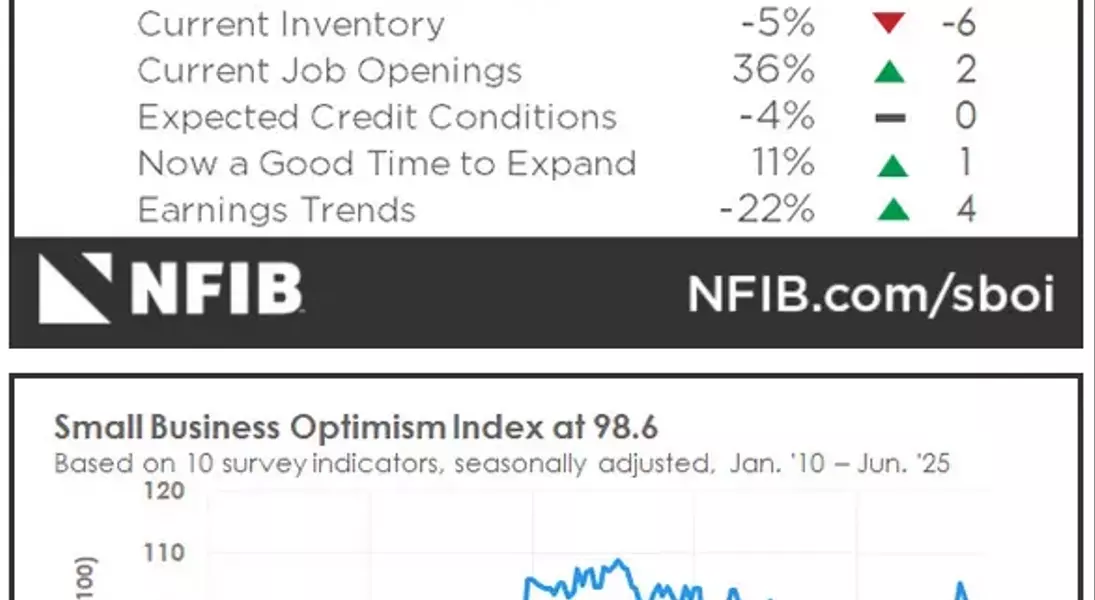
This nuanced picture indicates that while businesses are not experiencing a sharp downturn in confidence, they are navigating a complex economic landscape marked by inventory management issues and persistent tax-related pressures. The report offers valuable insights into the operational realities faced by the nation's smaller enterprises, providing context for economic observers and policymakers alike.
Understanding the Shifting Landscape of Small Business Confidence
The NFIB Small Business Optimism Index for June recorded a figure of 98.6, narrowly missing the projected 98.7. This marginal decline reflects a delicate balance in the small business environment. A primary contributor to this softness was a substantial increase in the number of respondents indicating an oversupply of their products or services. This accumulation of excess inventories suggests potential shifts in consumer demand or supply chain dynamics, impacting the operational efficiency and financial outlook of these businesses. Despite this, the Uncertainty Index, a measure of general economic apprehension, showed a positive trend, decreasing by five points to a reading of 89. This reduction in uncertainty could imply a clearer, albeit still challenging, path forward for many.
The persistently high concern over taxation is a critical takeaway from the June report. A significant 19% of small business owners identified taxes as their single most pressing issue, a slight increase from May and a level not witnessed since July 2021. This highlights an enduring financial burden on small enterprises. NFIB Chief Economist Bill Dunkelberg commented on the report, noting the stable level of optimism tempered by a drop in uncertainty. He emphasized that while taxes remain a paramount issue, many businesses are also contending with difficulties in securing skilled labor and managing elevated labor costs. This multifaceted set of challenges underscores the complex economic environment in which small businesses operate.
Key Challenges and Stable Optimism
Small business owners in the United States continue to grapple with several significant headwinds, even as their overall optimism maintains a relatively stable footing. The primary factors contributing to the slight dip in the NFIB Small Business Optimism Index in June were centered on inventory management and the ongoing pressure of taxation. The unexpected build-up of excess inventories indicates that many businesses may be facing either softer demand than anticipated or efficiencies in their supply chains leading to overstocking. This situation can tie up capital and lead to increased carrying costs, directly impacting profitability and future investment decisions for small firms. The data suggests that while these businesses are not losing hope, they are certainly becoming more cautious about their stock levels.
Beyond inventory, the fiscal policies remain a contentious point for a substantial portion of the small business community. The fact that nearly one-fifth of business owners consistently rank taxes as their most significant problem underscores a deep-seated concern that has lingered for some time. This level of tax-related anxiety points to a desire for greater fiscal clarity and potentially reduced tax burdens to foster growth and stability. While the Uncertainty Index showed a welcome decline, suggesting some clarity in the economic outlook, the twin challenges of inventory management and the pervasive impact of taxes, coupled with concerns about labor quality and costs, continue to shape the operational landscape for small businesses. These issues collectively represent critical areas that warrant attention for the sustained health and growth of this vital economic sector.