Anticipating the US CPI Report: Potential Market Volatility Ahead
The United States is on the brink of a pivotal economic revelation with the impending release of the Consumer Price Index (CPI) report next Tuesday, July 15, at 8:30 AM US Eastern Time (12:30 GMT). This critical indicator is widely anticipated to show a notable uptick in inflation, specifically with the core CPI projected to hit levels not seen since January. Financial institutions like TD Securities and Bank of America concur with consensus forecasts, predicting a monthly rise of 0.3% for core inflation.
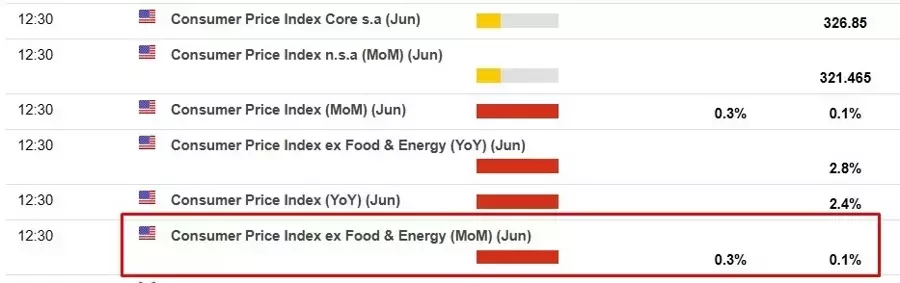
Economists are closely monitoring various components of the inflation data. Projections suggest an acceleration in goods prices for June, partly attributed to the potential pass-through effects of recent tariffs. Furthermore, the services sector is not expected to mitigate this upward pressure. The headline annual CPI is also forecast to reach 2.7%. The crucial aspect to observe in this upcoming report is the breadth of inflationary pressures across different sectors. A widespread increase in prices could signal significant shifts in the economic landscape, potentially driving bond yields higher for unfavorable reasons and reducing the likelihood of aggressive rate cuts by the Federal Reserve. Such a scenario could cascade into the equity markets, leading to considerable volatility.
The confluence of rising inflation and the specter of substantial tariffs could create a challenging environment for financial markets. The overall impact on bonds, interest rate policy, and stock valuations hinges on the comprehensive nature of the inflation figures. Investors and policymakers alike will be scrutinizing the data to gauge the path of future monetary policy and its broader implications for economic stability. Understanding these dynamics is essential for navigating the complex interplay between inflation, trade policies, and market sentiment, ultimately fostering a more informed and resilient economic outlook.