Bank of Canada Survey Reveals Lingering Business Uncertainty Amidst Tariff Concerns
The Bank of Canada's most recent Business Outlook Survey, spanning the second quarter, paints a complex picture of the nation's economic landscape. While there's a discernible easing in the direct impacts of international trade duties on corporate forecasts compared to the previous quarter, a persistent cloud of uncertainty continues to heavily weigh on the overall business environment. This prevailing sentiment is influencing strategic decisions, with many enterprises signaling intentions to sustain current employment figures and restrict capital expenditures predominantly to routine maintenance activities over the coming year. This cautious approach underscores an underlying apprehension within the Canadian business community, as they navigate an evolving global economic climate.
Key findings from the survey indicate a marginal shift in the Business Survey Indicator, moving from -2.12 in Q1 to -2.42 in Q2 (after a revision from -2.14). This suggests a slight deterioration in overall business confidence. Interestingly, the proportion of companies expressing concern over the most pessimistic tariff scenarios has diminished. However, the broader issue of trade barriers and the resultant unpredictability remain significant determinants of business prospects. This ongoing apprehension is reflected in workforce and investment strategies, as firms prioritize stability amidst fluctuating conditions. The survey also revealed that a significant portion of businesses, approximately 23%, expect inflation to exceed 3% over the next two years, a figure consistent with the first quarter's projections. Furthermore, 43% of firms foresee a reduction in labor costs over the next year, while only 9% anticipate an increase, pointing towards potential shifts in employment dynamics.
From the consumer perspective, the survey highlights an uptick in inflation expectations for the next five years, rising to 3.45% from 3.39% in the first quarter. This suggests a growing public concern regarding future purchasing power. Encouragingly, the percentage of firms reporting a decline in sales over the preceding twelve months decreased from 28% in Q1 to 24% in Q2. Similarly, the proportion of companies expecting Canada to enter a recession within the next year saw a reduction, dropping from 32% to 28%. Despite these improvements, the balance of opinion regarding future sales indicators experienced a notable decline, moving from a positive +22 in Q1 to -6, indicating a more tempered outlook for sales growth ahead.
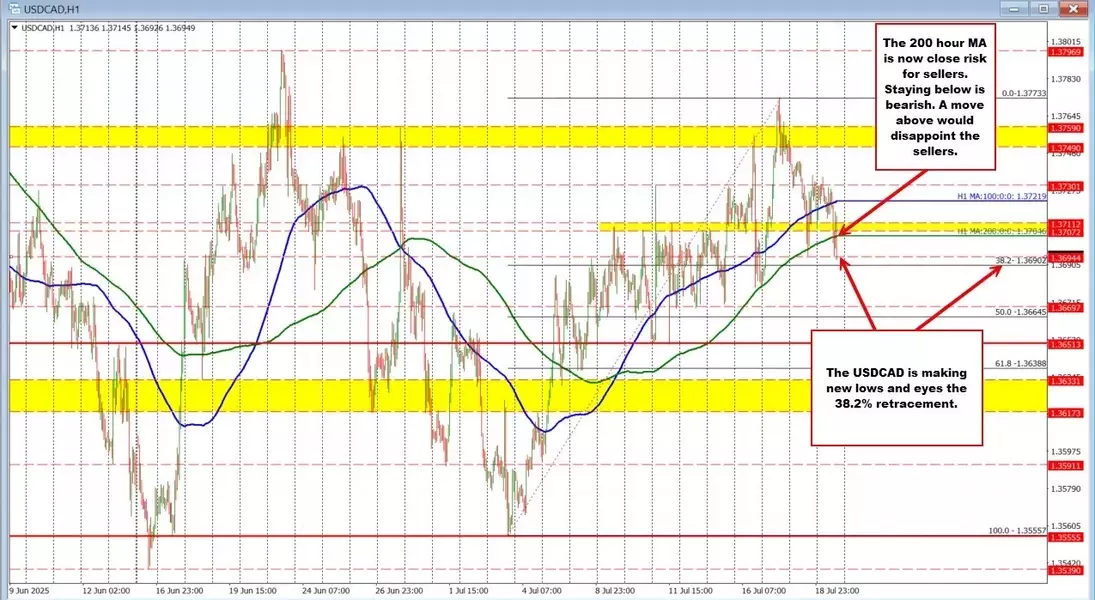
Concurrently, an analysis of the USDCAD currency pair reveals recent downward momentum, with the price dipping below its 200-hour moving average at 1.37846. This decline momentarily stabilized near Friday's low of 1.3695 before experiencing fluctuations above and below the moving average. As the downside pressure resumed, establishing a new low, attention turned to the 38.2% retracement level of the July trading range, situated at 1.36902. A sustained move below this level could signal further depreciation for the Canadian dollar. The 200-hour moving average now stands as a critical risk threshold for market participants, with a breach above it potentially deterring sellers.
In sum, the latest Bank of Canada survey underscores a period of continued economic adjustment, where businesses are adapting to ongoing global trade uncertainties. While some immediate anxieties around tariffs have lessened, a cautious stance on investment and employment prevails. Consumer inflation expectations are on the rise, and while sales and recession fears show some signs of receding, the overall sentiment regarding future growth remains tempered. These micro and macroeconomic indicators collectively shape the evolving financial landscape, urging a vigilant approach from policymakers and market participants alike.