Crude Oil Futures Experience Slight Decline Amidst Market Indecision
Crude oil futures recently recorded a marginal reduction in value, closing at $65.16, a decline of $0.87 for the session. This minor downward shift comes amidst a period of considerable market indecisiveness, where prices have repeatedly tested but ultimately bounced back from critical support levels. The inability of selling pressure to sustain momentum below key technical indicators suggests a cautious sentiment pervades the market, with neither buyers nor sellers establishing a definitive advantage. Investors are closely monitoring these price dynamics for clearer signals on future trends.
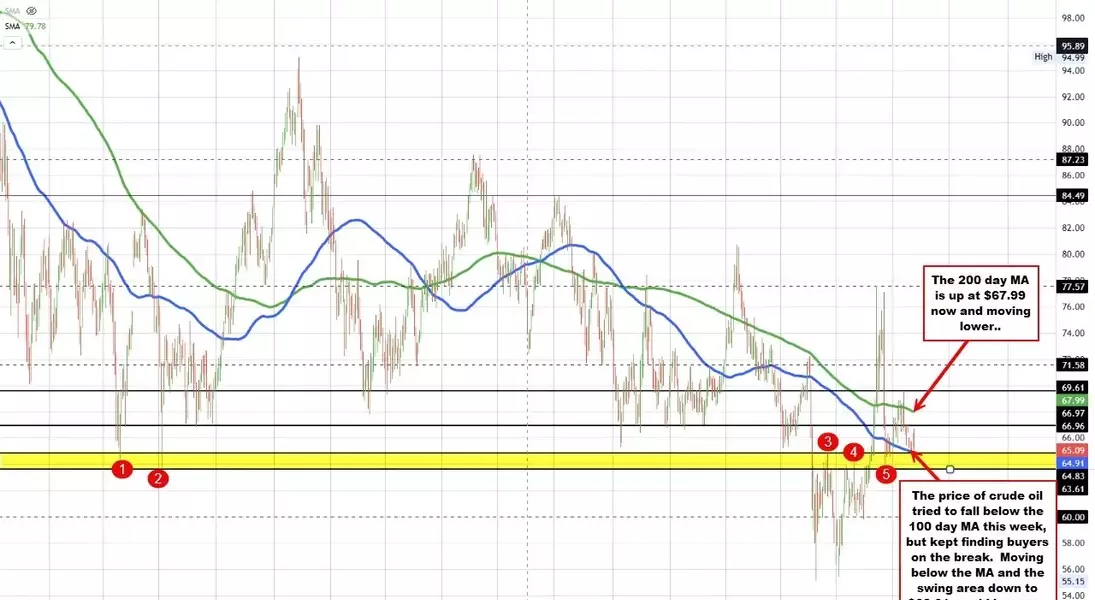
The market's immediate trajectory for crude oil appears to be at a crossroads, with traders keenly observing how prices interact with established technical thresholds. A sustained breach below the 100-day moving average could intensify selling pressure, paving the way for further declines. Conversely, a firm hold above this level, coupled with a move past immediate resistance, would indicate renewed buying interest. The upcoming trading period is therefore poised to be crucial in determining the near-term direction of crude oil prices, reflecting ongoing tensions between supply concerns and demand outlooks.
Understanding Recent Price Movements in Crude Oil
Crude oil futures settled at $65.16, experiencing a daily reduction of $0.87. This recent price action highlights a prevailing state of uncertainty within the crude oil market. Over the past week, the commodity's value has periodically slipped beneath its 100-day moving average, a significant technical indicator often watched by traders. However, each time the price dipped, it quickly recovered, closing above this benchmark. This consistent recovery indicates that despite transient bearish sentiments, there is no strong, sustained downward pressure on crude oil prices. The market is demonstrating resilience, preventing any definitive break lower and suggesting that sellers have not yet gained firm control.
The current behavior of crude oil prices suggests a delicate balance between supply and demand forces, with neither side able to assert prolonged dominance. The repeated rebounds from below the 100-day moving average illustrate a market that is not yet ready for a deeper correction. This pattern can be attributed to various underlying factors, including geopolitical developments, inventory reports, and global economic indicators that collectively influence investor confidence and trading strategies. For the market to adopt a clearer bearish bias, a more decisive and sustained push below critical support levels would be required, reflecting a fundamental shift in market sentiment or a significant change in supply-demand dynamics.
Key Technical Levels and Future Outlook
Looking ahead into the new trading period, the onus is on sellers to decisively push crude oil prices below and maintain them under the 100-day moving average. This action would be crucial in signaling an increased bearish inclination. A failure to do so, especially if prices continue to rebound, suggests that the current weakness is merely transient. Furthermore, a breach below the critical swing area low of $63.61 would provide substantial confirmation for downside momentum, significantly boosting seller confidence and potentially leading to more pronounced declines in value. Conversely, a sustained inability to break these levels might prompt a re-evaluation of market direction.
On the upside, market participants are closely watching the resistance point at $66.96. A successful surge past this level could open the door for further gains, potentially targeting the 200-day moving average, which currently stands at $67.99. Overcoming this resistance would imply a shift in market control towards buyers, indicating a strengthening of the bullish trend. The interplay between these support and resistance levels, combined with the market's response to the moving averages, will be instrumental in shaping crude oil's short-to-medium-term trajectory. Traders will be scrutinizing these technical benchmarks for clear indications of either a continued consolidation, a renewed uptrend, or a sustained downturn in prices.