ECB Expected to Maintain Interest Rates Amidst Economic Uncertainties
Navigating Uncertainty: The ECB's Stance on Monetary Stability
The European Central Bank's Policy Pause
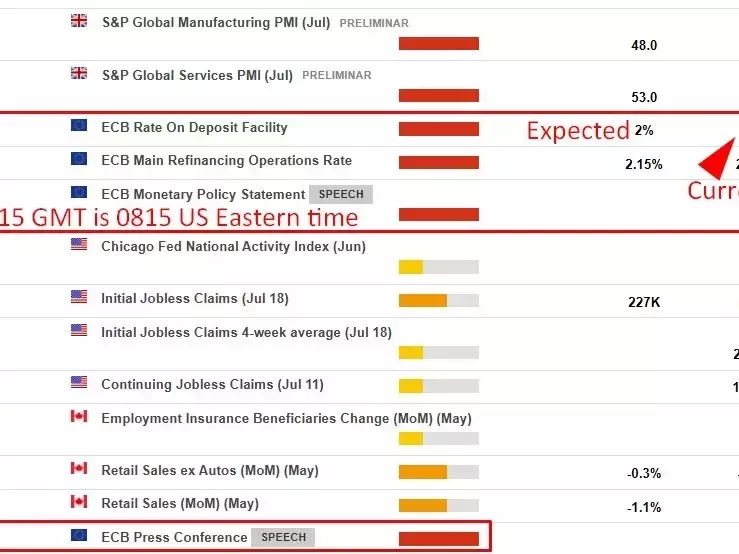
The European Central Bank is set to announce its latest monetary policy decision today, Thursday, July 24, 2025, and market observers widely anticipate a period of stability, with interest rates remaining at their current levels. This expected pause marks a significant shift after a year characterized by consecutive rate cuts, as the ECB adopts a watchful approach to global economic developments.
Economic Headwinds and Trade Tensions
A primary factor influencing the ECB's current cautious outlook is the ongoing uncertainty surrounding U.S.-EU trade negotiations. With inflation successfully brought back to the targeted 2% level and economic growth remaining somewhat fragile, policymakers are opting for a "wait-and-see" strategy. This prudence is particularly pertinent as a deadline approaches, potentially introducing new U.S. tariffs. The specter of a substantial 30% tariff from the U.S. administration complicates the economic forecast, necessitating a reevaluation of both growth projections and inflation risks within the Eurozone.
The Tariff Conundrum and Future Rate Prospects
Although there are indications that an agreement on a more moderate 15% tariff might be reached between Washington and Brussels, the overall environment remains highly uncertain. Economic analysts suggest that even a less severe tariff imposition could justify a further rate reduction later in the year, possibly in December. Historical trade agreements, such as those with Japan and the UK, have established varying tariff structures, intensifying concerns that any new EU tariffs could be more impactful and disruptive than initially projected.
Resilience Amidst External Pressures: The Eurozone's Economic Landscape
Despite the considerable external challenges, certain sectors of the Eurozone economy demonstrate notable resilience. There has been an observable increase in loan demand, equity markets continue to exhibit strength, and the bloc has attracted foreign investment, partly due to investor caution regarding U.S. policy volatility. However, the appreciating value of the euro, driven in part by this influx of capital, poses its own set of challenges for the ECB. A stronger euro could potentially undermine export competitiveness and exert downward pressure on inflation. While some central bank officials advocate for a measured response, ECB President Christine Lagarde is expected to address these risks and reaffirm the bank's readiness to intervene should inflationary pressures further diminish.