The Enduring Value of Hard Assets: A Historical Perspective on Currency Performance
Navigating the Tides of Time: Why Long-Term Investment Demands Tangible Safeguards
A Deep Dive into Currency Trends Since 1971: The Unwavering Strength of the Swiss Franc
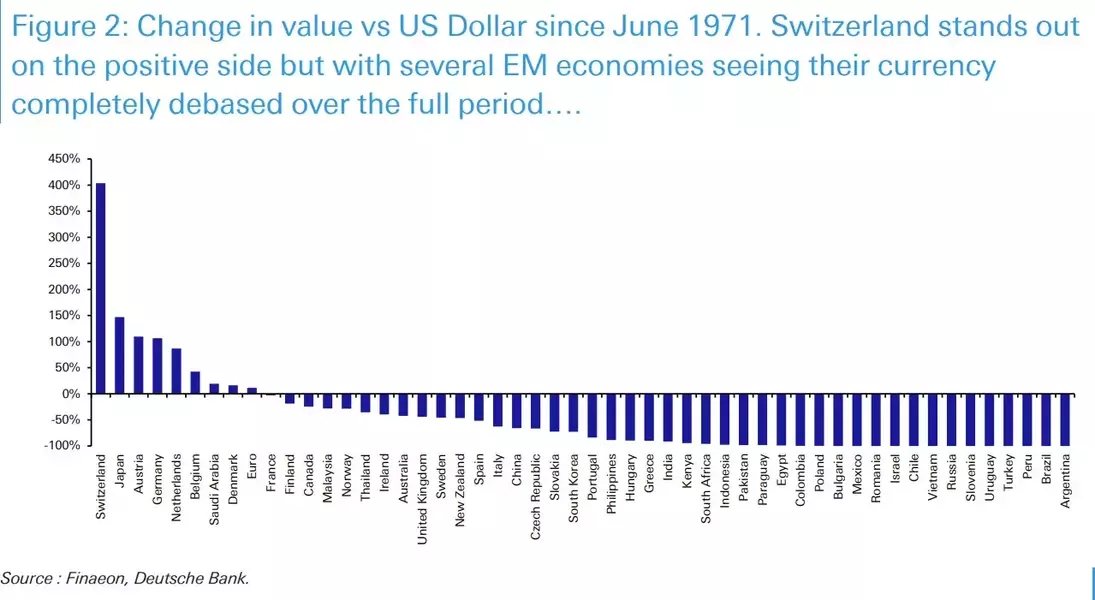
A recent chart from Deutsche Bank offers a compelling overview of currency movements since 1971, immediately drawing attention to the exceptional performance of the Swiss franc. This resilience, as illuminated by Deutsche Bank, stems primarily from the Swiss National Bank's constitutional directive until 1999 to maintain a minimum of 40% of its reserves in gold. Even after this mandate was lifted, the SNB has continued to hold substantial gold reserves. This unique policy stands in stark contrast to most other economies, though Germany's Bundesbank also holds a significant gold reserve, a factor that historically contributed to the Deutschmark's strength, low inflation, and robust purchasing power parity between 1971 and the advent of the Euro.
The Dollar's Dominance and the Fall of Fiat: A Landscape of Depreciation
Despite the United States' departure from the gold standard during this period, surprisingly few currencies have managed to outperform the US dollar. Only Japan and the strongest economies within the eurozone, which underwent a singular transition to the Euro, have shown superior performance. However, the most striking revelation from this analysis is the widespread collapse of numerous other currencies listed. While this compilation isn't exhaustive and excludes extreme cases of hyperinflation, even among economies considered relatively stable, approximately half have witnessed their currencies effectively diminish to zero value over time.
Protecting Future Wealth: The Imperative of Hard Assets
For investors with a horizon extending over five decades, these historical patterns present a clear mandate: incorporating hard assets or other secure stores of value into investment portfolios is not merely an option but a necessity. The data vividly illustrates the long-term erosion of purchasing power for fiat currencies. As a stark example, the US dollar has depreciated by approximately 98% against gold since August 1971, when gold was valued at $35 per ounce. More recently, since October 2022, the dollar has lost 50% of its value against the precious metal. This persistent decline underscores the critical role of assets like gold in preserving wealth against inflationary pressures and economic volatility over the long haul.