Federal Reserve Divided on Rate Cuts Amidst Tariff Impact
A significant divergence of opinion is emerging within the Federal Reserve concerning the trajectory of inflation and the opportune moment for adjusting interest rates. This internal debate has been considerably influenced by the recent tariff increases, which present a challenging scenario for policymakers balancing the risks of escalating prices against the potential for an economic slowdown. The central bank faces a delicate balancing act as it navigates these conflicting economic signals.
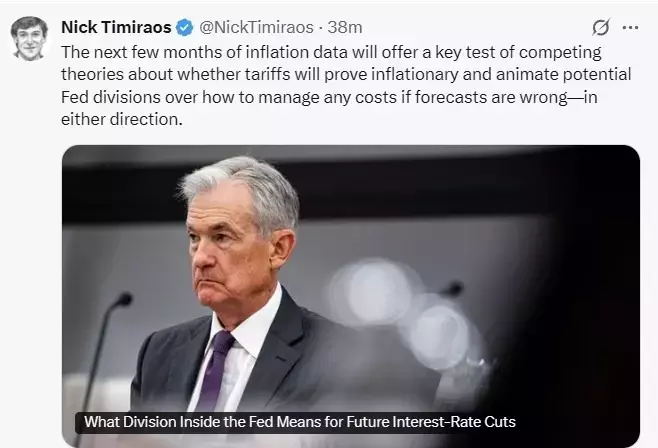
Despite the prevailing uncertainty, Federal Reserve Chairman Jerome Powell has articulated a more accommodative stance on future rate adjustments. He suggests that the criteria for implementing rate cuts may now be less stringent than earlier in the year, particularly if clear indicators of diminishing inflation or a softening job market become apparent. Although an immediate rate reduction is not anticipated at the forthcoming meeting, Powell has outlined conditions under which such cuts could materialize by late summer, signaling a proactive approach to economic management without necessitating a severe downturn.
The unexpected imposition of tariffs in April significantly altered the Federal Reserve's previously laid plans for resuming interest rate reductions. This policy shift has fueled anxieties about the prospect of stagflation, an undesirable economic state characterized by persistent inflation coupled with stagnant demand and high unemployment. In such an economic climate, central bank officials would require more unequivocal evidence of economic cooling to ensure that any inflationary surge is merely transient, thereby guiding their decisions on monetary policy.
In the face of these intricate economic challenges, the Federal Reserve's commitment to maintaining financial stability and fostering sustainable growth remains paramount. The ongoing deliberation highlights the dynamic nature of economic policy, where leaders must adapt to evolving circumstances and make informed decisions that serve the broader public interest. It is a testament to the resilience and adaptability required to navigate complex global economic landscapes, ultimately striving for a prosperous and equitable future for all.