GBPUSD Continues its Downward Trajectory
The GBPUSD currency pair is currently undergoing a significant bearish trend, consistently moving lower. This downward trajectory is taking the pair closer to key technical support levels, specifically targeting the 61.8% Fibonacci retracement of its June trading range. This movement reflects a broader strengthening of the US Dollar across various major currencies, primarily fueled by market apprehensions regarding inflationary pressures that could arise from recently imposed tariffs. Concurrently, US bond yields, particularly those of the 30-year and 10-year Treasury bonds, are witnessing an upward surge, with the 30-year yield nearing the critical 5% threshold. This confluence of factors paints a clear picture of prevailing market sentiment, emphasizing a shift towards the safety and strength of the US Dollar amidst growing economic uncertainties.
Detailed Analysis of GBPUSD's Decline and Market Influences
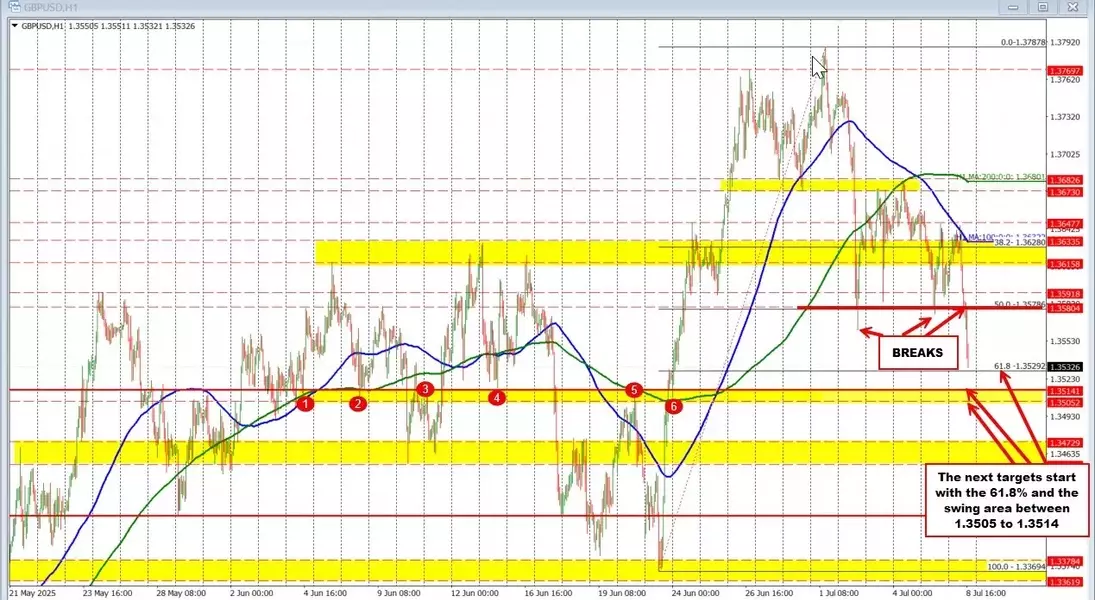
As of Tuesday, July 8, 2025, at approximately 14:15 GMT, the GBPUSD exchange rate continued its noticeable slide, positioning itself perilously close to the 61.8% retracement level of its trading activity throughout June. This pivotal technical level is precisely situated at 1.35292. At the time of observation, the currency pair was hovering just above this mark at 1.3533. Should the price breach this immediate support, the next significant areas of interest for traders would be the swing zone between 1.3505 and 1.3514, indicating further potential for depreciation.
From a technical standpoint, the GBPUSD has decisively broken below several crucial previous support points. These include the 50% midpoint of its June trading range, located at 1.35786, the low recorded yesterday, July 7, 2025, at 1.3574, and the low from the preceding week, established at 1.3561. This sustained breach of established support lines underscores the prevailing bearish momentum.
A significant driver behind the US Dollar's robust performance against the British Pound, and indeed all other major currencies in the US session, is the escalating concern among market participants regarding the inflationary implications of recently implemented tariffs. This apprehension is palpably reflected in the bond market. The yield on the 30-year US Treasury bond, for instance, is making a determined ascent towards the psychological 5% mark, last observed at 4.957%. This represents a notable increase from its low of 4.733% just last week. Similarly, the 10-year Treasury yield, currently at 4.423%, has climbed by 2.8 basis points, recovering from its session low of 4.187% recorded last week. These rising yields are indicative of investors demanding higher returns for holding US debt, largely due to inflation worries, which in turn bolsters the appeal of the US Dollar.
This evolving scenario prompts a crucial reflection on the interplay between global trade policies, inflation expectations, and currency valuations. The current downward pressure on GBPUSD serves as a stark reminder of how interconnected these economic variables are. For investors and market observers, the immediate future necessitates a vigilant eye on upcoming economic data releases, particularly those related to inflation, and any further developments in international trade relations. The sustained strength of the US Dollar, underpinned by rising yields and tariff-induced inflation fears, could signal a period of significant volatility and shifts in global currency dynamics. This situation highlights the importance of adaptive trading strategies and a deep understanding of macroeconomic forces at play to navigate the complexities of the foreign exchange market.