Gold Price Action Remains Confined Despite Economic Data
Gold's market performance currently displays a persistent adherence to a significant upward trendline, indicating a continued range-bound movement. This stability prevails despite recent economic indicators, specifically lower-than-expected Core CPI and Core PPI figures, which surprisingly failed to stimulate an upward surge in gold prices. This unexpected lack of reaction to inflation data suggests that market participants may be focusing on alternative influences affecting gold's valuation. Looking at the broader economic landscape, gold is generally poised for an upward trajectory. This is largely predicated on the anticipation of declining real yields, a likely consequence of the Federal Reserve's potential move towards monetary easing. However, any reassessment of interest rate cut expectations towards a more hawkish stance could introduce short-term downward adjustments in gold's price.
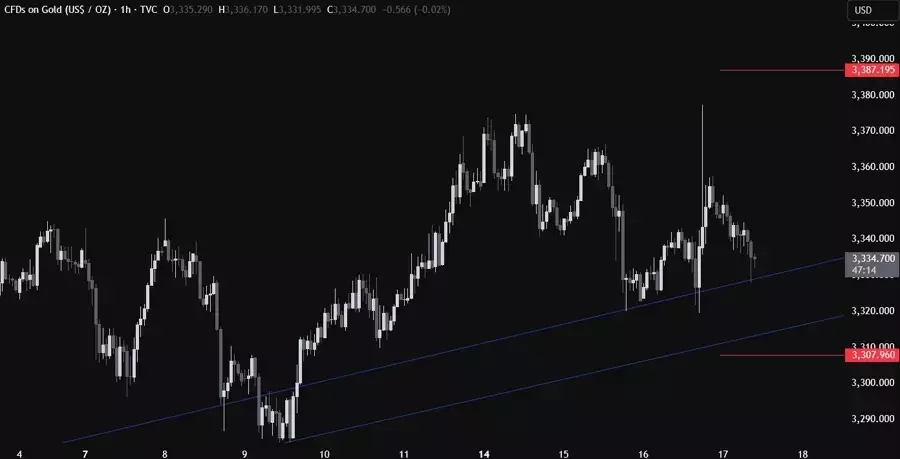
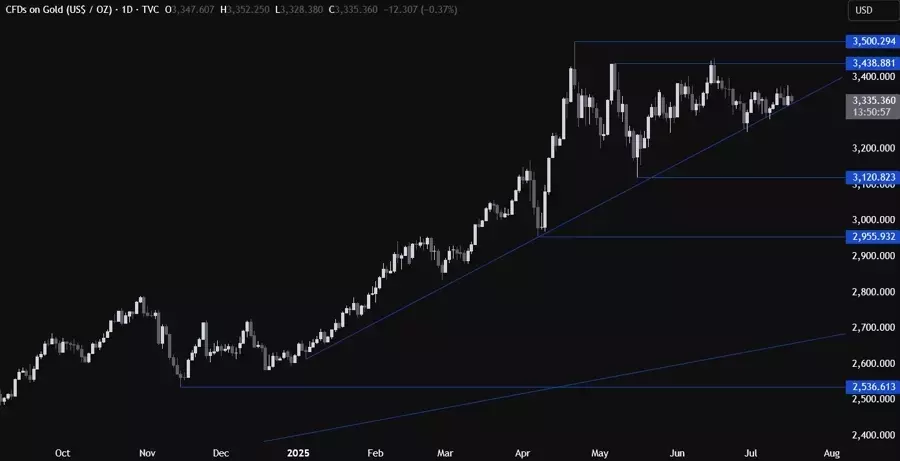
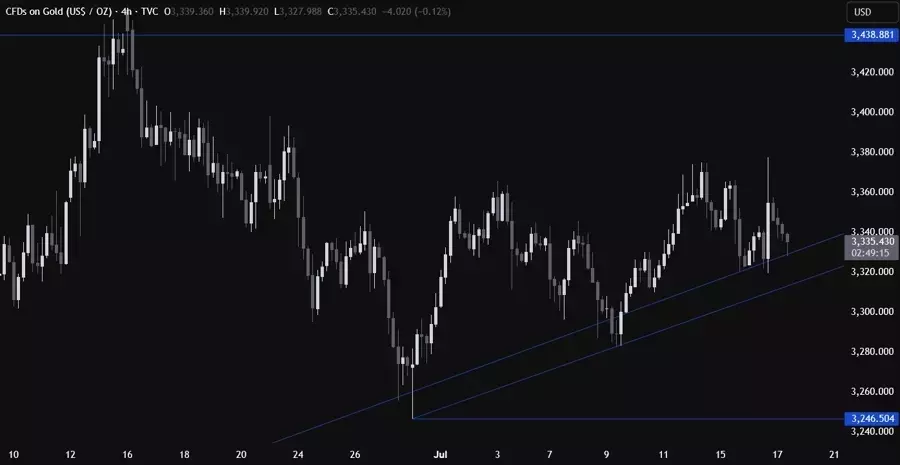
From a technical standpoint, gold's daily chart reveals its repeated return to the major upward trendline. This particular level is critical, as it typically prompts buyers to enter the market, establishing a defined risk tolerance just below the trendline, with aspirations of pushing prices towards the 3438 resistance level. Conversely, sellers are likely to intensify their positions if gold breaks below this trendline, aiming for the 3120 mark. Delving into a shorter four-hour timeframe, an additional minor trendline can be identified by connecting recent swing lows. There is a possibility that gold could test this minor trendline before a rebound, a scenario buyers should be mindful of. For sellers, a definitive break below this minor trendline would signal a confirmation of further declines. On the one-hour chart, the patterns echo these observations; buyers are seeking opportunities to purchase during dips around these trendlines, while sellers are poised to capitalize on any breakouts. The red lines delineated on this chart represent the average daily range for current trading sessions.
The intricate dance between fundamental economic data and technical market patterns underscores the complexity of gold's current positioning. As investors and traders navigate this period of consolidation, maintaining vigilance over both macroeconomic shifts and specific chart indicators will be paramount. The evolving economic landscape, combined with the technical thresholds, presents a dynamic environment where informed decision-making is key to discerning future market directions. This constant interplay of forces highlights the fluid nature of financial markets and the ongoing need for adaptive strategies.