New Zealand Central Bank Maintains Interest Rates Amidst Economic Uncertainty
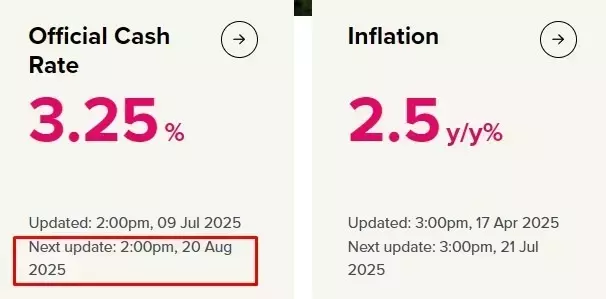
The Reserve Bank of New Zealand (RBNZ) recently announced its decision to maintain the Official Cash Rate (OCR) at 3.25%, aligning with widespread market expectations. This holds signals a cautious approach by the central bank as it grapples with a multifaceted economic environment. While there are clear indications of easing domestic inflationary pressures and an anticipated return of consumer price inflation to the target range, the global economic outlook remains shrouded in considerable uncertainty, primarily due to the ongoing implications of trade protectionism and tariffs. The RBNZ’s Monetary Policy Committee is closely observing key economic indicators and global developments to determine the appropriate timing for any future adjustments to monetary policy, with a potential bias towards further easing if inflation continues to recede as projected.
New Zealand's Central Bank Holds Steady on Rates Amidst Global Headwinds
On a significant Wednesday, July 9, 2025, the Reserve Bank of New Zealand confirmed its decision to hold the Official Cash Rate (OCR) at 3.25%. This key announcement was made by the RBNZ's Monetary Policy Committee, following a detailed assessment of both domestic and international economic conditions. The committee's deliberation centered on the delicate balance between receding internal inflation and the unpredictable global economic climate. They anticipate that annual consumer price inflation will likely inch towards the upper boundary of their 1 to 3 percent target band by mid-2025, eventually settling around the 2 percent mark by early 2026, thanks to existing productive capacity and declining domestic price pressures.
However, discussions within the committee revealed a high degree of uncertainty, specifically noting the potential for global growth to decelerate in the latter half of 2025, largely influenced by the unknown consequences of recent tariff implementations. This international trade friction is expected to temper New Zealand's economic recovery, thereby dampening inflationary forces. While some committee members pondered the merits of an immediate 25-basis-point rate cut to 3 percent to bolster economic activity, the prevailing sentiment favored waiting until August. This delay allows for further data collection on the pace of New Zealand's economic rebound, the persistence of inflation, and the full impact of tariffs, thereby providing a clearer picture for future policy interventions. Domestic financial conditions, fortunately, are evolving as anticipated, yet the external risks remain notably elevated.
Following this pivotal decision, no press conference was held, leaving financial observers to interpret the detailed minutes released by the central bank.
From a journalist's perspective, this decision by the Reserve Bank of New Zealand underscores the complex tightrope central banks must walk in an interconnected global economy. It highlights a critical lesson: even with robust internal economic management, external factors like trade policies can significantly influence monetary policy decisions. The RBNZ's cautious stance, prioritizing observation over immediate action in the face of global uncertainty, suggests a prudent and adaptable approach. It reminds us that in today's volatile world, foresight and flexibility are paramount for economic stability. For readers, this serves as a potent reminder that our daily lives, from prices at the supermarket to job market stability, are increasingly intertwined with global trade dynamics and the strategic decisions made by central financial institutions.