Nvidia's Future: Analyst Insights Before GTC 2026
Unlocking Nvidia's Potential: A Deep Dive into Future Growth and Valuation
Anticipating GTC 2026: What Analysts Are Focused On for Nvidia
Nvidia is gearing up for its annual GTC conference in March 2026, an event eagerly watched by financial analysts. Ahead of this significant industry gathering, experts are particularly interested in specific developments that could shape the company's trajectory and, consequently, its stock performance. Bank of America Securities (BofA), maintaining a positive stance with a 'Buy' rating and a $300 price target, has outlined three core areas that investors should monitor closely.
The Next Generation of AI Power: Unveiling Feynman GPU Pipeline
A primary point of interest for analysts is the impending updates regarding Nvidia's Feynman GPU product pipeline, with expectations pointing towards a potential release in 2028. This next-generation graphical processing unit is anticipated to further solidify Nvidia's dominance in high-performance computing and artificial intelligence, showcasing the company's relentless pursuit of innovation.
Enhancing AI Performance: Progress in Low-Latency and Inference Solutions
Another crucial area under observation is Nvidia's advancements in developing solutions for low-latency and inference requirements. These capabilities are vital for real-time AI applications and efficient data processing, underscoring the company's commitment to delivering cutting-edge technology that meets the evolving demands of the AI ecosystem.
Connecting the Future: Innovations in Networking and Quantum Computing
Beyond GPUs, analysts are also keen on understanding Nvidia's progress in networking and quantum computing. These sectors represent new frontiers for technological innovation, and any significant announcements or breakthroughs from Nvidia in these areas could unlock substantial future growth opportunities. The potential for a joint announcement with Intel regarding a custom CPU also adds an intriguing dimension to Nvidia's forward-looking strategy.
Financial Health and Market Position: A Closer Look at Nvidia's Valuation
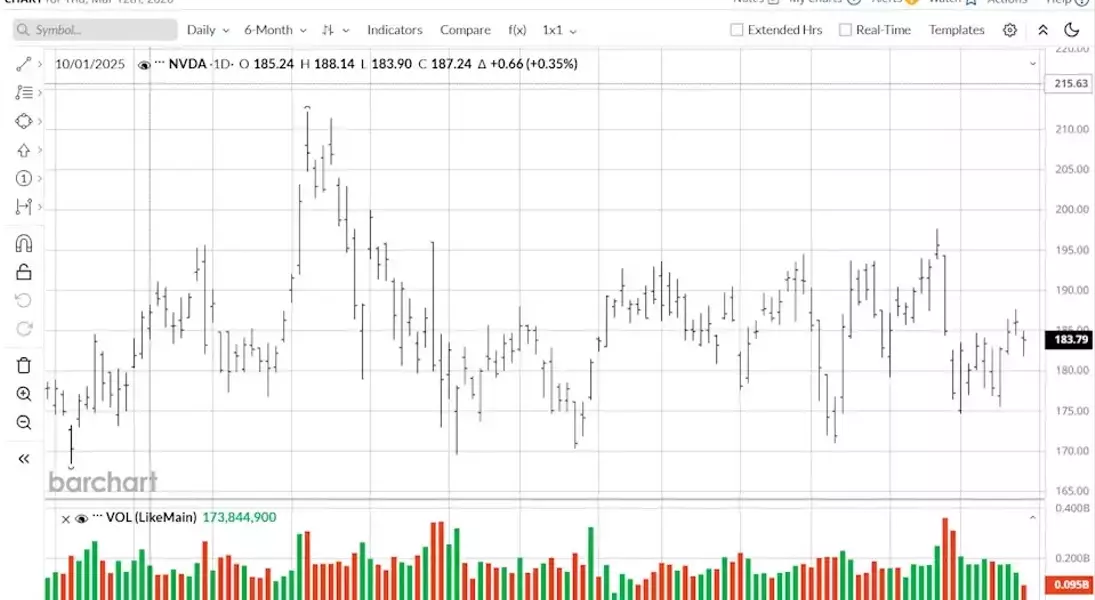
Despite a period of relatively stagnant stock performance over the past six months, Nvidia's underlying financial metrics present a compelling investment case. The company's Price/Earnings to Growth (PEG) ratio has remained below 1x for two consecutive quarters, indicating that the stock may be undervalued relative to its future earnings potential. Furthermore, its price-to-book ratio has seen a significant reduction, suggesting an increasingly attractive valuation for investors.
Robust Financial Footing: Cash Reserves and Debt Management
Nvidia boasts an impressive financial foundation, with a substantial cash reserve of $62.56 billion. This robust liquidity, coupled with a remarkably low debt-to-equity ratio of 7.25%, provides the company with ample flexibility to fund extensive research and development initiatives and fuel growth without straining its balance sheet. Such financial prudence, alongside an outstanding return on equity exceeding 100%, highlights Nvidia's operational efficiency and strong profitability.
Exceeding Expectations: Strong Earnings and Future Projections
Nvidia consistently surpasses Wall Street's expectations, as evidenced by its strong Q4 earnings report. The data center segment, driven by the highly successful Blackwell line of GPUs, experienced a remarkable 75% year-over-year revenue growth, now accounting for 91% of total sales. The company's guidance for the first fiscal quarter, projecting $78 billion in revenue, significantly exceeds analyst estimates, further reinforcing confidence in its continued growth trajectory and market leadership in semiconductor technology.