The Trajectory of Tesla: Disruption, Growth, and Future Challenges
Tesla has made a profound impact on the automotive sector, successfully bringing electric vehicles into the mainstream. The company's innovative approach has not only transformed the global car market but has also delivered substantial returns to its investors, who have seen considerable gains despite the inherent volatility of the stock. This success is largely attributed to Tesla's pioneering efforts in sustainable energy and its development of high-performance electric vehicles.
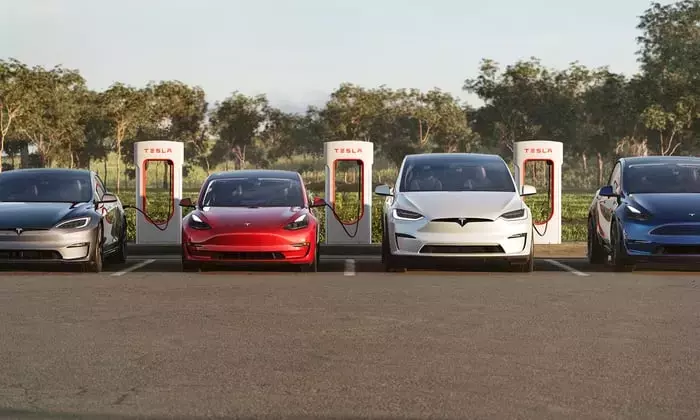
Looking ahead, a significant portion of investor confidence in Tesla is tied to the visionary predictions of its CEO, Elon Musk, particularly concerning autonomous driving and advanced robotics. Many believe these technologies will be the next major catalysts for the company's financial growth. However, despite the impressive historical performance, including a substantial increase in share value over the last five years, the current stock valuation appears to be quite high. This optimism prevails even as the company grapples with a decline in revenue, a shrinking share of the new EV market, and reduced profit margins.
While Tesla's past five-year returns have been remarkable, the path forward may be considerably more challenging. The high expectations reflected in its current stock price, coupled with recent operational struggles, suggest that the company needs to demonstrate flawless execution to justify its valuation. The future success hinges on Tesla's ability to navigate increasing competition and deliver on its ambitious technological promises amidst a more demanding market environment.
Tesla's journey underscores the dynamic nature of innovation and investment. While challenging the status quo can lead to immense rewards, it also brings the responsibility of continuous performance and strategic adaptation. The company's ongoing evolution in the face of market shifts and technological advancements will be a testament to its resilience and its enduring vision for a sustainable future.