UK Inflation Surges Beyond Expectations in June, Raising Rate Cut Doubts
The United Kingdom's economic landscape is currently under scrutiny following the release of June's inflation figures. The Consumer Price Index (CPI) has unexpectedly risen, prompting re-evaluations of potential interest rate adjustments by the central bank. This upward trajectory in inflation, particularly in core and services sectors, signals a robust pricing environment that diverges from earlier market predictions regarding monetary policy easing. The implications are far-reaching, influencing market sentiment and future economic strategies.
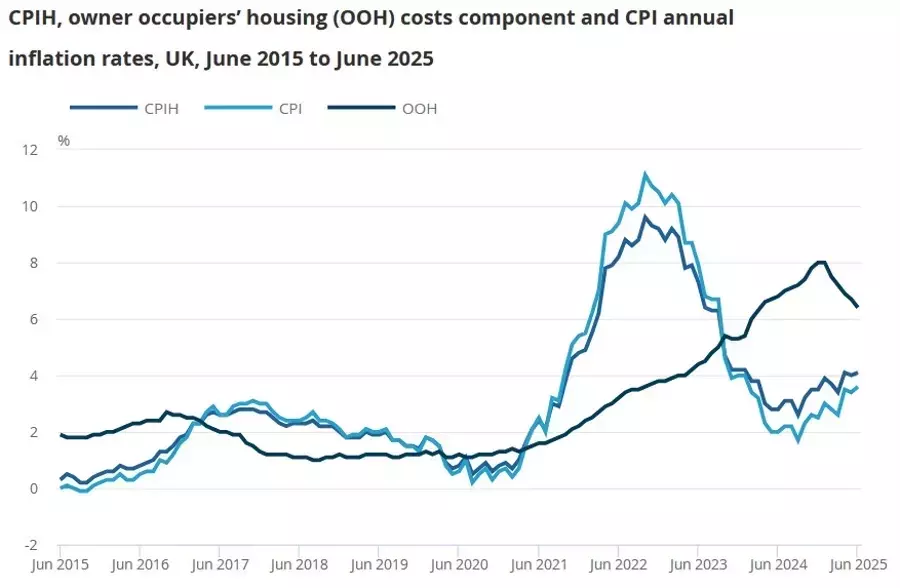
United Kingdom's June Inflation Data Exceeds Forecasts, Challenging Monetary Policy Expectations
On a significant Wednesday, the 16th of July, 2025, fresh economic data emerged from the United Kingdom, sending ripples through financial markets. The Office for National Statistics (ONS) unveiled the Consumer Price Index (CPI) for June, reporting a year-on-year increase of 3.6%. This figure comfortably outpaced the consensus forecast of 3.4%, indicating a hotter-than-anticipated inflationary environment.
Further delving into the specifics, the Core CPI, which excludes volatile items such as energy and food, climbed to 3.7% year-on-year, exceeding the expected 3.5%. Similarly, the Services CPI registered a 4.7% annual rise, slightly above the 4.6% forecast. These metrics collectively paint a picture of persistent price pressures across the British economy, contrasting with the prior month's readings where Core CPI stood at 3.5% and Services CPI was also 4.7%.
Prior to this announcement, market participants had largely priced in a strong probability of significant monetary easing, with expectations leaning towards approximately 53 basis points of rate cuts by the close of the year. The higher-than-expected inflation data, particularly the robust core measure, now presents a formidable challenge to these assumptions. While an interest rate reduction in August might now appear less probable, the underlying market consensus of two rate cuts before the year's end could still materialize across the subsequent three policy meetings.
This development underscores a dynamic interplay between inflationary pressures and central bank policy, with the Bank of England facing a delicate balancing act in managing economic stability. The path forward for UK monetary policy will undoubtedly be shaped by these evolving economic indicators.
As a financial reporter, observing the UK's latest inflation surge offers valuable insights into the complexities of economic forecasting and policymaking. The unexpected strength in core and services inflation highlights that underlying price pressures might be more entrenched than previously assumed by the market. This scenario presents a classic dilemma for central bankers: prioritizing inflation containment versus stimulating economic growth. It serves as a potent reminder that economic data can often defy expectations, requiring constant vigilance and adaptability from both analysts and policymakers. For investors and the general public alike, these shifts underscore the critical importance of understanding macroeconomic indicators and their potential to recalibrate financial landscapes. The coming months will be crucial in determining how the Bank of England navigates this challenging economic terrain.