US Indices Show Mixed Performance Amidst Record Highs and Netflix Correction
U.S. stock markets are experiencing a nuanced trading session, characterized by a blend of upward momentum and slight retractions across major indices. The S&P 500 and NASDAQ have once again demonstrated robust performance, extending their record-setting gains from the previous day. This upward trend highlights continued investor confidence in the technology and broader market sectors. However, the Dow Industrial Average exhibits a minor dip, suggesting a rotation or cautious stance among some investors. Amidst these broader market movements, Netflix's stock is undergoing a significant correction after its recent earnings release, shedding some of its considerable year-to-date gains.
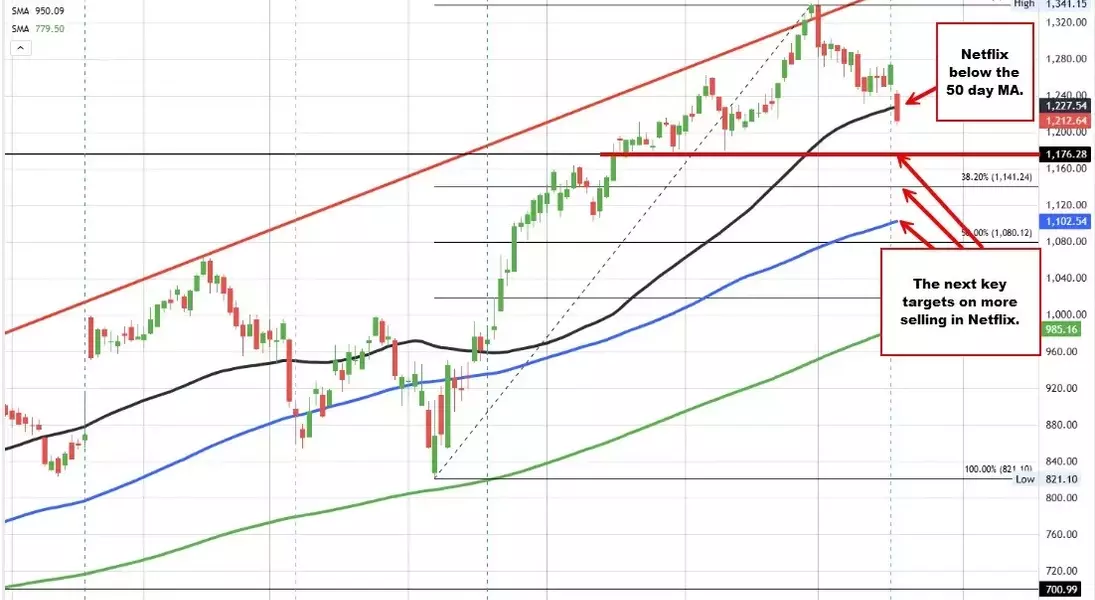
This current market behavior underscores the dynamic interplay of various factors. While some sectors revel in sustained growth, others face revaluation. The divergence in performance among the leading U.S. indices, coupled with the specific challenges faced by individual companies like Netflix post-earnings, reflects a complex market landscape where momentum, value, and sentiment are constantly recalibrating.
Market Open Dynamics
At the outset of trading, U.S. stock markets presented a varied picture, with the NASDAQ and S&P 500 continuing their ascent after closing at unprecedented levels on the preceding day. The technology-heavy NASDAQ posted a gain of 0.32%, while the S&P 500, a broad indicator of market health, rose by 0.20%. In contrast, the Dow Industrial Average, which comprises 30 prominent American companies, saw a modest decline of 0.08%, indicating a slight divergence in performance among the major benchmarks. Adding to the mixed sentiment, the Russell 2000 index, which tracks small-cap companies, enjoyed a positive start, climbing by 0.52%. These early movements reflect a market that, while generally buoyant, is also exhibiting selective strength.
The continued record-breaking performance of the S&P 500 and NASDAQ signals sustained optimism among investors, particularly in growth-oriented and technology sectors. This suggests that despite any minor headwinds, the underlying bullish sentiment remains strong for these segments of the market. The slight pullback in the Dow could be indicative of profit-taking in more established industrial stocks or a reallocation of capital towards higher-growth opportunities. The positive movement in the Russell 2000 points to a broader participation in the market's rally, extending beyond just large-cap tech companies, and potentially reflecting confidence in the domestic economy's smaller enterprises. This intricate opening underscores a market driven by a combination of broad positive momentum and specific sector-by-sector adjustments.
Netflix's Post-Earnings Volatility
Following its latest earnings announcement, Netflix shares experienced a significant downturn, dropping by $60, or 4.71%, to trade at $1213. This decline pushed the stock below its 50-day moving average, positioned at $1227.54, a technical indicator often watched by traders to gauge short-to-medium term trends. The immediate target for further potential declines appears to be a swing area around $1176.28, suggesting that the stock might seek support at that level. Despite this recent dip from its all-time high of $1341.15, it is important to note that Netflix's shares still boast an impressive year-to-date gain of 36.59%. This indicates that a substantial amount of future growth and positive expectations had already been factored into the stock's valuation, leading to the current corrective phase as the market adjusts to the actual earnings results.
The post-earnings correction in Netflix's stock underscores the high expectations placed on high-growth companies. While the company's long-term trajectory might remain positive, the sharp drop suggests that the reported earnings, or perhaps the guidance provided, did not fully meet the elevated anticipations of investors. The retracement from its peak and the breach of its 50-day moving average signify a period of consolidation and re-evaluation. This is a common occurrence for stocks that have experienced rapid appreciation, as market participants reassess fundamentals against an already stretched valuation. Therefore, the current movement in Netflix's stock is less about a fundamental weakness in the company and more about a market correction that aims to align its price more closely with the immediate reality of its performance and future outlook, especially after a period of aggressive buying and speculative pricing.