US June Core CPI Falls Below Expectations, Easing Inflationary Pressures
The latest Consumer Price Index report for the United States reveals a significant shift in inflationary trends for June. Contrary to earlier projections, the annual core CPI growth moderated, providing a nuanced perspective on the nation's economic landscape. This data has already begun to ripple through global financial markets, influencing everything from currency valuations to equity performance and bond yields, and shaping expectations for future monetary policy decisions. The intricate details of this report paint a complex picture, highlighting both areas of price stability and continued upward pressure, offering valuable insights for economists, investors, and policymakers alike.
Detailed Report on US June 2025 Consumer Price Index Performance
On Tuesday, July 15, 2025, at 12:30 GMT, a pivotal economic announcement from the United States revealed the Consumer Price Index (CPI) figures for June 2025, capturing significant attention across financial markets. The core CPI, which meticulously excludes volatile food and energy components, demonstrated a year-over-year increase of 2.9%. This rate notably undershot the market's consensus forecast of 3.0%, while also showing a marginal uptick from the preceding month's 2.8%.
Examining the monthly figures, the headline CPI advanced by 0.3%, aligning precisely with expert predictions. However, a deeper dive into the unrounded data positioned this increase at a slightly lower 0.287%, contrasting with May's 0.081%.
The core CPI, month-over-month, posted a 0.2% rise, falling beneath the 0.3% estimate, though its unrounded value of 0.228% reflected a firmer underlying momentum compared to May's 0.130%.
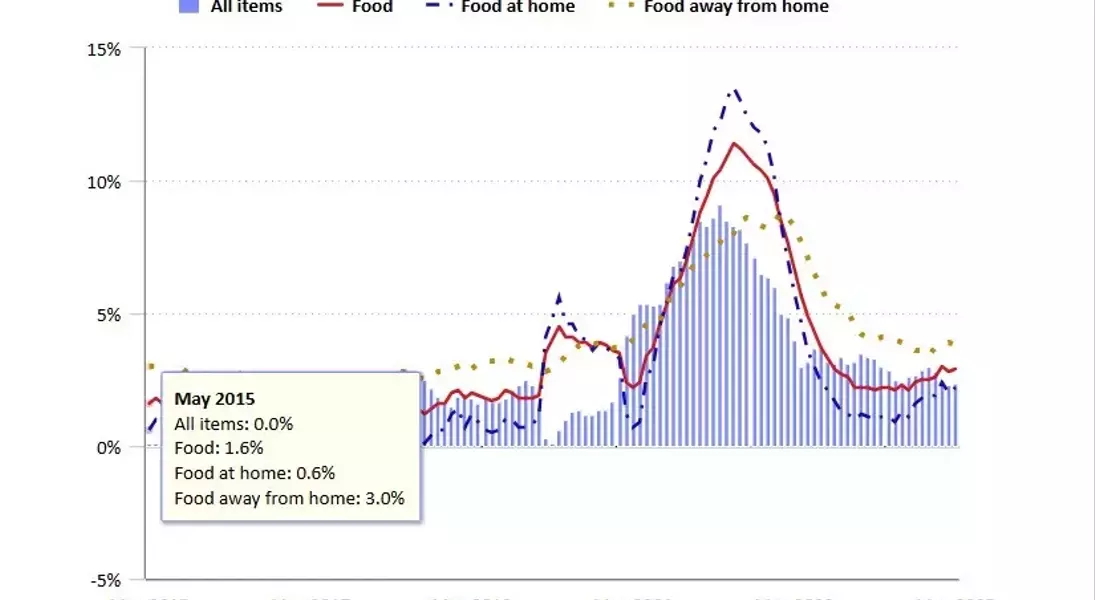
Key contributors to the monthly CPI movement included a 0.2% uptick in shelter costs, which remained the primary driving force behind the overall increase. Energy prices climbed by 0.9%, with gasoline alone seeing a 1.0% jump. Food costs saw a 0.3% increment, broken down into a 0.3% rise for food consumed at home and a 0.4% increase for food purchased away from home. On the core front, sectors experiencing heightened prices included household furnishings, medical care services, recreational activities, apparel, and personal care products. Conversely, the prices of used cars and trucks, new vehicles, and airline fares saw declines.
Looking at the broader annual trends, the headline CPI experienced a 2.7% surge, an acceleration from the 2.4% recorded in May. Despite this, energy prices for the year actually declined by 0.8%, offering some relief, while food prices continued their upward trajectory, rising by 3.0%.
Following the release, the immediate market reaction was palpable. The US dollar initially softened but quickly rebounded, showing resilience. Major equity indices reacted positively, with the NASDAQ experiencing a robust gain of 143 points and the S&P index indicating a 26.44-point increase. The Dow Jones Industrial Average, however, remained largely subdued. In the bond markets, US Treasury yields showed minimal fluctuation, with the 2-year yield at 3.914% (up 1.7 basis points), the 5-year yield at 3.988% (up 0.6 basis points), the 10-year yield remaining at 4.427%, and the 30-year yield slightly decreasing by 0.7 basis points to 4.965%.
This comprehensive report suggests that while overall inflation continues to be a factor, the core components, which are crucial for long-term policy decisions, are exhibiting signs of stability, providing a mixed but generally reassuring signal to the Federal Reserve and the broader economy.
From a journalist's perspective, this recent CPI report offers a compelling narrative of a market navigating complex economic currents. The slight divergence between the headline and core inflation figures, particularly the core CPI's modest rise below forecasts, provides a glimmer of hope that the Federal Reserve's persistent efforts to tame inflation are yielding results without overly stifling economic activity. It reinforces the idea that economic data is rarely black and white, and requires a nuanced understanding to interpret its true implications. As observers, we are reminded of the delicate balance central banks must strike, and how each statistical release can send ripples across the globe, influencing daily decisions from trading floors to kitchen tables. The ongoing vigilance over these figures is paramount, as they serve as vital indicators for economic health and future policy directions.