Asia-Pacific Markets React to Trump's Reassurance on Fed Chair Powell, Economic Data
Friday's trading session across Asia-Pacific markets was characterized by a confluence of political reassurance and significant economic data. A pivotal moment for investors came with President Trump's definitive statement regarding the Federal Reserve Chair, Jerome Powell, dispelling rumors of a potential dismissal. This clarity on monetary policy leadership, combined with fresh economic reports from the UK and Japan, offered a multifaceted backdrop for market movements. While the U.S. dollar displayed upward momentum, particularly against the Japanese Yen, regional stock indices in Hong Kong, Japan, and Shanghai saw modest pullbacks.
Key insights emerged from consumer behavior in the UK, where a notable increase in savings reflected growing household caution, and from Japan, where inflation metrics continued to exceed central bank targets, influencing expectations for future monetary policy. Simultaneously, the corporate earnings landscape drew attention, with Intel's quarterly performance eliciting a cautious response from analysts. These varied elements painted a comprehensive picture of market dynamics, where investor sentiment was shaped by a blend of political stability, economic realities, and corporate prospects.
Presidential Clarity and Market Confidence
The financial markets in the Asia-Pacific region experienced a degree of stabilization following President Trump's confirmation that he would not seek to remove Federal Reserve Chair Jerome Powell from his position. This declaration served to alleviate anxieties regarding potential instability in central bank leadership, a factor that had previously introduced uncertainty into economic forecasts. Trump's remarks, delivered after a joint tour of a Federal Reserve construction site with Powell, suggested a more cohesive stance between the executive branch and the central bank, contrary to earlier speculation. The absence of further major policy announcements from this high-profile interaction meant that markets largely focused on interpreting this restored harmony as a positive signal for continuity in monetary policy.
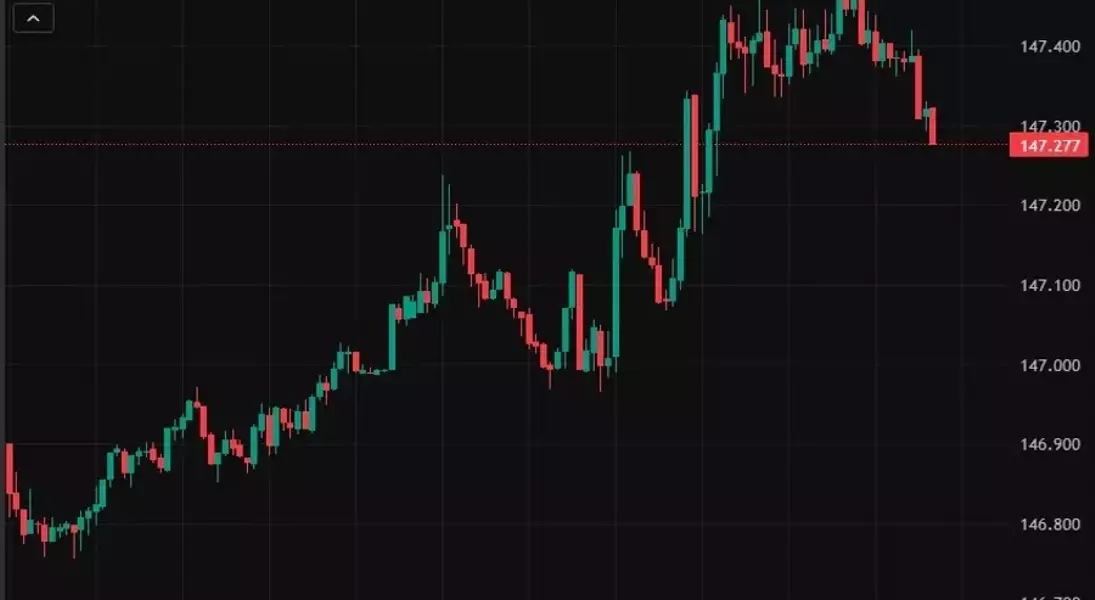
This presidential reassurance significantly impacted investor sentiment, particularly in the foreign exchange markets. The U.S. dollar, which had previously faced headwinds due to leadership uncertainties at the Fed, saw a noticeable strengthening against other major currencies. The Japanese Yen, in particular, experienced a depreciation against the dollar, with the USD/JPY pair climbing past the 147.40 mark. This movement indicated a renewed confidence in the dollar's stability and provided a clear direction for currency traders. The fading narrative of near-term dollar weakness, stemming from concerns over potential Fed leadership changes, underscored the market's positive reaction to Trump's definitive statement, affirming a more predictable environment for global financial flows.
Economic Indicators and Corporate Performance
Beyond the political landscape, several economic data releases provided critical insights into the health of key global economies. In the United Kingdom, consumer sentiment data from GfK revealed a distinct shift towards increased savings among British households. The GfK savings index surged to its highest level since late 2007, indicating a growing sense of caution and a predisposition among consumers to brace for potentially tougher economic conditions in the latter half of the year. This elevated propensity to save suggests a subdued outlook for consumer spending, a vital component of economic growth, and could signal challenges ahead for the UK economy.
Meanwhile, in Japan, July's Tokyo Consumer Price Index (CPI) figures demonstrated persistent inflationary pressures, with all three core measures—headline CPI, core CPI (excluding fresh food), and core-core CPI (excluding fresh food and energy)—remaining above the Bank of Japan's 2% target. Despite slight deviations from expectations, these figures reinforce the view that inflation is firmly embedded within the Japanese economy. This data is poised to be a significant consideration for the Bank of Japan's upcoming policy meeting, where policymakers are anticipated to revise their inflation forecasts upwards. While an immediate interest rate hike is not expected, the consistent inflationary readings are building expectations for a potential policy tightening in late 2025 or early 2026. Separately, Intel's second-quarter earnings report garnered a tepid response from analysts. Despite revenue surpassing estimates, the company reported an earnings per share miss, coupled with a stern warning from its CEO regarding the potential exit from advanced chip manufacturing if new foundry clients are not secured. This highlights the ongoing structural challenges faced by the semiconductor giant, impacting its stock performance and underscoring the competitive pressures within the tech sector.