Australian Pension Funds Bolster US Asset Hedging Amid Policy Unpredictability
In a significant financial maneuver, Australian pension funds are actively increasing their currency hedging positions on their substantial US dollar-denominated assets. This strategic shift is largely driven by mounting concerns over global trade tariffs and the anticipation of interest rate reductions by the US Federal Reserve, both factors expected to exert downward pressure on the American currency. Such hedging activities are poised to strengthen the Australian dollar, signaling a defensive yet opportunistic approach by these major investment vehicles to safeguard their portfolios and capitalize on shifting macroeconomic landscapes.
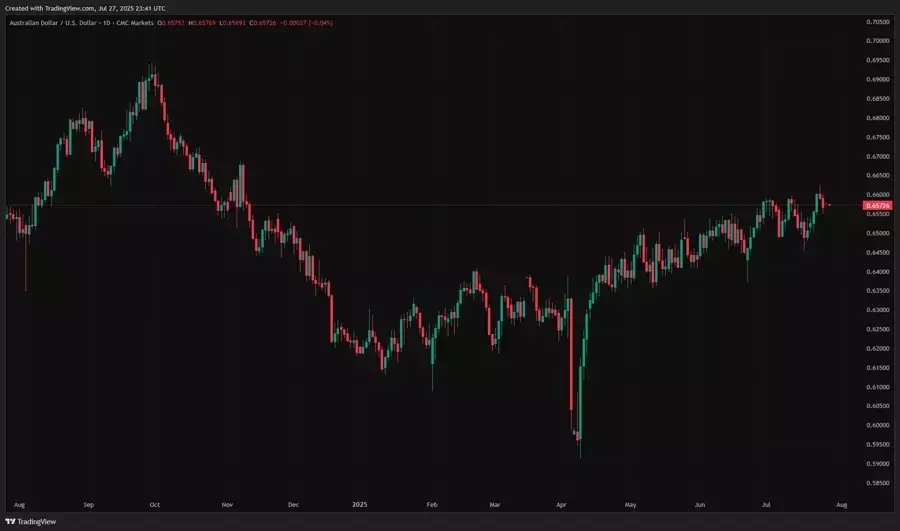
The impetus behind this heightened hedging activity stems from a confluence of global economic uncertainties. The specter of increased trade protectionism, particularly the imposition of tariffs, casts a shadow over international commerce and investment. These measures inherently introduce volatility and risk, prompting institutional investors to seek protection for their foreign holdings. Concurrently, market expectations for a more dovish stance from the US central bank, including potential cuts to benchmark interest rates, are building. A reduction in US rates would typically diminish the attractiveness of the US dollar, making it prudent for foreign investors to hedge against potential depreciation.
For Australia's sizable superannuation funds, which command significant offshore investment portfolios, managing currency exposure is a critical component of risk mitigation. Their substantial holdings in US assets make them particularly sensitive to fluctuations in the AUD/USD exchange rate. By boosting their hedging, these funds effectively lock in a certain exchange rate for future conversions, protecting the Australian dollar value of their US investments from adverse currency movements. This proactive management not only safeguards their capital but also indirectly supports the Australian dollar by increasing demand for the currency in the foreign exchange markets.
Market observers and financial analysts are closely monitoring these developments, with several institutions affirming the likely positive impact on the Australian dollar. Experts at National Australia Bank (NAB) project a potential appreciation of nearly 3% for the AUD by the close of the year. Similarly, Citigroup analysts note robust support for the AUD/USD pair above the 0.64 level, indicating resilience in the Australian currency's performance. Deutsche Bank maintains a year-end target of 0.67 for the AUD/USD, reinforcing the consensus that the Australian dollar is poised for upward momentum. These projections underscore the market's recognition of the influence exerted by large-scale institutional hedging on currency valuations.
This concerted effort by Australian pension funds to enhance their currency hedges reflects a calculated response to evolving global economic dynamics. By mitigating currency risks associated with their extensive US asset holdings, these funds are not only protecting their long-term investment returns but also contributing to a firmer footing for the Australian dollar in the international currency arena. This trend highlights the intricate interplay between global economic policy, institutional investment strategies, and currency market performance.