Oil Market Faces Future Surplus Amidst Current Price Strength
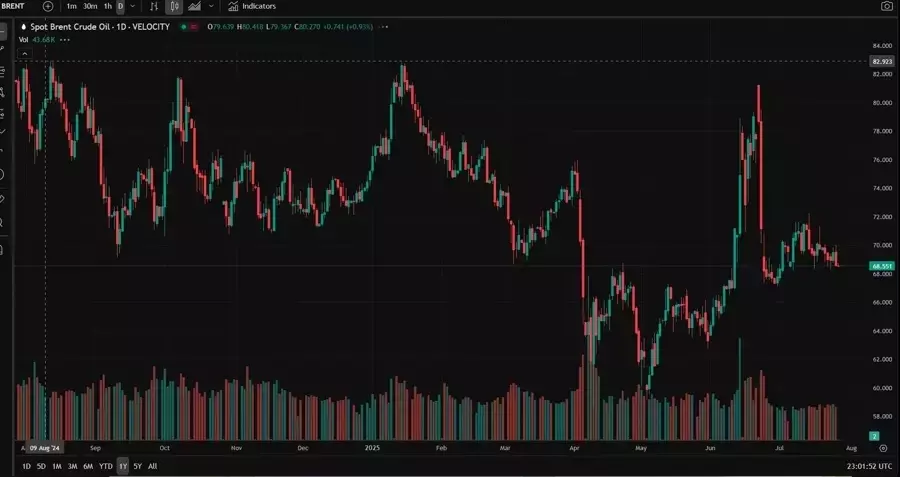
The global petroleum market finds itself at a crossroads, balancing the allure of robust current prices, hovering around the $70-a-barrel mark, with ominous forecasts of an impending oversupply. This delicate equilibrium is heavily influenced by a confluence of factors, including anticipated increases in crude production from regions outside the OPEC+ alliance and a looming slowdown in worldwide economic growth. Energy authorities and market experts are signaling a significant surplus by the next calendar year, creating a perplexing scenario for market participants who must reconcile today's strong performance with tomorrow's potential glut.
Global Energy Landscape: Anticipated Surpluses and Shifting Dynamics
In the vibrant energy markets of July 2025, oil traders are grappling with a fascinating paradox: the immediate strength of crude prices, firmly positioned around $70 per barrel, set against a chorus of warnings regarding a burgeoning market surplus on the horizon. Esteemed global institutions, including the International Energy Agency (IEA) and the U.S. Energy Information Administration (EIA), have meticulously forecasted a substantial oversupply for the upcoming year, with the IEA specifically projecting an excess of 2 million barrels daily. This anticipation is casting a long shadow over current market buoyancy.
Adding to this complex narrative, Francisco Blanch, a distinguished figure leading commodities and derivatives research at Bank of America Corp., has articulated a clear perspective: the expected surplus in the latter half of the year is poised to exert considerable downward pressure on prices. This sentiment is echoed by major players in the energy sector. France’s TotalEnergies SE recently issued a cautionary statement, highlighting the abundant supply entering the market as the OPEC+ coalition gradually eases its production limitations, even as global economic expansion shows signs of decelerating, potentially dampening demand.
Further compounding the supply side, Norway's Equinor ASA has confirmed that its new Johan Castberg field is now operating at its full potential, contributing significant new barrels to the global inventory. Moreover, the imminent commencement of operations at a new offshore asset in Brazil is expected to introduce even more oil, underscoring a broader trend of increased production from non-OPEC countries. These collective developments suggest a dynamic shift in the global energy landscape, where current price stability may soon give way to the challenges of an oversupplied market.
From an observer's vantage point, this situation underscores the intricate dance between short-term market reactions and long-term economic fundamentals. The current robust oil prices, while beneficial for producers, might inadvertently accelerate non-OPEC+ production, leading to the very surplus that analysts are predicting. This scenario highlights the delicate balance required in energy policy and investment, where decisions made today reverberate across future market conditions. The market's response to these evolving supply-demand dynamics will be a critical indicator of its resilience and adaptability in the face of shifting global economic currents.