Bitcoin's Unprecedented Surge: A Deep Dive into its Latest All-Time Highs and Market Dynamics
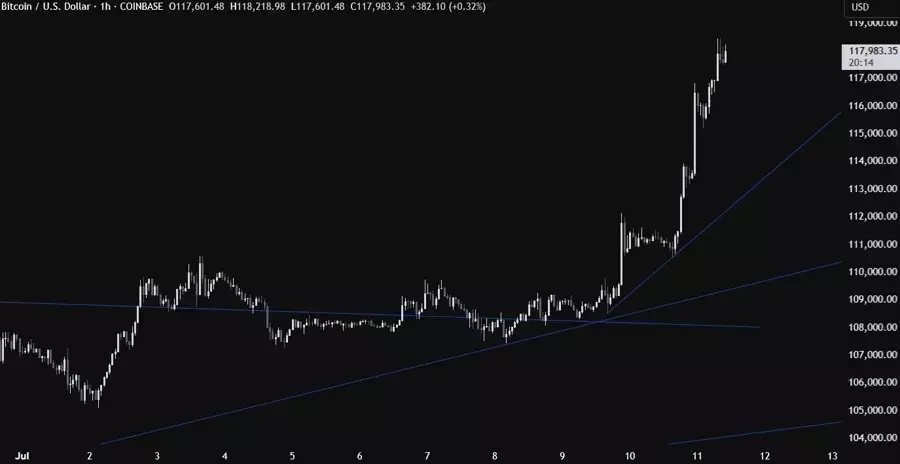
In recent days, Bitcoin has astounded the financial world by soaring to unprecedented heights, defying the generally stagnant performance of other asset classes. This remarkable ascent, marked by a substantial gain of over 9% within a mere 48 hours, has ignited fervent discussions among market analysts and enthusiasts alike. While traditional markets have largely remained subdued, Bitcoin's explosive rally has underscored its unique volatility and its capacity for swift, dramatic price movements. The prevailing consensus suggests that this surge is not primarily anchored in fresh fundamental news but rather stems from powerful technical market forces, most notably a pronounced short squeeze phenomenon that has propelled the digital currency into uncharted territory.
Bitcoin's Ascent to New Peaks: A Market Phenomenon Driven by Technical Dynamics
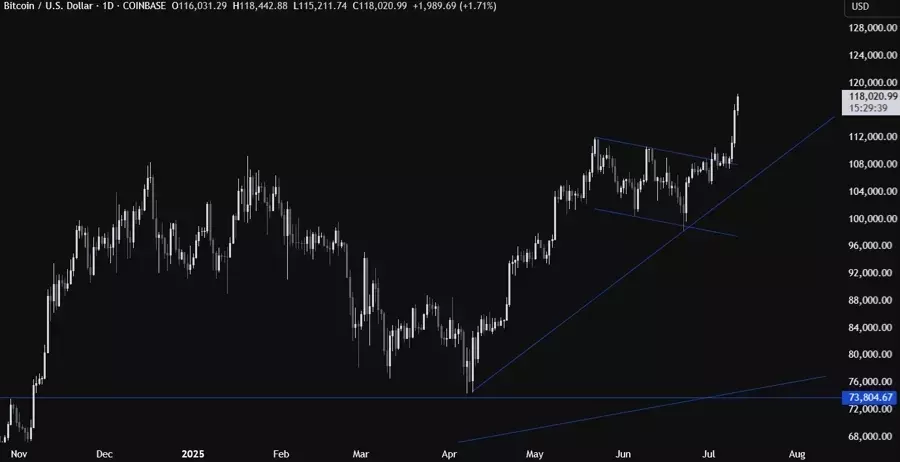
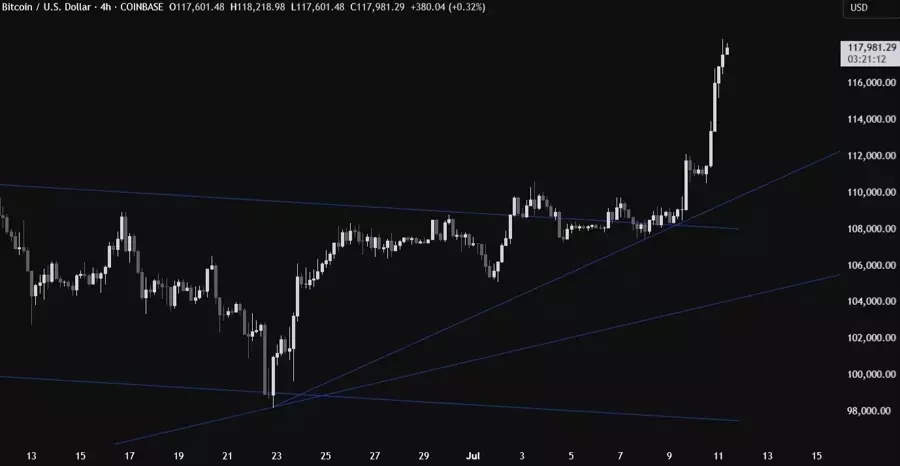
Over the past week, as many asset classes experienced a lull, Bitcoin broke free, demonstrating extraordinary strength. On a notable Friday, the 11th of July, 2025, the digital asset achieved multiple new all-time highs, propelled by a surge that began days earlier. This impressive upward momentum, observed by various market participants, accelerated significantly once Bitcoin surpassed its prior peak values. The primary force behind this rapid appreciation appears to be a massive short squeeze, an event where bearish investors are compelled to exit their positions, inadvertently fueling further price increases. Data from Coinglass highlights the scale of this squeeze, indicating over $1 billion in liquidated short positions. While traditional explanations like ETF inflows and anticipated Federal Reserve rate adjustments are often cited, the immediate trigger for this parabolic rise was the clear technical breakout from a bullish flag pattern identified by analysts, signaling potential targets reaching as high as $125,000 to $135,000. However, the upcoming release of the US Consumer Price Index (CPI) report on the following Tuesday presents a crucial test for this rally. A strong CPI could trigger a short-term correction, while softer figures would likely provide further support for Bitcoin's continued climb.
This latest surge in Bitcoin's value serves as a compelling illustration of the dynamic interplay between market psychology and technical indicators. For investors, it reinforces the notion that in the fast-paced world of cryptocurrencies, understanding chart patterns and market mechanics can be as crucial, if not more so, than traditional fundamental analysis. The short squeeze, a powerful market event, underscores the risks inherent in short-selling highly volatile assets. From a broader perspective, Bitcoin's resilience and its ability to carve out new highs, even in the absence of groundbreaking news, points to a maturing asset class that continues to attract significant capital. As a reader, I find this particularly fascinating, as it challenges conventional wisdom about market drivers and highlights the increasing influence of algorithmic trading and automated liquidations. It also reminds us that while the digital asset space can be incredibly rewarding, it demands a vigilant eye on both technical signals and macroeconomic events that can swiftly alter its trajectory.