Currency Market Dynamics: EUR and JPY Strengthen Against USD, While AUD and NZD Falter Amid Trade Tensions
Navigating the Volatile Forex Landscape: A Comprehensive Overview
Trade Tariffs and Diplomatic Responses: Shaping Market Sentiment
A major development impacting market sentiment over the weekend was the announcement of a substantial tariff imposition by the United States on goods from the European Union, slated to commence on August 1st. This aggressive trade measure has triggered immediate diplomatic efforts to mitigate its effects. High-ranking German and French officials, specifically Germany's Merz and France's Macron, are actively engaging with European Commission President von der Leyen to seek a resolution before the tariffs take effect. In a bid to foster dialogue, the European Union has extended its moratorium on retaliatory trade actions against the US, signaling a desire for continued negotiations.
Currency Movements: US Dollar's Fluctuating Fortunes and Equity Market Weakness
Following the trade news, the US Dollar initially saw a slight strengthening at market open, but this gain was quickly reversed. In contrast, US equity index futures began the session with a minor decline and have struggled to recover, indicating broader market apprehension. The Euro has appreciated, trading around 1.1695 against the US Dollar, while the US Dollar has depreciated against the Japanese Yen, with USD/JPY hovering around 147.00. This suggests a flight to safety or a shift in investor confidence away from the US Dollar in the immediate aftermath of the trade announcements.
Commodity Currencies Under Pressure: The Decline of AUD and NZD
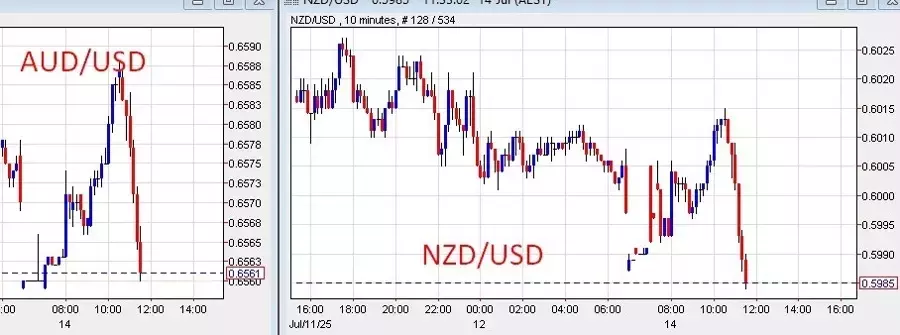
The Australian Dollar (AUD) and New Zealand Dollar (NZD), often sensitive to global trade and commodity prices, have experienced significant depreciation. Their decline underscores the mixed performance across the currency spectrum, highlighting their vulnerability to current geopolitical and economic uncertainties. The lack of fresh news or significant economic data releases, beyond the trade developments, suggests that market participants are reacting primarily to the tariff news and the ensuing diplomatic efforts.
Anticipation Builds for China's Trade Data: A Critical Economic Indicator
Looking ahead, market attention is keenly focused on the upcoming release of China's trade data for June. This information is expected to provide crucial insights into the health of the global economy and could significantly influence currency valuations, particularly for commodity-linked currencies like the AUD and NZD. The data will offer a clearer picture of international trade flows and demand, which is especially pertinent given the ongoing trade disputes.
Market Outlook: Mixed Signals and Strategic Caution
The current market environment is characterized by mixed signals, with certain major currencies appreciating while others falter. The US Dollar's fluctuating performance, coupled with weakness in equity futures, indicates a cautious sentiment among investors. The spotlight remains on the resolution of trade disputes and the forthcoming economic indicators, particularly from China, which will likely dictate the next major movements in the global currency markets. Participants are advised to remain vigilant and adapt strategies as new information emerges.