Dollar's Stability Amidst Global Trade Tensions and Anticipation of Key US Economic Data
The United States dollar demonstrates resilience against leading global currencies as the new trading week commences, indicating a period of stability in foreign exchange markets. This steadiness is observed despite prevailing trade-related anxieties that have tempered overall market sentiment. Investors and analysts are now directing their attention towards a series of critical economic releases from the U.S., which are poised to shape the Federal Reserve's monetary policy decisions in the near future. The highly anticipated Consumer Price Index (CPI) report is central to this week's economic calendar, with its findings expected to significantly influence market perceptions regarding potential interest rate adjustments by the central bank. These developments underscore a cautious yet forward-looking approach by market participants, who are closely monitoring economic fundamentals to gauge future currency movements and investment strategies.
As global trade tensions continue to simmer, impacting broader risk appetite, the dollar's relative stability provides a focal point for currency traders. The forthcoming U.S. economic data, especially the inflation figures, are paramount in determining the trajectory of the dollar and broader market dynamics. The market's current assessment of potential Fed actions, heavily weighted towards a pause in July and a possible rate cut in September, highlights the sensitivity to these economic pronouncements. This delicate balance between geopolitical concerns and domestic economic performance dictates the immediate outlook for the dollar and its counterparts.
Dollar's Position and Currency Performance
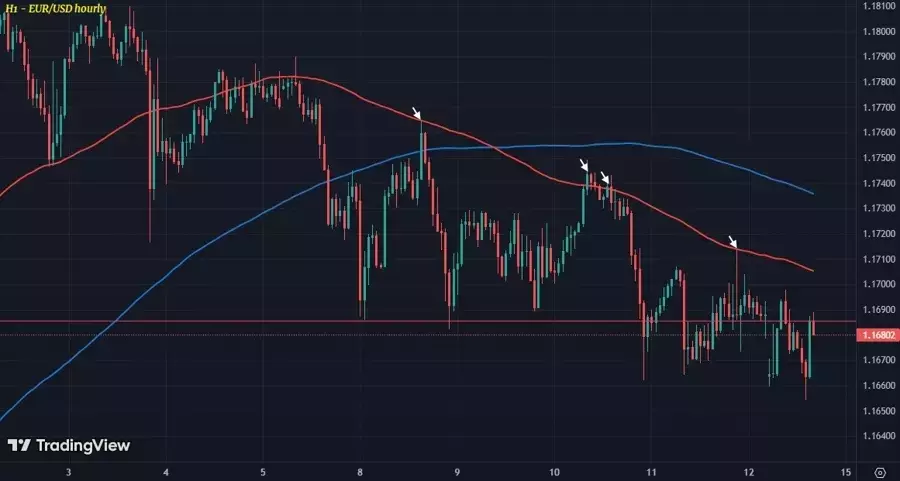
The U.S. dollar is exhibiting remarkable stability at the start of the week, with minimal fluctuations observed against its primary counterparts. This calm in the foreign exchange market comes even as broader trade concerns create a more cautious risk environment. The euro, for instance, is currently hovering around 1.1680 against the dollar, persistently trading below its crucial short-term moving averages. Although the immediate sentiment for the euro appears to lean bearish, a significant breakthrough below the 1.1650 level would intensify selling pressure and draw attention to new retracement benchmarks. This indicates that while the current trading range might suggest neutrality, underlying technical indicators hint at potential for a downtrend if key support levels are breached, prompting traders to watch for definitive directional cues.
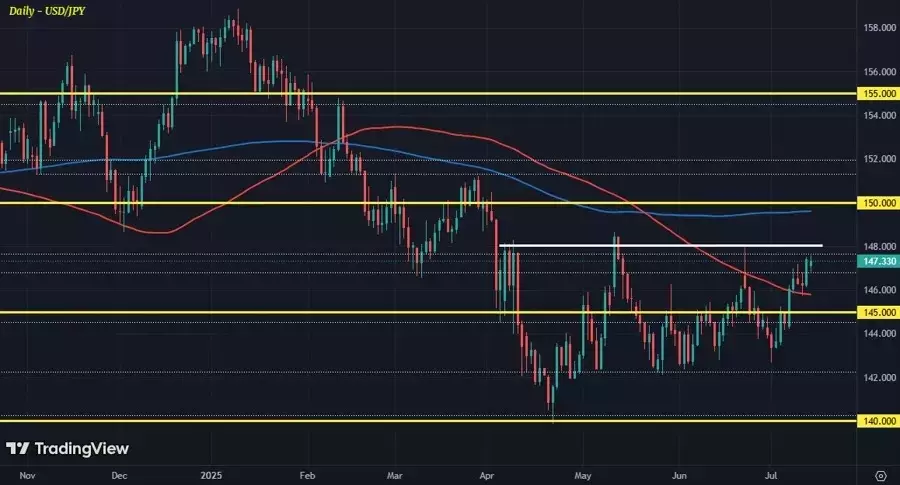
Similarly, the Japanese yen is trading flat against the dollar, with the USD/JPY pair holding firm around 147.33. This pair is attempting to build on its upward momentum from the previous Friday, yet faces modest resistance near the 148.00 mark. Conversely, the downside for USD/JPY seems contained, with solid support offered by its 100-day moving average, currently at 145.79. Meanwhile, other major currencies show minor adjustments, with the British pound experiencing a slight dip of 0.2% to 1.3473 against the dollar, and the Canadian dollar remaining stable at 1.3683. Commodity-linked currencies are notably underperforming, with the Australian dollar down 0.2% to 0.6565 and the New Zealand dollar declining by 0.4% to 0.5985. This weakness in commodity currencies reflects a more cautious global risk sentiment, influencing investor preferences towards safer assets like the dollar.
Anticipation of US Economic Data and Fed Policy
Market participants are shifting their focus towards critical economic releases from the United States, which are expected to steer sentiment throughout the week. The upcoming US Consumer Price Index (CPI) report stands out as the most significant event, with its outcome poised to heavily influence market expectations regarding the Federal Reserve's monetary policy decisions. Forecasts suggest that June's inflation figures will likely surpass those of May, with core annual inflation projected to reach 3.0%, an increase from the previous month's 2.8%. These inflation readings are crucial as they directly feed into the Fed's assessment of economic health and inflationary pressures, thus molding the probability of future interest rate changes, including potential adjustments at the July and September policy meetings.
The current market consensus largely discounts an interest rate change for July, with approximately 93% of traders anticipating no adjustments. However, the odds for a 25 basis point rate cut in September are notably higher, currently standing at around 67%. These probabilities underscore the market's sensitivity to incoming economic data, particularly inflation. Any deviation from these expectations in the CPI report could trigger significant shifts in the dollar's value and revise the outlook for the Federal Reserve's policy trajectory. This makes the CPI data not just a key economic indicator, but a pivotal moment that could redefine the short-to-medium term investment landscape for currency and bond markets, as traders adjust their positions based on the evolving interest rate outlook.