Euro Reaches New Highs Amidst Geopolitical Shifts and Monetary Policy Divergence
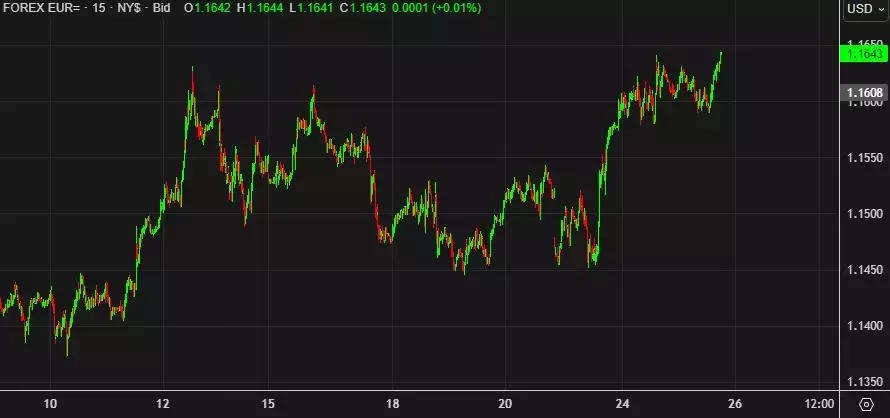
The Euro has recently achieved a notable milestone, ascending to its strongest position against the US Dollar since late 2021. This surge is intricately linked to shifting geopolitical dynamics and diverging monetary policy outlooks between Europe and the United States. European Union leaders' declarations of enhanced defense spending within NATO suggest a potential easing of fiscal constraints, which could provide further impetus for the Euro. Simultaneously, a broad weakening of the US Dollar has been observed, largely attributed to the de-escalation of tensions in the Middle East following a ceasefire in the Iran-Israel conflict. This confluence of factors paints a bullish picture for the Euro, with market analysts pointing to significant technical levels that could see the currency appreciate further.
Looking ahead, the trajectory of the US Dollar appears heavily dependent on forthcoming inflation data and the Federal Reserve's response. While the European Central Bank has adopted a wait-and-see approach, projections for substantial rate cuts by the Fed in the coming year, as evidenced by some major financial institutions, highlight a widening gap in monetary policy. This divergence is a critical driver for currency markets, making upcoming economic indicators, especially the Personal Consumption Expenditures (PCE) report, vital for shaping short-term currency movements. The market's current pricing of significant easing by the Fed underscores the potential for continued volatility and further shifts in the global currency landscape.
Euro's Resurgence and European Policy Signals
The Euro's recent ascent to levels not seen since October 2021 marks a significant moment in currency markets. This upward movement is not merely a technical fluctuation but is underpinned by fundamental shifts in European policy and the broader global economic environment. The commitment from European leadership to increase NATO defense expenditures is particularly noteworthy. Such pledges often precede adjustments in national fiscal policies, potentially signaling a more relaxed approach to budgetary rules within the Eurozone. This flexibility could empower member states to engage in greater fiscal stimulus, which in turn could bolster economic growth and strengthen the Euro's appeal to investors. The momentum gained over the past weeks and months, especially following increased German fiscal spending post-election and in response to global trade tensions, suggests a sustained period of strength for the Euro.
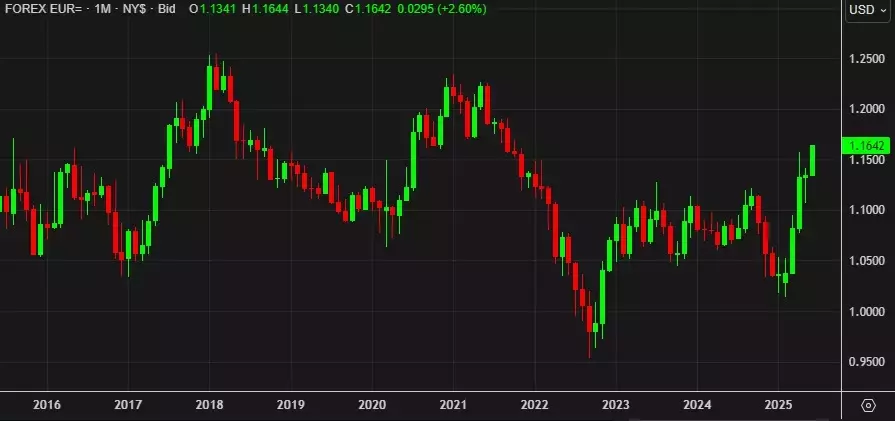
Moreover, the broader trend supporting the Euro's rally is evident when examining its performance over a longer timeframe, specifically a monthly chart perspective. The currency has shown impressive gains from a significant double-bottom formation observed at the 1.02 level, indicating a robust reversal of previous downtrends. This technical strength, coupled with the potential for more accommodative fiscal policies, creates a compelling narrative for continued Euro appreciation. The unwinding of safe-haven flows from the US Dollar, which typically occur during periods of geopolitical uncertainty such as the Iran-Israel conflict, further contributes to the Euro's upward pressure. As global tensions ease, capital tends to flow back into growth-oriented currencies, benefiting the Euro. The market's response to these evolving factors reflects a growing confidence in the Eurozone's economic resilience and policy direction.
Dollar's Dilemma: Inflation and Rate Cut Expectations
In stark contrast to the Euro's upward trajectory, the US Dollar is experiencing a period of broad weakness, largely driven by the evolving outlook for US monetary policy and the easing of international tensions. The recent ceasefire in the Iran-Israel conflict has diminished the demand for the dollar as a safe-haven asset, allowing capital to flow into other currencies. More critically, the market's attention is now firmly fixed on the prospects of aggressive interest rate cuts by the US Federal Reserve. While the European Central Bank has indicated a pause in its policy adjustments for the time being, analysts from major financial institutions are forecasting as many as seven quarter-point rate cuts from the Fed in the upcoming year. This significant divergence in expected monetary policy between the two economic blocs is a primary factor influencing the EUR/USD exchange rate.
The critical determinant for the dollar's immediate future will be forthcoming US inflation data, particularly the Personal Consumption Expenditures (PCE) report. If the US economy demonstrates that it can absorb the inflationary impacts of tariffs without a significant overall price surge, it would reinforce the argument for a series of rate reductions. The market currently anticipates approximately 104 basis points of easing in the next twelve months, although these expectations have shown considerable volatility. Recent statements from Federal Reserve officials, such as Governor Bowman's indication of a willingness to consider a rate cut as early as July, further amplify the dovish sentiment within the Fed. On the technical front, analysis of the monthly chart suggests that the EUR/USD pair faces minimal major resistance until it reaches the 1.20 or 1.22 levels, reinforcing the notion that the dollar could continue to depreciate against the Euro if these rate cut expectations materialize.