Federal Reserve's Stance: Navigating Modestly Restrictive Policy Amidst Economic Shifts
New York Federal Reserve President John Williams recently delivered a comprehensive assessment of the economic landscape and the central bank's ongoing strategies. His remarks underscored a commitment to a 'modestly restrictive' monetary policy, viewing it as a fitting approach to navigate present economic conditions. This strategic stance affords the Fed crucial time to meticulously analyze incoming economic data, ensuring informed decision-making. Williams also highlighted the potential for tariffs to exert an inflationary influence, signaling a keen awareness of evolving global trade dynamics. Furthermore, he presented detailed projections for key economic indicators, including inflation, economic growth, and unemployment, painting a nuanced picture of the path ahead.
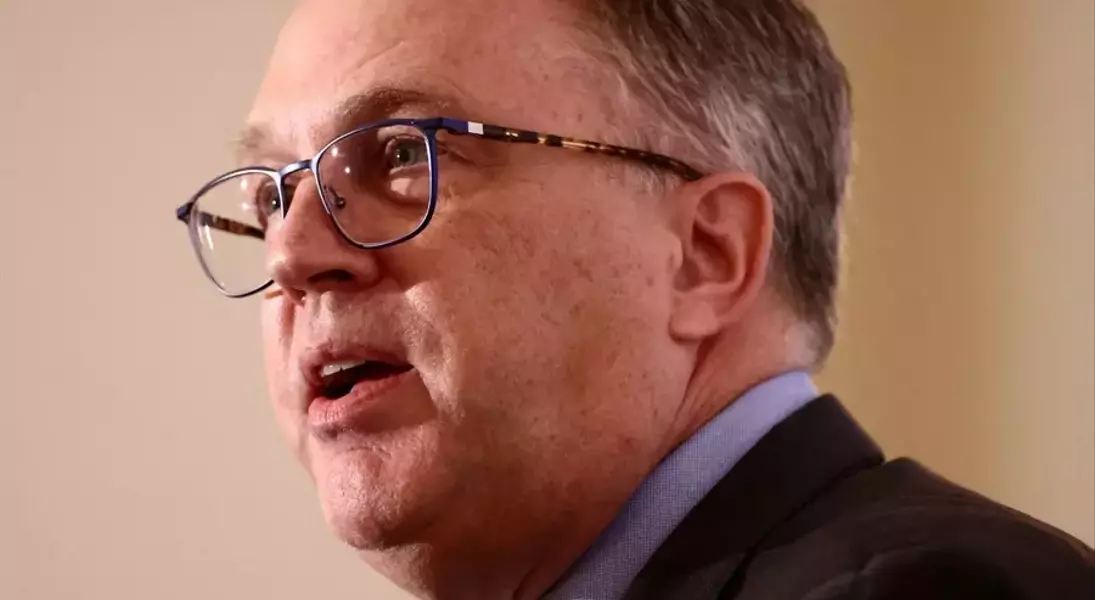
Federal Reserve Official Discusses Economic Outlook and Policy Framework
On a significant Wednesday, July 16, 2025, during a keynote address at the New York Association for Business Economics (NYABE) Distinguished Speaker Series, Federal Reserve Bank of New York President John Williams articulated the current state and future direction of U.S. monetary policy. Speaking to a gathering of prominent business economists, Williams affirmed that the prevailing 'modestly restrictive' monetary policy remains suitable for the economy. This policy, he elaborated, provides the Federal Reserve with the necessary latitude to meticulously assess economic data before considering any significant shifts.
A critical point of discussion revolved around the impact of tariffs. Williams acknowledged their currently modest influence but cautioned that their effect is anticipated to intensify over time, potentially adding one full percentage point to inflation between late 2025 and 2026. This projection signals a vigilant watch by the Fed on trade developments and their implications for price stability. Despite this, Williams noted that overall inflation in June was likely around 2.5%, with core inflation at 2.75%, underscoring the persistent inflationary pressures in the economy.
Regarding the broader economic picture, Williams characterized the current economic environment as being in a "good place," supported by a robust labor market. However, he also pointed to signs of moderation, with both job growth and labor supply experiencing a slowdown. He emphasized the heightened uncertainty permeating the economy, a factor that will undoubtedly influence future policy considerations. Looking ahead, the Federal Reserve projects U.S. economic growth to hover around 1% for the year, with unemployment expected to gradually climb to 4.5% by year-end. Inflation is forecasted to settle between 3% and 3.5% this year, before easing to 2.5% in the subsequent year and ultimately reaching the Fed's 2% target by 2027.
Reflections on Economic Projections and Policy Implications
From a journalist's perspective, President Williams' recent remarks offer valuable insights into the Federal Reserve's current thinking and its forward-looking strategy. His emphasis on a 'modestly restrictive' policy, coupled with a commitment to data-driven decision-making, highlights a cautious but adaptable approach to monetary management. The acknowledgment of tariffs as a potential inflation driver is particularly noteworthy, suggesting that global trade dynamics will increasingly factor into domestic economic forecasts. This points to a complex interplay between international relations and internal economic stability, demanding careful monitoring. For the average citizen and market participant, these projections signal a period of continued vigilance. While the economy appears stable now, the anticipated rise in unemployment and persistent, albeit moderating, inflation suggest that the path to full economic normalization may not be entirely smooth. The Fed's willingness to allow time for data analysis before making significant policy shifts should reassure markets, emphasizing prudence over hasty reactions. This measured stance provides a clearer understanding of the challenges and opportunities that lie ahead, urging both businesses and individuals to remain adaptable in an evolving economic climate.