France's June Consumer Confidence Dips Below Forecasts
French consumer sentiment remained stagnant in June, with the confidence index holding at 88. This figure fell slightly below market expectations of 89, indicating a persistent cautious outlook among households. The underlying factors contributing to this subdued sentiment include ongoing concerns about job market prospects and a restrained view of personal financial well-being, largely mirroring the trends observed in the preceding month. This consistent level of caution could have broader implications for economic activity, as consumer spending is a critical driver of growth.
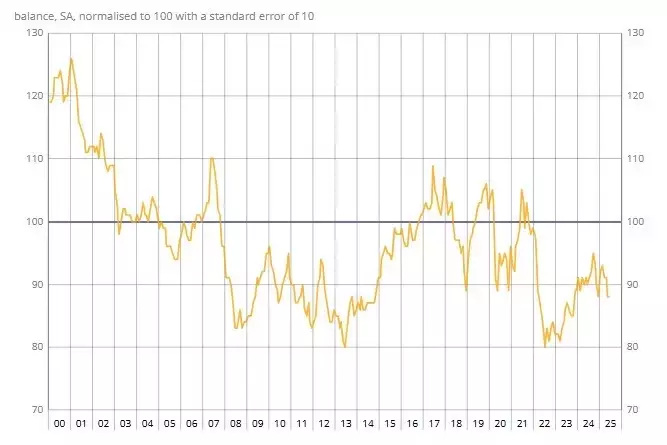
The latest data from INSEE underscores a continued period of stagnation in consumer confidence across France. While the index held steady at 88, this stability comes after a period where expectations were for a slight improvement. The details of the survey reveal that French households are still grappling with a sense of uncertainty, particularly regarding their employment futures. Additionally, their assessment of their current and prospective financial health remains pessimistic, contributing to a cautious approach to spending and investment. This environment suggests that despite broader economic shifts, the immediate outlook for individual financial security is not improving for many.
Stagnant Consumer Sentiment in France
French consumer confidence showed no upward movement in June, maintaining its score of 88, a figure that disappointed against the consensus forecast of 89. This persistent level of confidence points to an underlying reluctance among the populace to increase spending or make significant financial commitments. The primary drivers behind this continued caution are deeply rooted in households' perceptions of the employment landscape, where job security and prospects for finding work remain a significant concern. Furthermore, individuals' assessments of their own financial standing, both presently and in the near future, continue to be less than optimistic, dampening the overall economic mood. This stability at a lower-than-expected level suggests that the factors influencing consumer behavior are entrenched and not easily swayed by short-term economic fluctuations, potentially posing a challenge for policymakers aiming to stimulate domestic demand.
The latest report from INSEE confirmed that the French consumer confidence index in June settled at 88, unchanged from the previous month and slightly below the anticipated 89. This outcome reflects a sustained lack of optimism among French consumers, who continue to exhibit a cautious stance. The survey's findings highlight that unemployment remains a significant worry for households, influencing their overall economic outlook. Moreover, the perceived future financial situation of these households continues to be suppressed, indicating that they do not foresee an improvement in their personal economic conditions anytime soon. This stagnation at a relatively low confidence level, consistent with May's readings, underscores a lingering apprehension about economic stability and future prosperity. Such prolonged caution in consumer behavior can impede economic recovery and growth, as it directly impacts purchasing decisions and investment patterns, thereby reinforcing a cycle of subdued demand within the economy.
Lingering Economic Concerns Among French Households
The latest consumer confidence data for France reveals a landscape dominated by lingering economic anxieties, with the index for June holding firm at 88, just shy of the predicted 89. This indicates that the cautious sentiment among French consumers observed in previous periods has largely persisted. A key factor contributing to this stagnation is the continued apprehension regarding job security and the broader employment outlook. Many households remain concerned about the prospect of unemployment, which naturally curtails their willingness to engage in discretionary spending. Concurrently, their expectations for their personal financial situations remain subdued, reflecting a lack of confidence in income growth or improved financial stability. This combination of employment fears and financial pessimism suggests that consumers are prioritizing saving and caution over expenditure, a trend that can significantly impact the pace of economic expansion and recovery.
French consumers continue to navigate an environment of economic uncertainty, as evidenced by the June consumer confidence index which remained at 88, missing the 89 expectation. This consistent score points to a prolonged period where households have maintained a reserved outlook on their economic future. The most notable elements contributing to this sustained cautiousness are the elevated concerns about unemployment. Despite any broader economic indicators, the personal perception of job prospects remains a considerable deterrent to greater consumer spending and investment. Additionally, the public's assessment of their current and future financial wellbeing continues to be modest at best, suggesting that the average French household does not anticipate a significant upturn in their personal economic fortunes. This static confidence level, echoing the previous month's readings, implies that the French economy faces an ongoing challenge in stimulating robust domestic demand as long as these fundamental concerns about employment and financial stability persist among the general populace. The lack of upward momentum in confidence underscores a need for stronger signals of economic improvement to alter consumer behavior and foster a more dynamic market.