Gold Reaches Pivotal Resistance Level, Market Awaits Next Move
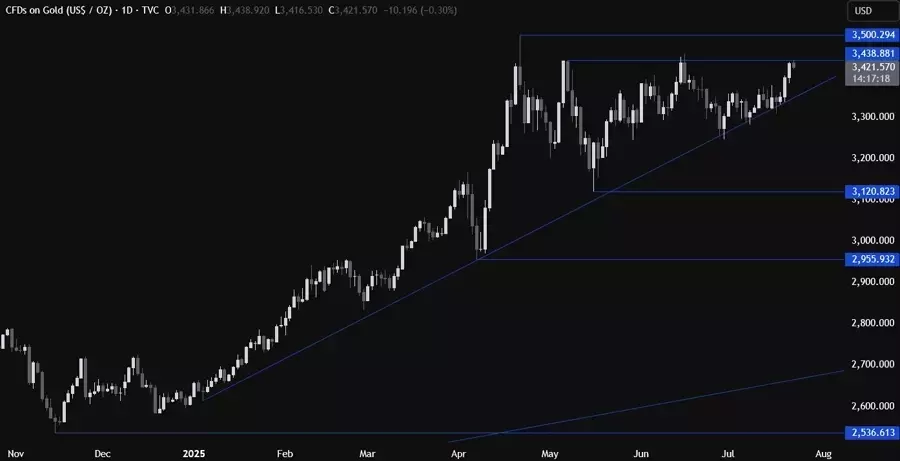
Gold has ascended to a crucial resistance level, sparking widespread market speculation about its impending direction. This pivotal point, around the 3440 mark, represents a significant hurdle for the precious metal, which has maintained this resistance since May. Investors are now keenly observing whether gold will successfully breach this barrier to continue its upward momentum or if it will experience a reversal, leading to a potential decline. The recent upward trajectory of gold prices has been significantly buoyed by a combination of lower real yields and a weakening US dollar, factors that typically enhance the appeal of non-yielding assets like gold.
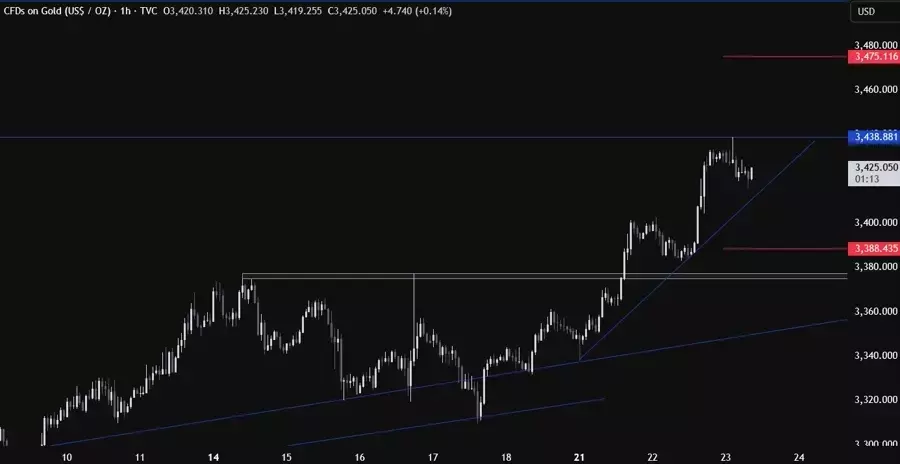
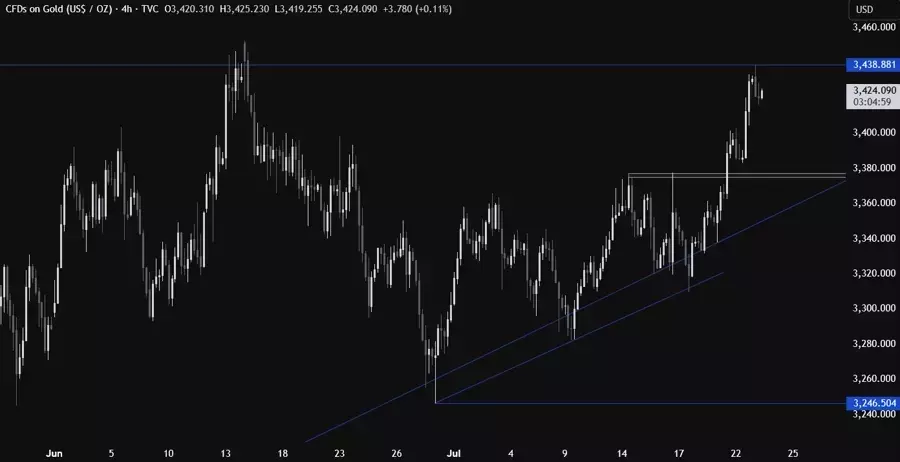
Looking ahead, the broader market sentiment suggests a continued bullish outlook for gold, primarily driven by expectations that real yields will further diminish as the Federal Reserve potentially moves towards easing its monetary policy. However, this optimistic long-term view is tempered by the possibility of short-term corrections. Any unexpected hawkish shifts in interest rate forecasts could disrupt gold's rally, introducing volatility and prompting investors to adjust their positions. The market remains vigilant, with upcoming economic data, particularly concerning US jobless claims and flash PMIs, poised to offer further insights into the economic landscape and its implications for gold prices.
Navigating Gold's Critical Juncture
Gold has successfully advanced to a critical resistance point, specifically around the 3438 mark, a level that has historically posed a formidable challenge since May. This recent surge indicates a strong bullish sentiment among traders, who have persistently driven prices higher. The current scenario presents a decisive moment for gold, as market participants are on high alert for either a definitive breakout above this resistance, which could signal the beginning of a new all-time high, or a firm rejection, potentially leading to a retreat towards the established major trendline. This resistance point is now a battleground where buying and selling pressures are intensely concentrated, making its resolution paramount for gold's immediate future.
From a technical perspective, the daily chart clearly illustrates gold's persistent upward movement, directly challenging this multi-month resistance. Buyers have demonstrated remarkable resilience, pushing through minor resistance levels to reach this significant threshold. Conversely, sellers are anticipated to enter the market aggressively at these elevated levels, aiming to capitalize on potential pullbacks. Their strategy involves establishing positions for a decline back towards the major trendline, with a clearly defined risk margin just above the resistance. Should gold successfully break past 3438, it would not only invalidate the sellers' immediate strategy but also empower buyers to increase their bullish positions, aiming for unprecedented price levels. The interplay between these forces will dictate gold's short-term direction, underscoring the importance of this resistance zone.
Market Dynamics and Future Outlook for Gold
The recent strengthening of gold prices can be largely attributed to underlying fundamental factors, particularly the decline in real yields and a depreciation of the US dollar. These conditions enhance gold's attractiveness as an alternative investment, as it does not yield interest and therefore benefits from lower opportunity costs when bond yields are suppressed. Despite the absence of a singular, dramatic catalyst, the market's repositioning following last week's lower-than-expected US inflation data has played a significant role in fostering this rally. This suggests that investors are adjusting their portfolios in anticipation of evolving economic conditions, particularly in response to inflation trends and central bank policies.
Looking beyond the immediate term, the overarching outlook for gold remains positive, predicated on the expectation of continued real yield compression. This trend is closely tied to the anticipated easing of monetary policy by the Federal Reserve, which, by reducing interest rates, could further diminish the appeal of yielding assets relative to gold. However, this optimistic forecast is not without its caveats. Any indication of a more hawkish stance from the Fed—such as a slower pace of rate cuts or unexpected rate hikes—could trigger sharp corrections in gold prices. Such shifts would increase the cost of holding non-yielding assets and might prompt a reallocation of capital. Therefore, while the long-term fundamentals appear supportive, the short-term trajectory of gold will remain highly sensitive to monetary policy signals and incoming economic data, including key indicators like US jobless claims and manufacturing PMIs.