Japanese Equities Soar to New Highs Driven by Robust Trade Deal
Trade Winds Propel Nikkei: A New Era for Japanese Stocks Since Mid-2024!
Understanding the Market's Ascent: A Glimpse into Japan's Equity Performance
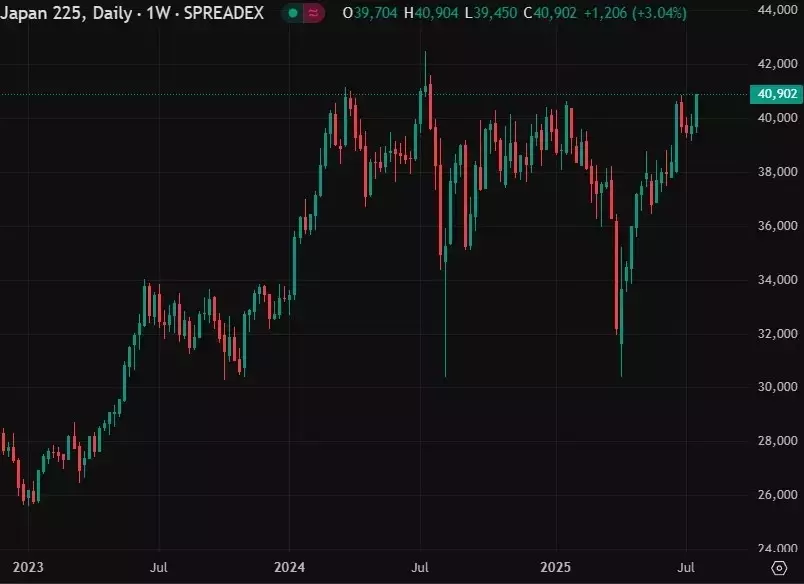
The Japanese stock market has recently demonstrated remarkable strength, with the Nikkei index climbing to levels not observed since July 17, 2024. This notable increase signifies a period of strong growth and renewed investor confidence in the region's financial health. The upward trajectory indicates a robust response to underlying economic factors and market stimuli, positioning Japanese equities in a favorable light.
The Catalytic Power of Trade Agreements: Boosting Investor Confidence
A major impetus behind this resurgence in Japanese stock values is attributed to a newly established trade accord. Such agreements frequently act as powerful catalysts for economic expansion by opening new markets, reducing trade barriers, and fostering greater international cooperation. The positive implications of this trade deal have directly translated into a buoyant market sentiment, leading to an appreciation in equity prices across various sectors.
Currency Stability Amidst Equity Gains: The USD/JPY Perspective
Interestingly, despite the substantial gains in the Japanese stock market, the exchange rate between the US Dollar and the Japanese Yen (USD/JPY) has shown remarkable stability. The currency pair has largely held its ground, mirroring its closing position from the US trading session. This divergence suggests that while the trade deal has significantly bolstered equity valuations, its immediate influence on currency fluctuations has been minimal, indicating a more concentrated impact on capital markets rather than foreign exchange dynamics.