Japanese Markets Closed for Marine Day Holiday, Yen Trading Thins
Japanese financial markets experienced a quiet trading day due to the Marine Day public holiday on July 21, 2025. The closure of stock and bond exchanges in Japan significantly impacted yen trading, leading to exceptionally thin volumes, particularly in the early hours. While nearby markets remained open, the absence of Japanese participation created a subdued environment for the currency, with some implications for the yen's performance following recent political developments.
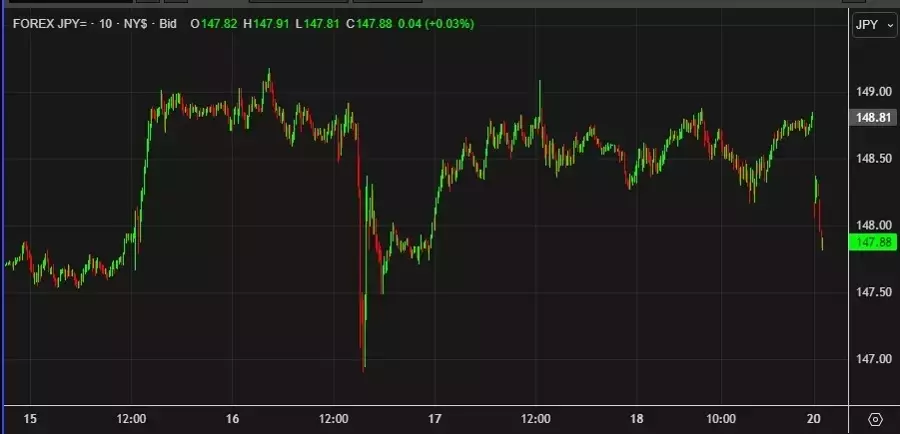
Amidst the holiday-induced market quietude, attention was also drawn to Japan's recent weekend election results. The ruling coalition, despite projections of a weak performance, is expected to seek alliances, potentially impacting the political landscape. The Prime Minister faces pressure following these outcomes, setting the stage for potential shifts in leadership and policy, which could influence future market dynamics once normal trading resumes.
Holiday Impact on Japanese Financial Markets
On Monday, July 21, 2025, Japanese financial markets were largely dormant as the nation observed Marine Day, a significant public holiday. This observance meant that both the Japanese stock and bond markets were completely closed for the day. Consequently, trading activity for the Japanese Yen (JPY) was significantly curtailed, leading to unusually thin market conditions. While other major financial centers in the Asia-Pacific region, such as New Zealand, Australia, Singapore, and Hong Kong, remained operational, their open status did not compensate for the absence of Japanese market participants, resulting in reduced overall liquidity for the yen. This holiday effect underscores how national observances can create localized disruptions in global financial flows.
The impact of Marine Day on yen trading was particularly evident in the early hours, with volumes described as "extremely thin." Even with Sydney markets open before 7 AM, and Singapore and Hong Kong before 5 AM, meaningful yen transactions were minimal, with only New Zealand registering any notable activity. This subdued environment highlights the centralized nature of yen trading within Japan's financial infrastructure. Despite this, the yen's performance prior to the holiday, notably opening stronger earlier in the week, provided some context for its current state. The holiday-induced lull serves as a temporary pause, with traders and analysts anticipating a return to more typical trading volumes and price discovery once Japanese markets reopen and full participation resumes.
Political Ramifications and Future Outlook
Beyond the immediate market closures, recent political developments in Japan added another layer of complexity to the financial landscape. The weekend's election results indicated a challenging outcome for the ruling Liberal Democratic Party (LDP) coalition. Projections suggested the coalition would secure only around 41 seats, a significantly underwhelming performance that could trigger substantial political shifts. This electoral setback places considerable pressure on the incumbent Prime Minister, potentially jeopardizing his leadership position. Such political instability, even during a market holiday, remains a crucial factor for investors, as government stability and policy direction are fundamental to economic confidence and future market trends.
Despite the LDP coalition's less-than-ideal electoral showing, expectations are that they will endeavor to form alliances, potentially with parties like the Democratic Party for the People (DPP), to cobble together a workable majority. This political maneuvering will be closely watched, as the composition of the new government could influence Japan's economic policies, including fiscal stimulus, monetary policy, and international trade relations. While the immediate focus remains on the thin trading due to the holiday, the longer-term implications of the election results on Japan's political leadership and its economic trajectory will undoubtedly shape investor sentiment and yen performance in the weeks and months to come, emphasizing the interconnectedness of political events and financial markets.