Trump's Proposed Tariffs on EU Goods and EURUSD's Reaction
In a recent development indicating escalating trade tensions, former President Trump is reportedly pushing for substantial tariffs on all goods imported from the European Union. This proposal suggests a minimum tariff rate of 15% to 20%, a notable shift from a previously considered 30%. Such measures, if implemented, could significantly alter the economic landscape between the United States and the European Union. The market's immediate reaction to this news has been evident in the foreign exchange realm, with the EURUSD currency pair experiencing a decline, reflecting investor concerns over the potential economic impact of these protectionist policies.
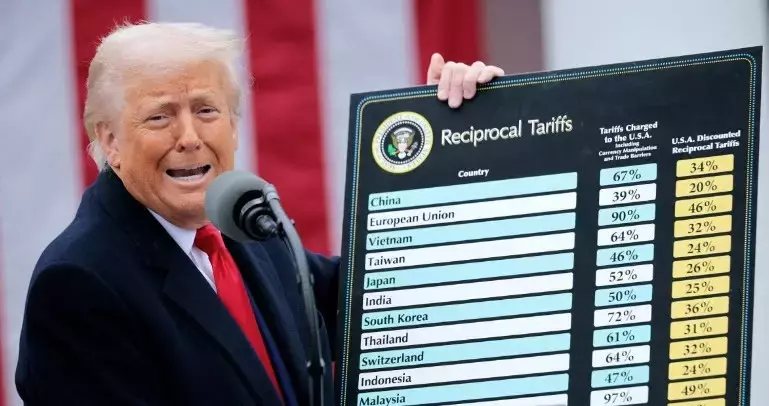
According to recent reports, the former President's strategy extends beyond a general tariff, as he is also said to be against any reduction in the existing 25% duty on European cars. Furthermore, his administration is considering a reciprocal tariff rate exceeding 10%, even in the event that a broader trade agreement is reached. This firm stance underscores a consistent belief that access to the American market should inherently incur a 'tax,' viewed as a means to generate revenue for the United States, regardless of the consequences for international trade relations. This perspective, whether justified or not, appears to be a core tenet of his trade policy, with national security cited as a potential justification for invoking such duties.
The European Union's trade commissioner recently conveyed a rather somber outlook to EU ambassadors following discussions in Washington. This assessment suggests a lack of progress in mitigating the impending trade challenges. It is worth noting that any tariffs imposed by the US would not apply to goods manufactured and sold within the United States by EU companies. This distinction highlights a nuanced approach within the broader protectionist framework. The market's response to these geopolitical and economic developments has been swift, particularly for the EURUSD pair.
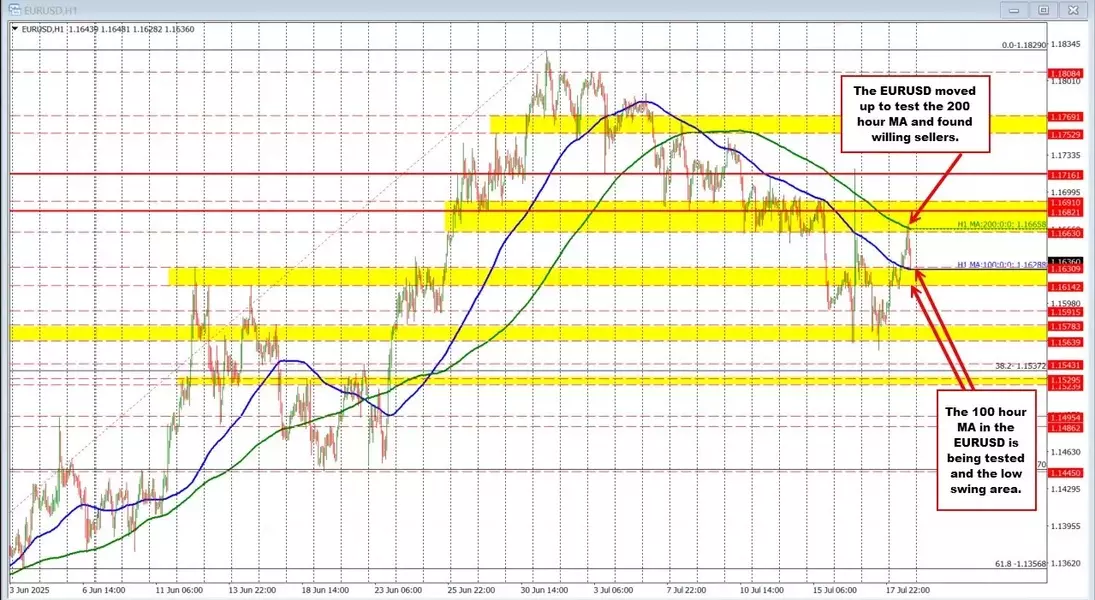
The EURUSD currency pair has seen a downward movement, currently testing the 100-hour moving average. This decline follows a prior attempt to rally, which was halted by resistance at the 200-hour moving average and a specific price zone between 1.1663 and 1.1691. Should the EURUSD break below the 100-hour MA, it could further decline towards 1.1614, and potentially reach the 1.1563-1.1578 range. A more significant drop could see it touch the 38.2% Fibonacci retracement level of the upward movement from the May low, which stands at 1.15372. These technical indicators suggest a bearish sentiment for the currency pair amidst the ongoing trade discussions.
The emerging trade policy proposed by former President Trump, emphasizing high tariffs and an unwavering stance on existing duties, is poised to reshape the trade dynamics between the US and the EU. This protectionist approach, intended to reclaim economic advantages for the United States, has already triggered discernible market reactions, particularly within the foreign exchange market, signalling an era of potential trade recalibration.