Japanese Prime Minister Ishiba's Imminent Resignation Amidst Political Turmoil
A recent report from a major Japanese news agency suggests that Prime Minister Ishiba is expected to step down from his leadership position by the close of August. This anticipated resignation comes in the wake of a considerable defeat for his party in the upper house election held just last weekend. The outcome of this election has placed Ishiba's government in a minority configuration within both legislative chambers, marking a critical juncture in Japanese political landscape. The political tremors initiated by the election results have seemingly culminated in this leadership transition, underscoring the deep impact of the recent electoral shift on the country's governance.

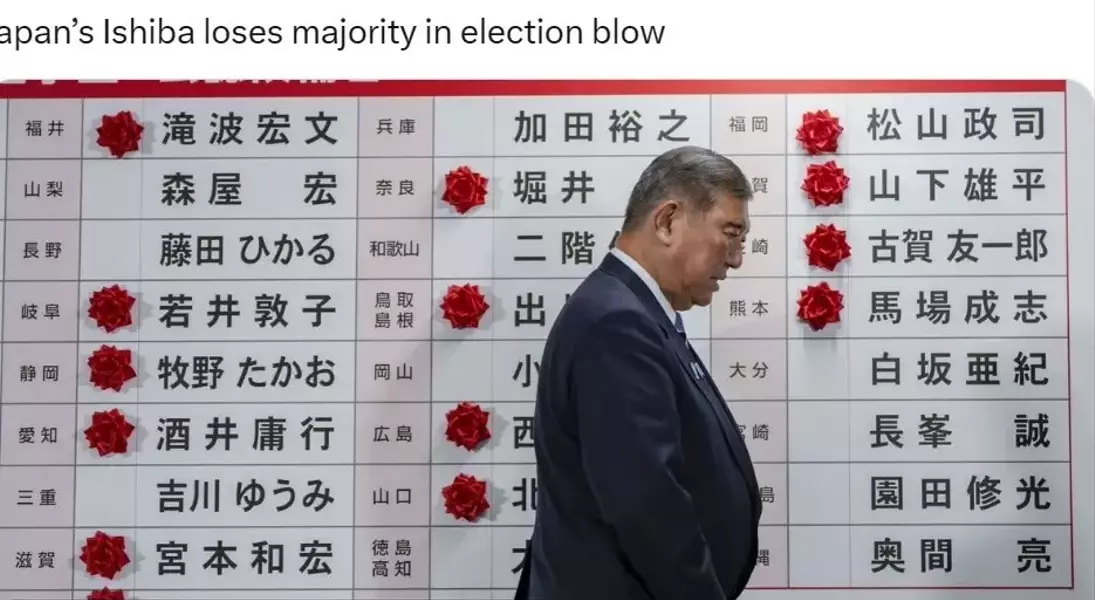
Japanese Prime Minister Ishiba to Resign Following Electoral Defeat
In Tokyo, on a recent Tuesday, a significant political announcement sent ripples through the nation: Japanese Prime Minister Ishiba is reportedly preparing to tender his resignation by the end of August. This decision follows a devastating defeat for his ruling coalition, comprising his Liberal Democratic Party (LDP) and Komeito, in the upper house election that concluded on July 20th. This historic loss saw the coalition relinquish its majority for the first time in an astonishing 70 years, since 1955.
The immediate consequence of this electoral setback is that Prime Minister Ishiba's administration now finds itself in a minority position within both the upper and lower houses of the Japanese parliament. This precarious political standing has undoubtedly amplified the calls for his resignation, a possibility that had already been hinted at prior to this official report.
The political pressure on Ishiba has been mounting steadily since the election results were confirmed. The loss of majority status signifies a significant shift in public sentiment and political power, making effective governance increasingly challenging for the current administration. The resignation, if confirmed, will trigger a period of intense political maneuvering as the LDP seeks to identify a successor capable of uniting the party and navigating the complex parliamentary landscape.
The upcoming weeks will be crucial for Japan's political future, as the nation anticipates a new leadership to emerge from the aftermath of this significant electoral shake-up. The focus will be on how the political vacuum created by Ishiba's departure will be filled and what direction the country's governance will take under new stewardship, especially concerning its domestic policies and international relations.
From a journalist's vantage point, this unfolding political drama in Japan offers a compelling case study in democratic accountability and the inherent volatility of electoral outcomes. The swift transition of power, triggered by a substantial loss of public confidence, highlights the delicate balance between a government's mandate and its ability to maintain parliamentary support. It underscores how profoundly electoral results can reshape a nation's leadership and policy trajectory in a remarkably short span of time. For the citizens, this period of transition will likely bring a mix of uncertainty and anticipation for new policies and a potentially refreshed political agenda.