USDJPY: Navigating Political Shifts and Economic Currents
The USDJPY currency pair is currently in a period of consolidation, influenced by a confluence of economic and political factors in both the United States and Japan. On the American front, recent inflation figures have not significantly altered the Federal Reserve's dovish stance, with market participants still anticipating multiple rate cuts this year. This monetary policy outlook is a crucial determinant for the dollar's valuation. Concurrently, Japan's political arena is experiencing significant shifts following the ruling party's loss of its upper house majority. This development introduces considerable uncertainty regarding future fiscal policy and the intricate trade negotiations with the United States. The interplay of these domestic and international dynamics is shaping the current trajectory of the USDJPY pair, demanding close observation from market analysts and traders.
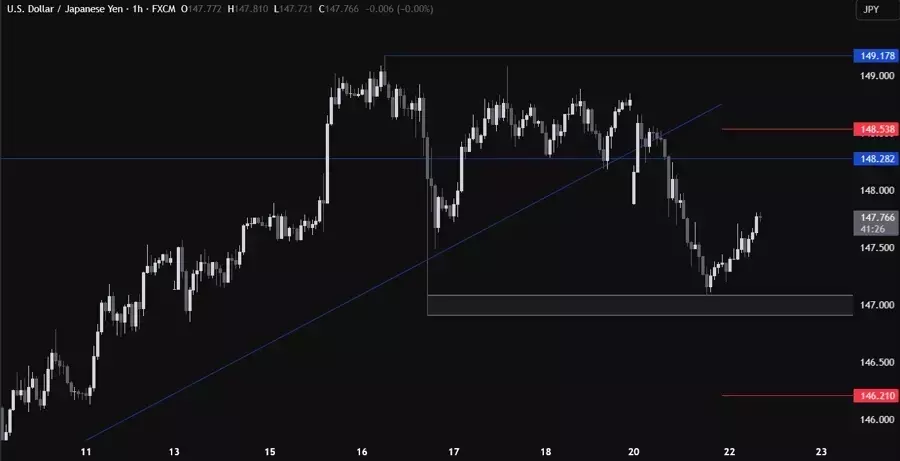
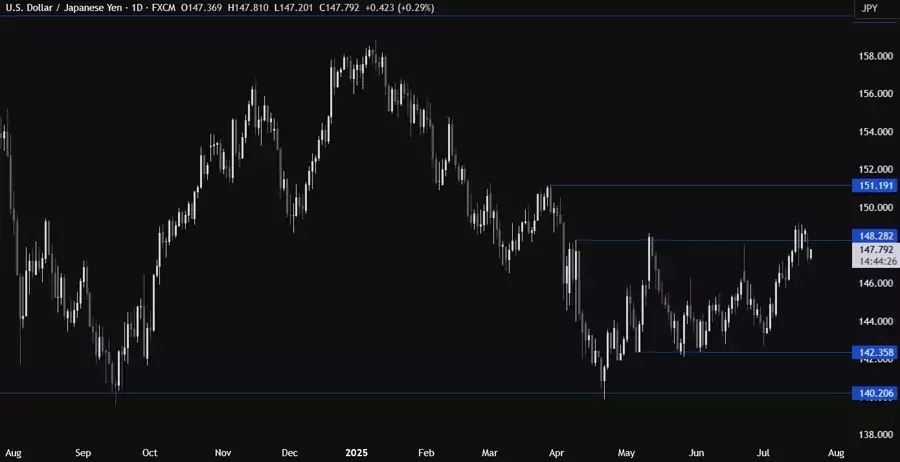
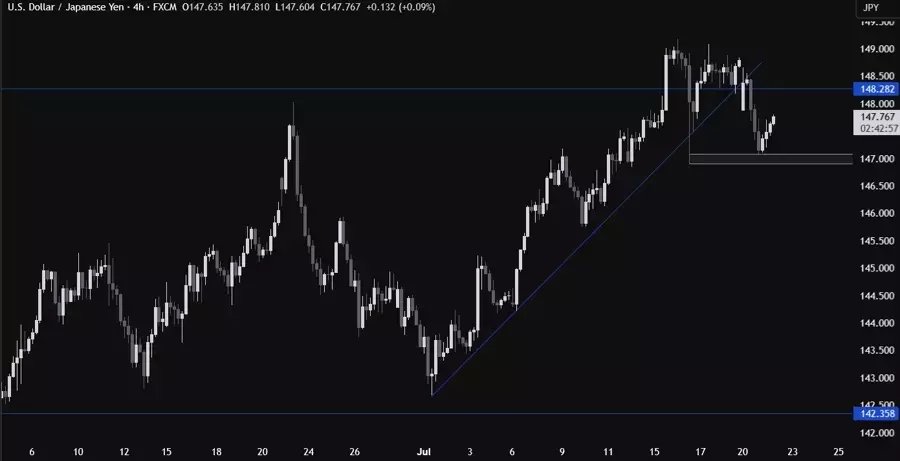
From a technical analysis perspective, the USDJPY pair has encountered notable resistance, failing to sustain rallies above critical levels. This suggests a potential shift towards a more bearish sentiment in the near term. The currency pair's movement is being closely watched for breaks above or below key technical thresholds, which could signal a clearer direction. The confluence of these fundamental and technical elements underscores a complex trading environment for USDJPY, where political developments in Japan and monetary policy expectations in the US continue to exert a strong influence on market behavior.
Economic Undercurrents and Monetary Policy Outlook
The recent trajectory of the USDJPY pair has been significantly influenced by prevailing economic conditions, particularly the Federal Reserve's monetary policy stance. Despite the latest inflation data, which did not trigger a more aggressive repricing of interest rate expectations, the US dollar experienced a pullback, erasing previous gains. The market's anticipation remains centered on the Federal Reserve implementing approximately two interest rate cuts before the year concludes. This expectation of looser monetary policy by the Fed contrasts with the Bank of Japan's cautious approach, contributing to the current range-bound trading pattern observed in the USDJPY pair.
Moreover, upcoming economic indicators and central bank communications are poised to provide further clarity. Although Federal Reserve Chair Powell's upcoming remarks are not expected to touch on monetary policy due to a blackout period, subsequent data releases, including Japanese and US Flash PMIs and US Jobless Claims figures, will be critical. The week will conclude with the release of Tokyo CPI data, offering additional insights into inflationary pressures in Japan. These economic releases will be instrumental in shaping future market sentiment and influencing the USDJPY pair's direction, as traders and investors assess the implications for central bank policies and economic growth prospects.
Political Dynamics and Trade Deal Ramifications
The Japanese political landscape is undergoing a significant transformation, with profound implications for the yen and its relationship with the US dollar. The ruling party's recent loss of its upper house majority introduces a layer of complexity, particularly concerning the negotiation of trade agreements with the United States. This shift in political power raises questions about the stability and direction of future government policies, including potential changes in leadership and the formation of new political alliances. Such internal political realignments could directly impact Japan's fiscal policy and its approach to international trade, adding an element of uncertainty for the USDJPY pair.
The intricate link between political developments and economic policy is evident in the current environment. A less stable political climate in Japan could lead to delays or shifts in key economic initiatives, including those related to trade with the US. Traders are closely monitoring these political movements, as they will directly influence expectations for Japan's fiscal health and its stance in trade discussions. The ability of the Japanese government to navigate these political challenges and maintain a coherent economic strategy will be paramount in determining the yen's performance and, by extension, the USDJPY exchange rate. This political fluidity necessitates a vigilant assessment of its potential ripple effects across financial markets.