Marvell Technology: An Undervalued AI Stock Despite Short-Term Guidance Concerns
Marvell Technology, a prominent custom chip manufacturer, has recently experienced a significant drop in its stock value, falling over 40% this year. This decline follows the company's strong revenue performance but tempered short-term guidance, causing investor unease. However, with a modest price-to-earnings ratio of 22, substantially lower than the S&P 500's 25 and the Technology Select Sector SPDR Fund's 39, Marvell presents itself as a potentially undervalued asset in the booming artificial intelligence sector. This situation encourages a deeper look into the company's long-term potential, especially for growth-oriented investors.
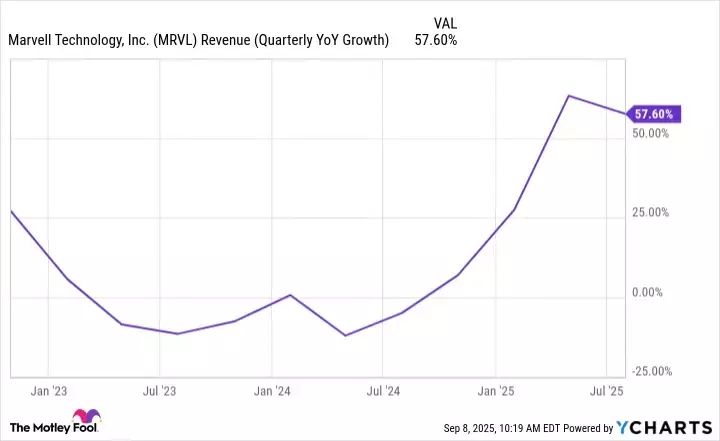

Marvell Technology Faces Investor Scrutiny Amidst Strong Performance and Cautious Outlook
On September 12, 2025, David Jagielski reported on Marvell Technology, highlighting the company's recent challenges despite its robust growth in the custom chip market. Marvell, a key player in providing application-specific integrated circuits (ASICs) as cost-effective alternatives to general-purpose chips like those from Nvidia, posted an impressive nearly 58% year-over-year revenue growth, reaching over $2 billion in its most recent quarter ending August 2. This figure aligned with analyst expectations. However, the subsequent guidance for the current quarter, projecting revenue of approximately $2.06 billion—below Wall Street's anticipated $2.11 billion—triggered a notable sell-off. This forecast implies a growth rate reduction to 36% from the previous quarter's 63%, despite last year's third-quarter sales totaling around $1.5 billion. CEO Matt Murphy remains optimistic, attributing current softness to short-term factors and foreseeing a stronger fourth quarter driven by sustained demand for the company's chips. The market's reaction underscores the sensitivity of AI stock valuations to future projections, even when underlying performance remains strong.
From a journalist's perspective, Marvell Technology's current market situation offers a classic narrative of short-term investor reactions versus long-term intrinsic value. It's a reminder that market sentiment can often overshadow fundamental strengths, especially in rapidly evolving sectors like AI. The dip in Marvell's stock, spurred by conservative near-term guidance rather than poor performance, might present a unique opportunity for discerning investors. It highlights the importance of looking beyond immediate headlines and considering a company's strategic positioning, market share in niche segments like custom chips, and its role in broader technological advancements. In essence, while the market may punish temporary uncertainty, a solid business model with long-term growth drivers, as Marvell appears to possess in the AI chip space, often prevails in the end.