Tesla's AI Ambitions: Beyond Electric Vehicles to Humanoid Robots
Tesla, under the visionary leadership of Elon Musk, is embarking on an ambitious journey to redefine its core identity, extending far beyond its celebrated electric vehicle and energy storage solutions. Central to this strategic evolution is the company's deepening foray into artificial intelligence, with a particular emphasis on humanoid robotics. Musk's bold pronouncements suggest that these advanced AI and robotics initiatives, especially the Optimus humanoid robot project, are not merely supplementary ventures but are poised to become the dominant drivers of Tesla's future valuation, potentially overshadowing its established automotive sector.
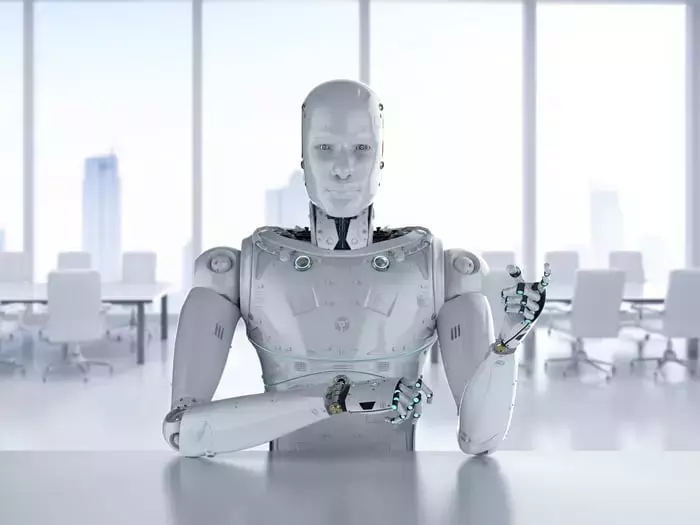
Musk, known for his audacious claims, has consistently articulated a long-term vision where artificial intelligence plays a pivotal role in Tesla's growth trajectory. While the development of a fully autonomous robotaxi fleet remains a significant component of Tesla's AI roadmap, the spotlight is increasingly shifting towards Optimus. This humanoid robot project, once confined to the realm of science fiction, is progressively manifesting as a tangible reality. Industry leaders like Nvidia's Jensen Huang have highlighted the immense economic potential at the confluence of AI and robotics, estimating it to be worth trillions of dollars. Musk himself has gone further, projecting that Optimus alone could eventually contribute as much as 80% to Tesla's overall market capitalization once it achieves widespread adoption.
The critical question for investors and industry observers alike is whether Optimus represents another instance of Musk's characteristic grandiosity or if it genuinely possesses the transformative potential to become Tesla's most significant innovation to date. Tesla's current financial performance is largely underpinned by its electric vehicle sales and energy storage divisions. However, Optimus introduces an entirely new domain of opportunity: labor automation. Designed as a versatile worker, Optimus is envisioned to enhance manufacturing efficiency on factory floors and manage routine tasks within domestic environments.
The implications of this venture are multifaceted. Internally, the deployment of Optimus within Tesla's own gigafactories could lead to substantial labor efficiencies, subsequently reducing operational costs and bolstering profit margins as vehicle production scales. Externally, the commercialization of Optimus would open doors to new markets, including logistics, retail, and healthcare, all sectors experiencing increasing demand for reliable labor. Unlike vehicles, which are subject to market commoditization and cyclical demand fluctuations, Optimus could evolve into a high-demand, mission-critical asset for businesses grappling with labor shortages or inflationary pressures. This potential for recurring demand and the inherently high-margin nature of robotics could, as Musk suggests, dwarf the most optimistic projections for Tesla's automotive business, which consistently faces evolving consumer preferences and intense competition.
The pursuit of humanoid robotics is at the forefront of AI innovation, aiming to bridge the gap between advanced computational intelligence and physical interaction with the real world. While large language models have demonstrated impressive capabilities in processing and generating information, they primarily operate in a reactive capacity, responding to user prompts. Humanoid robots, equipped with human-like dexterity and mobility, are designed to actively engage with and perform complex tasks in diverse environments. This represents a significant leap towards achieving generalized intelligence, where AI systems can not only comprehend but also physically interact with their surroundings. Tesla's Optimus project is not without competition. Other prominent players in the humanoid robotics space include Boston Dynamics, known for its agile Atlas robot, and Figure AI, a startup backed by major tech giants, which is focusing on manufacturing and logistics applications. Despite the competitive landscape, Musk's vision for Optimus remains bold, with projections of a potential $10 trillion market opportunity. Nevertheless, it is crucial to recognize that Optimus is still a long-term, speculative endeavor, and its substantial financial impact on Tesla is likely several years away.
In essence, Tesla's strategic pivot towards humanoid robotics, particularly with the Optimus project, signifies a profound evolution in the company's long-term vision. This bold move, driven by Elon Musk's belief in the transformative power of AI and robotics, aims to unlock new avenues of value generation beyond its current electric vehicle and energy sectors. The successful realization of Optimus could establish Tesla as a dominant force in labor automation, potentially generating massive recurring revenue streams and reshaping its financial landscape, even as it navigates a competitive and technologically demanding future.