US 30-Year Mortgage Rates See Slight Uptick, Market Dynamics Under Scrutiny
Navigating the Evolving Landscape of US Mortgage Rates
Recent Adjustments in Mortgage Interest: A Closer Look at Freddie Mac's Findings
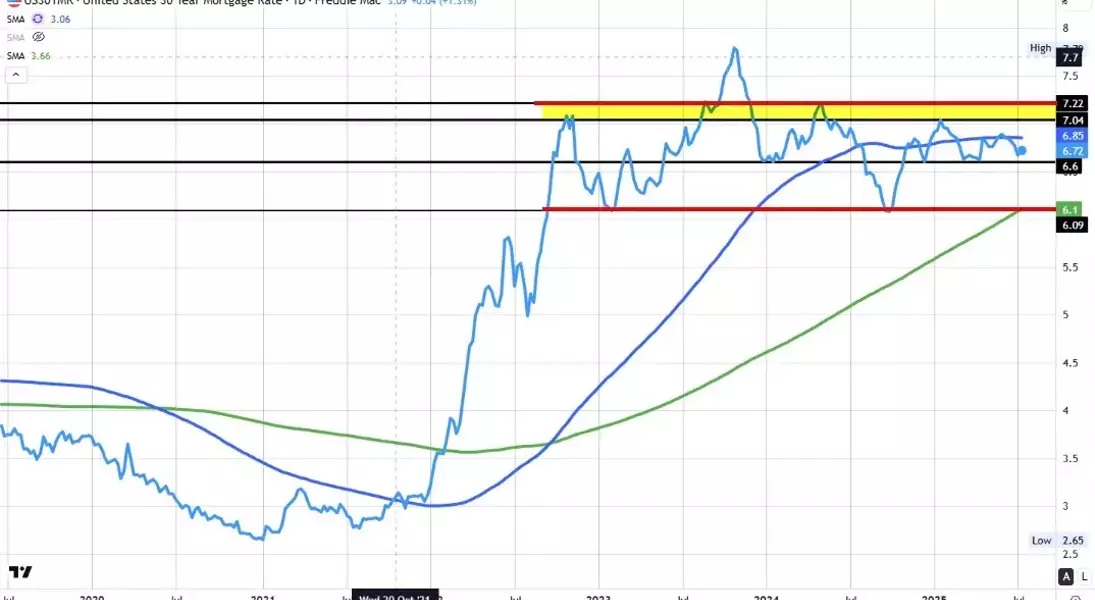
The latest data from Freddie Mac indicates a slight upward adjustment in the average 30-year US mortgage rate, moving from 6.72% to 6.75%. This marginal shift reflects the ongoing volatility within the housing finance sector. Earlier in the year, specifically in mid-April, the rate touched a low of 6.62%, while mid-January saw it peak at 7.04%, showcasing the dynamic nature of these rates throughout the year.
Historical Context and Rate Fluctuations: Understanding the Pattern
An examination of historical trends reveals that mortgage rates have largely hovered within a specific corridor, ranging from 6.10% to 7.22%. A notable exception occurred between September and November of the previous year, when rates experienced a significant surge, reaching a high of 7.79%. This historical perspective provides crucial context for understanding the current market behavior.
The Interplay Between Mortgage Rates and Treasury Yields: A Comparative Analysis
A key area of interest involves the relationship between the 30-year mortgage rate and the 10-year Treasury yield. Intriguingly, the current 10-year yield is positioned above its 100-week moving average, while, conversely, the mortgage rate remains below its 100-day moving average. This divergence prompts questions about market dynamics, such as whether subdued demand is contributing to the comparatively lower mortgage rates, or if other macroeconomic factors are at play, potentially including political influences.
Market Interpretations: Demand Dynamics vs. External Pressures
The differential movement between the mortgage rate and the 10-year yield invites speculation. One perspective suggests that a lack of robust demand in the mortgage market might be influencing lenders to keep rates relatively subdued. Another consideration is the potential impact of political rhetoric, particularly given recent discussions surrounding financial institutions' performance. Despite recent positive earnings from financial institutions, the 10-year yield appears to maintain a higher posture in relation to the 30-year mortgage rate, highlighting a complex and multifaceted financial environment.