Atlanta Fed's Q2 GDPNow Growth Forecast Experiences Slight Downturn
The economic outlook for the second quarter of 2025 has seen a minor recalibration, as the Atlanta Federal Reserve's closely watched GDPNow model indicates a fractional reduction in its growth forecast. This adjustment highlights the dynamic nature of economic projections, continually refined by incoming data. Observers of the financial landscape pay close attention to these updates, as they offer timely insights into the nation's economic momentum, serving as a crucial barometer for market sentiment and policy considerations. The slight decline suggests a moderation in the pace of economic expansion from earlier projections, prompting a closer examination of underlying factors contributing to this shift.
Atlanta Fed Adjusts Q2 Economic Growth Projections
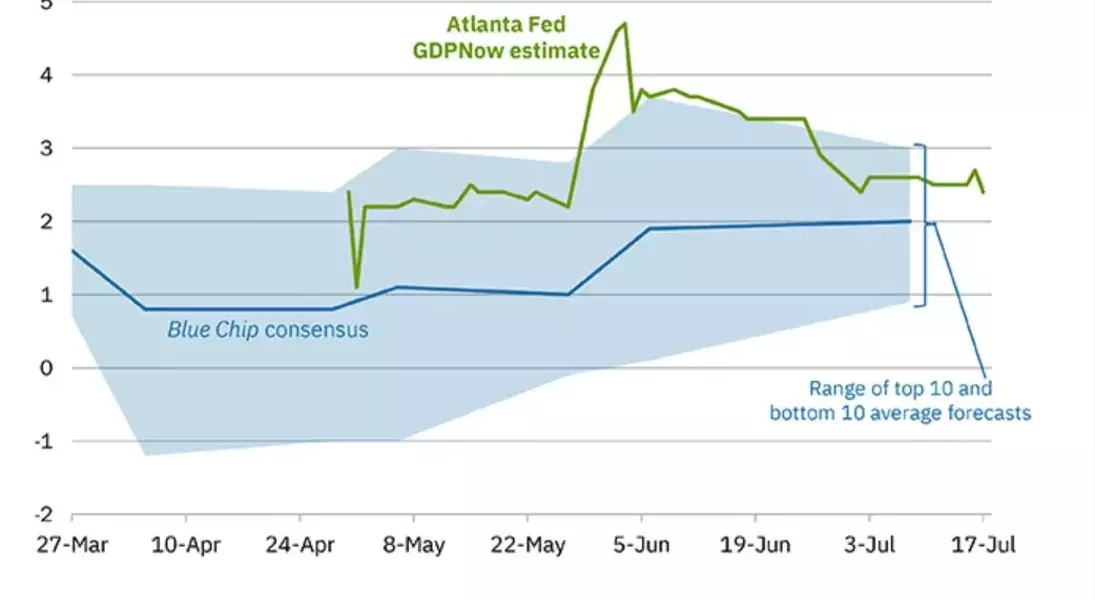
On a bright Thursday, the 17th of July, 2025, the distinguished Federal Reserve Bank of Atlanta released its latest GDPNow forecast, revealing a subtle but notable revision to the United States' real Gross Domestic Product (GDP) growth for the second quarter. The updated projection now pegs growth at an annualized rate of 2.4%, representing a minor decline from the 2.6% estimate issued just eight days prior, on July 9th. This recalibration was primarily influenced by recent comprehensive datasets disseminated by pivotal U.S. governmental economic entities, including the U.S. Census Bureau, the U.S. Bureau of Labor Statistics, and the esteemed Federal Reserve Board of Governors. Specifically, the nowcast for second-quarter real personal consumption expenditures witnessed a marginal reduction, shifting from 1.6% to 1.5%. Economic analysts eagerly anticipate the next update from the Atlanta Fed's GDPNow model, scheduled for release on Friday, July 18th, which promises further clarity on the evolving economic trajectory.
This subtle downward revision in the GDPNow forecast serves as a timely reminder of the inherent uncertainties and constant flux within economic cycles. While seemingly small, such adjustments can ripple through financial markets, influencing investment decisions and monetary policy discussions. For businesses and consumers alike, these forecasts offer valuable cues regarding future economic conditions, underscoring the importance of adaptability and informed decision-making in navigating the ever-changing economic terrain. It highlights the intricate dance between data, models, and real-world economic activity, a dance where every step, no matter how small, has the potential to reshape the broader economic narrative.