Asia-Pacific Market Dynamics: Currency Shifts, Inflation Trends, and Geopolitical Tensions
Navigating Volatility: A Deep Dive into Asia-Pacific's Economic and Geopolitical Currents
Currency Movements and Trade Policy Impacts
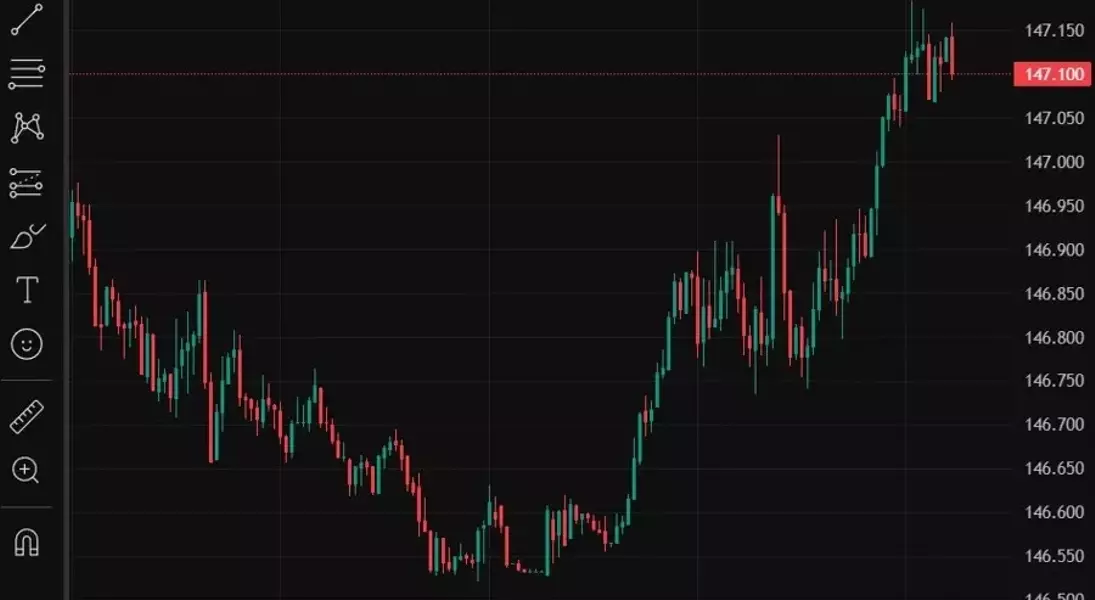
During the recent trading period, the U.S. dollar demonstrated notable strength, particularly against the Japanese Yen, surpassing the 147.00 mark. This appreciation was largely influenced by renewed rhetoric from former President Trump regarding tariffs. His announcements, made via social media, indicated upcoming details on new tariffs affecting multiple countries, with further revelations anticipated throughout the day. These trade policy discussions continue to be a significant driver for global currency valuations, creating an environment of cautious optimism for the greenback among investors.
Energy Markets: Unexpected Inventory Surges
A recent private assessment of U.S. crude oil reserves revealed an unexpected increase in stockpiles. This finding stands in sharp contrast to market expectations, which had predicted a reduction in inventories. The discrepancy highlights potential shifts in supply and demand dynamics within the energy sector. Market participants are now eagerly awaiting the official government data, expected during U.S. trading hours, to either confirm or contradict this preliminary survey, as it will likely impact global oil prices and related derivatives.
China's Economic Indicators: Inflationary Nuances and Deflationary Pressures
Recent economic data from China presented a mixed picture. The Consumer Price Index (CPI) recorded a modest year-on-year increase of 0.1% in June, marking the first rise in five months. While this indicates a subtle return to inflationary territory for consumer goods, the Producer Price Index (PPI) experienced a substantial year-on-year contraction of 3.6%. This sharp decline in producer prices represents the most significant drop since July 2023, underscoring persistent deflationary pressures within the industrial sector. The divergence between CPI and PPI suggests a complex economic environment, with potential implications for future monetary policy decisions by the People's Bank of China.
New Zealand's Monetary Policy Stance and Currency Response
As widely anticipated, the Reserve Bank of New Zealand (RBNZ) opted to maintain its cash rate at 3.25%. In its official communication, the RBNZ signalled a potential for future interest rate reductions, provided that medium-term inflationary pressures continue to subside in line with current projections. Following the announcement, the New Zealand dollar initially experienced a brief uplift against its U.S. counterpart. However, this gain was short-lived as the broader strengthening of the U.S. dollar subsequently reversed the NZD's upward momentum.
Leadership Speculation at the Federal Reserve
Reports from the Wall Street Journal have indicated that Kevin Hassett, a key advisor to former President Trump, is being considered as a prominent candidate for the next Federal Reserve Chair. This speculation follows two reported meetings between Hassett and Trump in June, where the influential role was reportedly a central topic of discussion. The potential appointment of Hassett could signal a shift in the central bank's leadership and, consequently, its future monetary policy direction, warranting close observation from financial markets.
Global Geopolitical Developments and Their Ramifications
The geopolitical landscape continues to be a focal point of international concern. The White House is reportedly assessing the possibility of deploying an additional Patriot air defense system to Ukraine, signifying ongoing support amidst regional conflict. Concurrently, Taiwan has commenced its largest-ever military exercises, an action that explicitly underlines the escalating tensions within the region and serves as a clear demonstration of its defensive capabilities. These developments highlight the persistent undercurrents of global instability and their potential to influence international relations and economic sentiment.