China's Commerce Minister Emphasizes Resilience and Dialogue in Sino-US Economic Relations Amidst Challenges
China's Commerce Minister has addressed the complex and often tumultuous economic and trade relationship between China and the United States. Despite facing significant headwinds and challenges, this bilateral tie remains crucial for both global economic powerhouses. The Minister underscored that unilateral and protectionist policies adopted by the U.S. since 2018 have exacerbated tensions and created considerable friction. However, he maintained that the inherent nature of the US-China commercial bond is one of mutual advantage and shared prosperity. Any attempts at economic decoupling, he argued, are destined to falter because they fundamentally oppose the natural trajectory of global economic progress. Acknowledging that disparities and disagreements are an inherent part of such a vast relationship, he strongly advocated for open dialogue and ongoing consultation as the primary mechanisms for resolving disputes and fostering stability. Furthermore, the Minister highlighted that certain interdependencies are, at least for the foreseeable future, indispensable, and emphasized the critical need for both nations to honor each other's fundamental interests and key concerns. Historical agreements, specifically mentioning the Geneva agreement and London framework, were credited with successfully stabilizing trade relations and de-escalating conflicts.
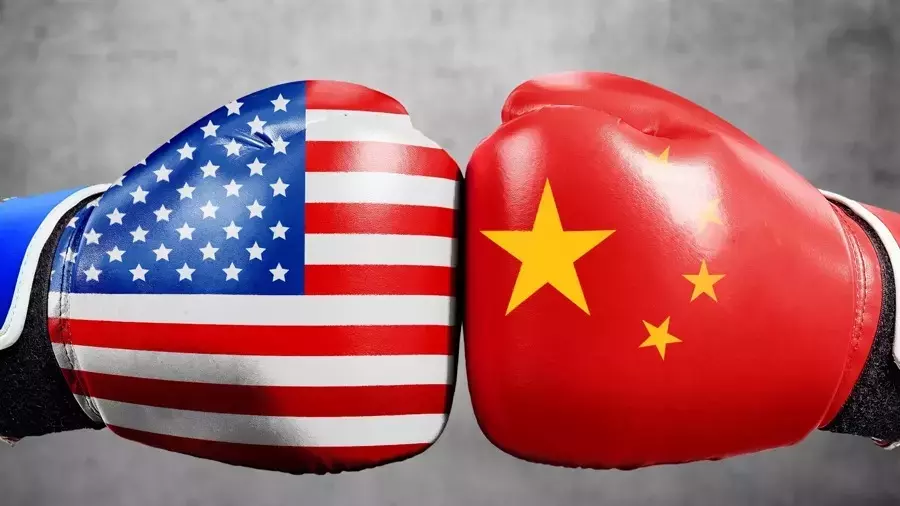
This steadfast commitment to engagement and cooperation, despite past and present difficulties, signals China's perspective on navigating the intricate landscape of international trade. The emphasis on shared interests and the futility of isolationist approaches resonates as a call for a more collaborative future in global commerce. The Minister's remarks not only reflect China's stance on current trade dynamics but also hint at a strategic vision that prioritizes long-term stability and economic interdependence over short-sighted protectionism. This ongoing narrative between the world's two largest economies continues to shape international trade policies and global market sentiment, underscoring the necessity of finding common ground and fostering an environment of mutual respect.
Navigating the Tumultuous Waters of Sino-US Trade
China's Commerce Minister has insightfully remarked that the economic and trade ties between China and the United States have weathered numerous storms, yet they retain their profound significance for both nations. He specifically pointed out that since 2018, the United States has increasingly implemented unilateral and protectionist measures, which have undeniably fueled tensions and created significant friction within the bilateral relationship. The Minister firmly believes that the very essence of the commercial bond between these two giants lies in their mutual benefit, asserting that any attempts at 'decoupling' their economies are ultimately doomed to fail. This conviction stems from the fundamental argument that such separation contradicts the natural and intertwined progression of global economic development. He acknowledged that differences and points of contention are an unavoidable reality in a relationship of this scale, advocating strongly for dialogue and consultation as the most effective and constructive pathways to address and resolve these challenges. The Minister also underscored the reality that certain economic components are, at least in the immediate future, irreplaceable, highlighting the deep interdependencies that bind their economies. Crucially, he stressed the importance of both countries respecting each other's core interests and major concerns, viewing this as a cornerstone for stable relations. Historic milestones like the Geneva agreement and the London framework were specifically cited as successful precedents that effectively stabilized commercial interactions and successfully diffused tensions, offering a template for future engagements.
The intricate dance between the Chinese and American economies, as articulated by China's Commerce Minister, is a testament to resilience and the persistent need for diplomatic engagement. His observations paint a clear picture of a relationship that, despite facing intense pressure from protectionist policies initiated by the US since 2018, remains robust and mutually dependent. The Minister’s strong assertion that 'decoupling' is fundamentally flawed and contradicts economic principles highlights China's long-term vision for global integration rather than fragmentation. This perspective is rooted in the belief that shared economic prosperity is best achieved through cooperation, not isolation. The acknowledgment of inevitable frictions is pragmatic, yet it is immediately followed by a powerful call for consistent dialogue and consultation, emphasizing these as indispensable tools for conflict resolution. The notion of 'irreplaceable' elements in their economic relationship underscores the depth of their interdependence, suggesting that certain supply chains and market dynamics cannot be easily reconfigured without significant disruption to both sides. By referencing the Geneva agreement and London framework, the Minister subtly suggests that historical precedents for managing complex trade relations exist and can be drawn upon to stabilize current and future challenges. This comprehensive view from the Chinese Commerce Minister offers a strategic outlook on the enduring nature of Sino-US economic relations, advocating for a path of mutual respect, continuous dialogue, and recognition of shared economic destinies, even amidst significant geopolitical complexities and protectionist tendencies.
The Indispensable Role of Mutual Respect and Dialogue
The Chinese Commerce Minister emphasized that despite the significant challenges and frequent turbulences that have characterized the economic and trade relations between China and the United States, these ties remain profoundly important to both nations. He pointed out that since 2018, the United States has increasingly resorted to unilateral and protectionist measures, which have undoubtedly escalated frictions and created a more challenging environment for bilateral trade. However, the Minister firmly believes that the fundamental strength of the US-China commercial relationship lies in its inherent mutual benefit. He posited that any attempts to 'decouple' these economies are inherently flawed and are destined to fail, as such actions run counter to the natural course of economic development and globalization. While acknowledging that disagreements and conflicts are a natural part of any complex relationship, he stressed that open dialogue and sincere consultation represent the most effective and indeed, the only viable means to resolve outstanding issues. The Minister further highlighted that certain aspects of their economic relationship are, at least in the short term, irreplaceable, underlining the deep interdependencies that exist. A key principle for navigating these relations, he argued, is the reciprocal respect for each other's core interests and major concerns. Historical examples, such as the Geneva agreement and the London framework, were cited as successful instances where concerted efforts effectively stabilized commercial ties and successfully de-escalated tensions, providing a valuable blueprint for future interactions.
This profound statement from China's Commerce Minister provides a crucial insight into Beijing's strategic approach to its economic engagement with Washington. The emphasis on mutual benefit as the bedrock of their trade relationship signals a desire to move beyond punitive measures towards a more collaborative framework. His assertion that economic 'decoupling' is unsustainable is not merely a diplomatic platitude but a reflection of the deep integration of global supply chains and markets, where the two economies are inextricably linked. This perspective challenges the notion that either nation can achieve self-sufficiency without incurring substantial costs or sacrificing efficiency. The Minister's consistent call for dialogue underscores a belief in diplomatic solutions over confrontational ones, positioning negotiation and consultation as the preferred methods for addressing trade imbalances and geopolitical differences. The recognition of 'irreplaceable' economic elements serves as a powerful reminder of the intricate web of interdependencies that necessitate continued engagement. By invoking historical agreements that previously stabilized the relationship, the Minister subtly urges both sides to revisit proven strategies for de-escalation and cooperation. This strategic stance by China aims to reinforce the idea that, despite current frictions, the long-term prosperity of both nations, and indeed the global economy, depends on a stable and mutually respectful Sino-US economic relationship, built on the foundations of open communication and a shared understanding of core interests.