Deutsche Bank Warns Markets Underestimate Risk of Powell's Removal
A recent analysis from Deutsche Bank reveals a critical oversight in current financial market sentiment: an underestimation of the potential for President Trump to remove Federal Reserve Chair Jerome Powell from his position. This assessment, spearheaded by strategist George Saravelos, posits that market participants are not adequately pricing in the severe ramifications such a decision could trigger. The repercussions could include a significant depreciation of the U.S. dollar and a notable increase in Treasury yields, profoundly impacting global financial stability. The central concern revolves around the perceived independence of the Federal Reserve, an institution whose autonomy is vital for maintaining market confidence and economic stability.
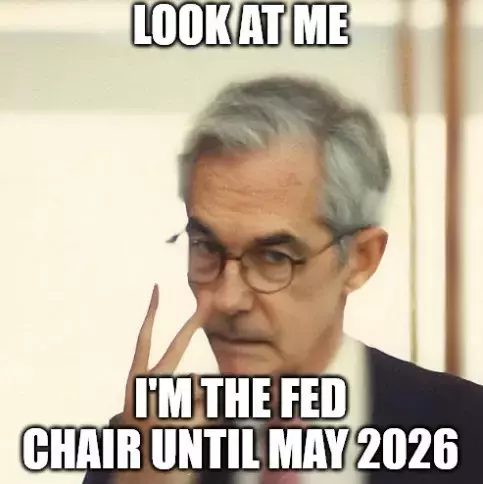
The current market prognosis, as reflected by platforms like Polymarket, indicates a low probability—less than 20%—of Powell's dismissal. However, Deutsche Bank's perspective sharply contrasts this prevailing view, cautioning that should such an ousting occur, immediate and drastic market movements are highly probable. Specifically, the U.S. dollar could experience a rapid decline of 3-4%, while Treasury yields might surge by 30-40 basis points within a single trading day. Such abrupt shifts would undoubtedly send shockwaves across various asset classes, impacting investment strategies and risk assessments globally.
The implications extend beyond mere numerical fluctuations. The forced departure of a Federal Reserve Chair would be widely interpreted as a direct assault on the central bank's independence, setting a perilous precedent for political interference in monetary policy. This erosion of autonomy could have long-term consequences, undermining trust in U.S. financial institutions and potentially deterring foreign investment. The broader economic conditions, coupled with the U.S.'s inherently weak external funding position, are identified as factors that could exacerbate market volatility in the aftermath of any such move.
Moreover, the longer-term market response would be intricately linked to a series of subsequent events. These include the identity and policy leanings of Trump's chosen successor for the Federal Reserve Chair, the collective reaction of other senior Fed officials, and the overarching state of the global economy. These variables would collectively dictate the trajectory of market recovery or sustained instability, highlighting the multifaceted nature of the risk involved.
This looming possibility is not without its historical context. Recent tensions between Trump and Powell have escalated, particularly concerning allegations regarding the Fed's building renovations. Trump had previously called for Powell's immediate resignation if these allegations, which he claimed suggested misleading information provided to Congress, were proven true. Powell, in turn, staunchly defended the Fed's independence, dismissing parts of the reports as "flatly misleading" and unequivocally stating his refusal to resign under political pressure. This ongoing friction underscores the inherent political risk surrounding the leadership of the Federal Reserve.
Ultimately, the financial community's current complacency regarding the potential dismissal of the Federal Reserve Chair is a significant point of vulnerability. Deutsche Bank's warning serves as a stark reminder that political actions can have profound and immediate economic consequences, particularly when they challenge the bedrock principles of institutional independence. The markets, therefore, might be on the precipice of a significant re-evaluation of this understated risk, with the potential for substantial shifts in currency valuations and bond yields should the improbable become reality.